How to Choose the Best Transparent LED Display in China?
Choosing a Transparent Led Display in China is not just a brightness comparison. It means balancing visibility, structure, and image quality in a real space. MarketsandMarkets valued the global LED display market at about USD 9.7 billion in 2023 and projected USD 13.8 billion by 2028. That forecast covers LED displays broadly, not transparent models alone. It signals a growing category, but it cannot tell buyers which product will suit a storefront or atrium.
Look closely. A fine-pitch sample may appear crisp in a dark showroom, then lose contrast beside a sunlit window. Check transparency, pixel pitch, brightness, refresh rate, cabinet weight, and service access together. Ask the supplier for test results under conditions resembling your installation. Eric Virey, a display-industry analyst at Yole Group, provides a useful expert perspective: selection should follow the application and its performance demands, not a headline specification. Treat that as a decision principle, not a verbatim quotation.
Details matter. Confirm viewing distance, mounting method, control system, warranty terms, and replacement-part availability before comparing quotations. China offers many manufacturers and configurations, but a polished demo is not proof of long-term reliability. I would also question overly neat promises: real installations face glare, uneven surfaces, and maintenance limits. The best choice is usually the one that performs consistently in your actual space, even if its specification sheet looks less impressive.
Understanding Transparent LED Displays and Their Core Technology
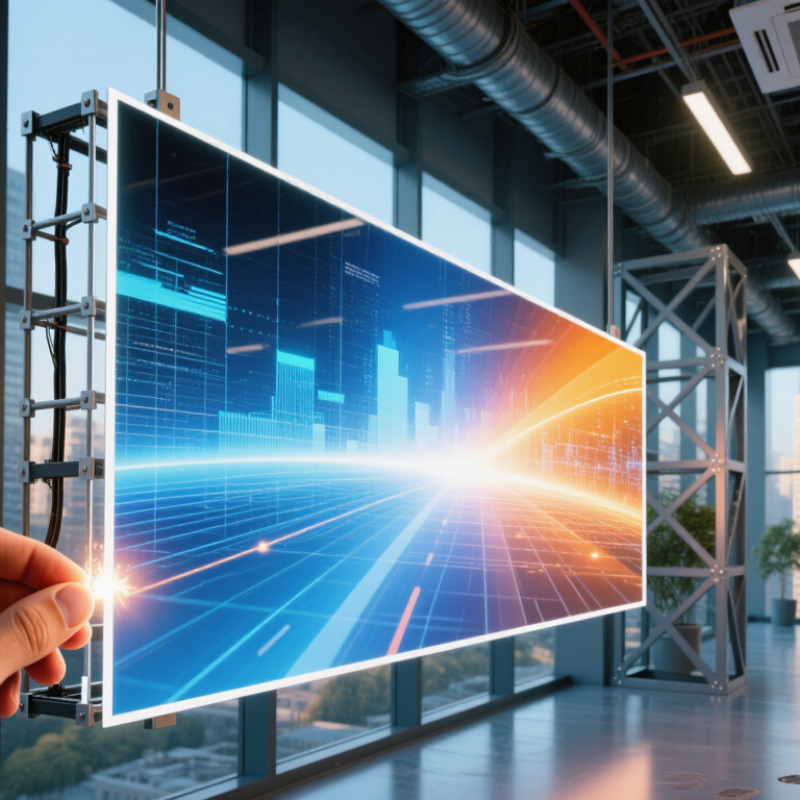
A transparent LED display is not a clear screen with images simply placed on top. It uses rows of LED modules, with gaps between them that allow daylight and views through the glass. Those gaps create the display’s transparency, but they also limit how much detail it can show. Pixel pitch matters: a tighter pitch usually produces sharper images at close range, while wider spacing can preserve a more open appearance. There is a trade-off. It is easy to overvalue transparency and overlook viewing distance.
The core system combines LED chips, driving circuits, a control system, and a supporting frame. Brightness, refresh rate, and grayscale performance affect how content looks under changing light. For example, a storefront facing afternoon sun needs enough brightness to remain legible, without washing out indoor views. Grand View Research valued the wider global LED display market at USD 7.10 billion in 2023 and projected 6.3% annual growth from 2024 to 2030. This figure covers LED displays broadly, not transparent models alone. That distinction matters. Before comparing products in China, check measured transparency, pixel pitch, brightness, and heat management under real installation conditions. Datasheets help, but a short on-site test can reveal uneven light or visible gaps that specifications miss.
How to Choose the Best Transparent LED Display in China?
Pixel Pitch and Theoretical Pixel Density
Pixel density is calculated as (1,000 ÷ pixel pitch in millimeters)², assuming a uniform square pixel grid. Smaller pixel pitch provides more pixels per square meter and can support finer detail at closer viewing distances. These pitches are illustrative examples, not a universal product standard; compare transparency, brightness, viewing distance, and installation conditions as well.
Defining Your Project Requirements and Installation Environment
Defining project requirements begins with the job the display must do. Is it for storefront promotions, architectural content, or visitor information? Record the viewing distance, screen dimensions, content type, daily operating hours, and acceptable visibility from both sides. MarketsandMarkets estimated the global digital signage market at USD 27.8 billion in 2024, with a projected USD 35.9 billion by 2029. This broader market trend signals growing adoption, but it cannot determine the right display for an individual site.
The installation environment often changes the specification. Measure daylight at the glass during different hours, and note reflections, direct sun, and nearby street lighting. A screen that looks vivid indoors may appear weak beside a bright window. Check glass type, mounting options, cable routes, ventilation, and access for maintenance. For a façade, ask a qualified engineer to review wind exposure and structural loads. Pixel pitch should match the closest expected viewing distance; finer pitch can improve close-up detail, but usually raises cost.
Tips: Photograph the installation area at morning, noon, and evening. Share those images with the supplier alongside dimensions and viewing distances. Confirm brightness and transparency using a sample under real site conditions, not only in a showroom. A drawing may miss glare or hidden obstructions. I would treat early measurements as estimates, then verify them on site before ordering.
Comparing Display Specifications and Performance
How to Choose the Best Transparent LED Display in China?
Comparing Display Specifications and Performance
Start with pixel pitch and match it to the usual viewing distance. A finer pitch can sharpen text viewed up close, but may raise cost and reduce visual openness. Compare transparency ratios carefully; measurement methods can differ. Ask how the figure was calculated. Numbers need context.
Brightness should suit the site: a sunlit shop window needs more output than an indoor lobby. Yet maximum brightness alone is not a quality score. Check whether images remain clear without washing out nearby products.
Refresh rate, grayscale performance, and color consistency affect moving content and camera recordings. Request test footage, then view the screen from several angles. At the site, play the same video in daylight and after dark. Test it onsite.
Also compare power use, heat, cabinet weight, and maintenance access. A lightweight panel may simplify installation, but its structure still needs stable support.
I would not choose from a specification sheet alone; real lighting can expose weaknesses that a showroom hides.
One detail is easy to overlook: cables and framing can interrupt the clean appearance. Record these limits before comparing quotes.
Evaluating Chinese Manufacturers, Quality, and Certifications
When comparing Chinese transparent LED display manufacturers, look beyond showroom brightness. Ask whether the company designs modules, assembles them, or outsources key stages. Request a live factory video or visit, then check production records, aging-test procedures, and how defects are handled. Ask for proof. A polished sample does not show how a large installation will perform.
Evaluate the display itself under realistic conditions. Compare transparency, brightness, viewing angle, pixel pitch, and color uniformity at the distance your audience will stand. Inspect module seams and cable connections closely. Ask how the screen manages heat during long operating hours, and request test results for the exact model—not a similar product. That matters. A specification sheet alone cannot show whether the image remains clear beside a bright window.
Review certifications and reports carefully. ISO 9001 describes a quality-management system; it does not certify every display’s performance. Request applicable electrical-safety and electromagnetic-compatibility documents, plus material-compliance reports when required for your destination market. Check model numbers, issuing laboratory, dates, and test scope. Documents can look tidy while leaving gaps. Confirm warranty terms, spare-module availability, and technical support response times in writing. One detail is easy to miss: replacement modules should match the original color and brightness closely, or repairs may remain visible.
Reviewing Installation, After-Sales Support, and Total Cost
A transparent LED display should be assessed as part of a building, not as a panel bought in isolation. Ask the supplier for installation drawings, screen weight, mounting details, and cable routes. Check the glass dimensions and nearby access points before approving the design. A site survey can reveal uneven frames or limited service access. Small details matter.
Installation quality affects both appearance and maintenance. Request a sample installation plan and confirm who handles lifting, wiring, calibration, and safety checks. Ask how the image looks in daylight and after dark, since brightness needs vary with the setting. Leave room behind or beside the display for repairs where possible. Tight spaces complicate work. A neat drawing may still miss a site constraint, so verify measurements on location.
After-sales support deserves the same scrutiny as display specifications. Get response times, warranty coverage, replacement-part availability, and labor costs in writing. Clarify whether technicians can provide remote troubleshooting or must travel to the site. Compare total cost, not just the initial quotation: include installation, transport, power use, maintenance, and likely component replacement. Ask for a clear list of exclusions. Even careful estimates miss something. A spreadsheet can look reassuring while leaving service costs uncertain.