I can write the introduction, but no source articles were provided, and I can’t verify a named expert’s quotation without a reliable source. Please share the articles or the expert quote you want cited; otherwise, I’d risk inventing a quotation or misrepresenting industry data.
Top 10 Types of Stainless Steel Clamps for Buyers
Stainless Steel Clamps: Structure, Materials, and Core Functions
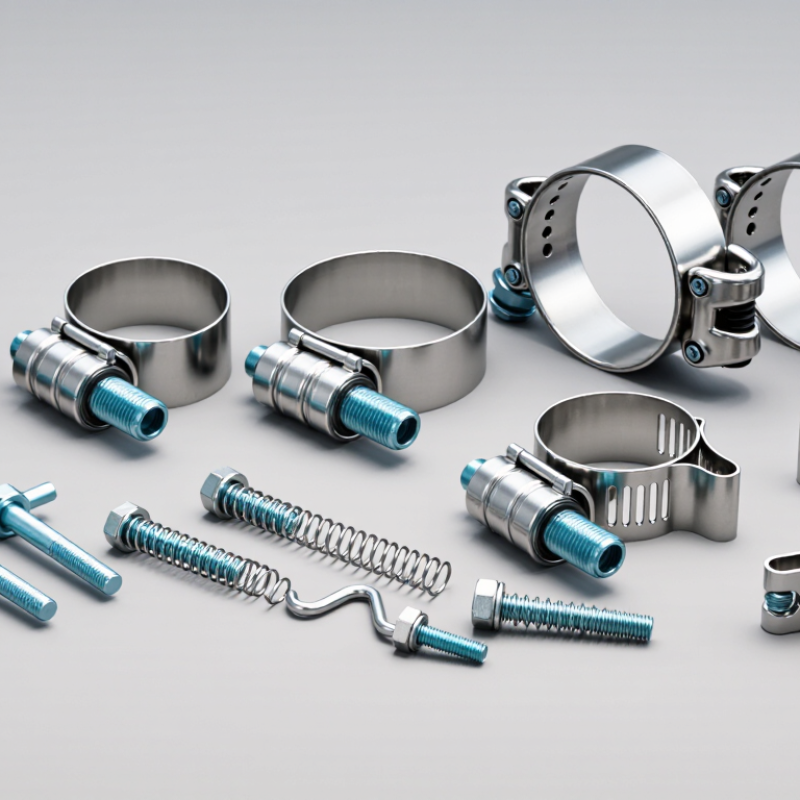
A stainless steel clamp typically has a curved band, a tightening mechanism, and sometimes a protective liner. The band wraps around a hose, pipe, or cable. A screw or bolt draws its ends together, creating a firm hold. Small parts matter. Smooth edges help reduce surface damage, while a well-fitted housing keeps tightening force more even. Some designs use a solid band; others have perforations for screw engagement. That detail can affect how pressure reaches the material underneath.
Material choice matters as much as structure. Grade 304 stainless steel suits many general indoor and outdoor uses, while grade 316 offers added resistance in salty or chemically exposed settings. Neither grade makes a clamp immune to corrosion. Dirt, trapped moisture, and contact with dissimilar metals can still cause problems. In practice, fit is often less exact than a drawing suggests, so check the actual hose diameter and working conditions before selecting a clamp.
Tips: Match the clamp’s size to the outside diameter of the assembled hose and fitting, not the hose alone. Tighten gradually and inspect the joint for leaks or crushing. A clamp that feels secure may still be poorly positioned. For vibration or frequent servicing, inspect it periodically; even stainless hardware can loosen or wear.
Stainless steel clamps differ in how they apply pressure, handle movement, and fit around a connection. A worm-drive clamp tightens with a screw and suits many flexible hoses. T-bolt designs use a solid bridge and often provide stronger, more even pressure on larger hoses. Spring clamps flex as temperatures change. Small details matter.
Other types serve more specific jobs. Ear clamps create a compact, permanent crimp, while V-band clamps join flanged connections and allow quicker removal. Constant-tension, double-bolt, pipe-repair, banding, and quick-release clamps each address different fitting or maintenance needs. Their strength depends on band width, material grade, fastener design, and correct installation—not the clamp type alone. Grade 316 can resist salt exposure better than grade 304, but it is not immune to corrosion. Choosing by appearance alone is an easy mistake.
Tips: Match the clamp to the hose diameter and working pressure, then check the manufacturer’s specifications. Look for sharp edges, uneven gaps, or a screw that binds during tightening. Avoid overtightening; it can deform a hose or damage its liner. For vibrating equipment, recheck the connection after operation. A perfect fit on paper may still need adjustment in the field.
Stainless steel clamps secure hoses, pipes, ducts, and flanged joints, but the right design depends on pressure, vibration, temperature, and service access. World Stainless’s Stainless Steel in Figures 2024 reports 58.4 million tonnes of global stainless-steel production in 2023, up 4.6% from 2022. This is material-production data, not clamp-market data, but it shows the scale of stainless steel’s industrial supply. Check the grade and the full assembly, not just the shiny band.
A worm-drive clamp suits adjustable hose connections, such as a garden or coolant hose. T-bolt clamps provide broader, firm compression on larger hoses exposed to vibration. Spring-band clamps maintain force as hoses warm and cool. Constant-tension clamps help manage repeated temperature changes in engine or heating systems.
Ear clamps create a compact, low-profile connection on small hoses, though removal usually damages them. Small detail. Tighten only to the specified range; overtightening can cut soft hose walls.
Wire clamps can hold light-duty hoses where a narrow profile is useful. Band clamps distribute pressure around larger ducts or housings. Pipe-repair clamps use a sealing sleeve to contain leaks on compatible pipe surfaces.
Saddle clamps support pipe runs against walls or frames; they are not leak-sealing fittings. V-band clamps join matching flanged sections, often where quick inspection matters. A heavier clamp is not automatically safer. Confirm dimensions, corrosion exposure, and operating pressure before selection.
Choosing among the top 10 types of stainless steel clamps starts with the joint, not the clamp’s appearance. A worm-drive clamp suits many low-pressure hose connections and allows simple adjustment. For thicker hoses or stronger vibration, a T-bolt clamp can distribute load more evenly. It still needs the right tightening torque. Too much force can cut a soft hose.
Temperature changes matter. Spring clamps can maintain pressure as some hoses expand and contract, while constant-tension designs help accommodate thermal cycling. An ear clamp gives a compact, even fit, but is usually not adjustable after installation. V-band clamps join flanged components; they are not substitutes for ordinary hose clamps. Small distinction. For pipe runs, a support clamp may prevent movement, but it does not automatically seal the connection.
Check the hose material, operating pressure, temperature range, and vibration before selecting a type. Stainless grade matters too: 316 generally resists chloride exposure better than 304, but neither is immune to every corrosive environment. Match clamp width and diameter to the hose, then tighten to the maker’s specified torque when available. In practice, a dry fit can reveal a poor match before service begins. There is no perfect shortcut; even a well-chosen clamp can fail if the hose is damaged or the joint is misaligned.
| Clamp type | Typical construction | Best-matched operating conditions | Buyer checks and limitations |
|---|---|---|---|
| Worm-drive hose clamp | Perforated or embossed band tightened by a screw housing. | General-purpose hose connections where the clamp needs to be adjustable and removable with common tools. | Match the diameter range and band width to the hose. Check for a smooth inner band if hose damage is a concern. Do not assume suitability for high pressure without a verified assembly rating. |
| T-bolt clamp | Wide band closed by a bolt-and-nut assembly, often with a bridge over the closure. | Large-diameter or reinforced hoses, including applications exposed to vibration or higher clamping loads. | Check the manufacturer’s load and size limits, band width, and hose compatibility. A T-bolt design alone does not establish a pressure rating. |
| Constant-tension clamp | A band clamp with a spring element that maintains force as the joint changes dimension. | Hose joints subject to temperature cycling or dimensional changes that can reduce sealing force after installation. | Confirm the working temperature range, spring travel, hose size, and required installation method. The spring feature does not compensate for an incorrectly sized hose or clamp. |
| Spring-band clamp | A resilient, pre-formed band that applies radial force as it returns to its relaxed shape. | Suitable flexible-hose connections where temperature-related hose movement occurs and the clamp can be fitted with the appropriate tool. | Choose the correct nominal diameter and verify the usable temperature and hose ranges. Installation and removal may require dedicated pliers; suitability depends on the joint design. |
| Ear clamp | A narrow band closed by crimping one or more raised “ears” with a specified tool. | Compact hose assemblies where a low-profile, fixed-size connection is preferred and repeatable installation is possible. | Usually treated as a one-time installation; removal generally requires cutting the clamp. Select the correct diameter and crimping tool, and avoid over-crimping the hose. |
| Quick-release hose clamp | An adjustable band with a hinged latch or lever for opening and closing without fully removing the fastener. | Connections that need frequent inspection, cleaning, or hose changes, provided the joint’s service requirements are within the clamp’s rating. | Check the latch security, adjustment range, vibration exposure, and specified tightening method. Convenience of release should not be taken as evidence of pressure suitability. |
| Pipe repair clamp | A stainless-steel shell or band with an internal elastomer gasket and bolted closure. | Repairing or containing leaks on compatible pipe sections when the clamp is specifically designed and rated for the pipe and service. | Match pipe outside diameter, repair length, gasket material, and pressure rating. Check whether the product is intended for temporary repair or permanent service; not every clamp suits every pipe defect. |
| Sanitary ferrule clamp | A hinged or two-piece clamp that draws together two sanitary ferrules around a gasket. | Removable connections in hygienic process piping, such as food, beverage, and pharmaceutical systems designed for cleanability. | Confirm ferrule standard and size, gasket material, surface-finish requirements, and process conditions. Clamp, ferrules, and gasket must be compatible as an assembly. |
| V-band clamp | A V-profile band tightened around matching flanged joint rings, typically with a T-bolt or latch closure. | Joining compatible flanged components, including exhaust or ducting assemblies, where a compact, removable circumferential connection is needed. | The flange profiles and clamp geometry must match. Check temperature, vibration, and assembly ratings; a V-band clamp is not a substitute for a hose clamp or a mismatched flange joint. |
| Cushioned P-clamp | A formed metal loop with a mounting tab and an elastomer or polymer lining. | Supporting and routing pipes, tubes, hoses, or cables while reducing abrasion and rattling at the mounting point. | Select by supported outside diameter, mounting-hole size, load, and lining compatibility. It is a support clamp, not a pressure-sealing clamp. |

Material note: Stainless grades such as 304 and 316 are common, but corrosion resistance depends on the grade, environment, finish, and exposure. Verify the complete clamp assembly’s material, temperature limits, and pressure or load rating for the intended service.
The right clamp depends on the joint, working conditions, and how often it needs adjustment. For a soft hose, a smooth inner band can reduce surface damage. A perforated band may grip firmly, but its edges can mark delicate material. Check the hose’s outside diameter and the clamp’s usable adjustment range before ordering. A fit that is barely within range can be awkward to install.
Consider moisture, cleaning chemicals, and salt exposure. Grade 304 stainless steel suits many general indoor and outdoor uses; grade 316 often offers better resistance in chloride-rich settings. It is not a cure-all. Match the clamp’s width and band thickness to the load, and check the screw mechanism for secure, even tightening. For vibrating equipment, inspect the connection after installation and during routine maintenance. Small details matter. Avoid overtightening: it can deform a hose or cut into its surface. A sample fit on the actual assembly is useful, though it may not represent every operating condition. Temperature changes, pressure, and repeated movement can all affect performance.
5107 County Road C
Manitowoc, WI 54220
920-726-4526