Please provide the source articles or the name and verified quotation of the pneumatic-valve expert you want cited. No source material was included, and inventing an expert or attributing an unverified quote would undermine the accuracy and trustworthiness of the introduction.
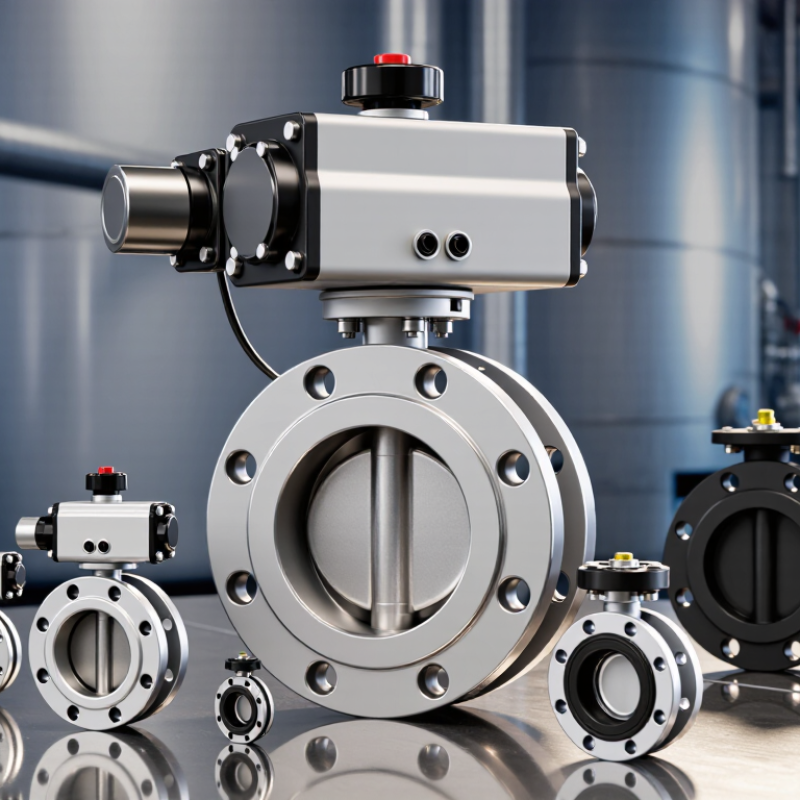
A pneumatic butterfly valve controls flow with a circular disc mounted inside a pipe. The disc turns on a central shaft, usually through a quarter-turn. When it sits parallel to the flow, fluid passes through; when it turns across the pipe, the valve closes. The body is compact, so it often suits lines where installation space is limited. Simple in appearance. Not simple in every application.
Compressed air powers an actuator attached to the valve shaft. In a common setup, air moves a piston or diaphragm, rotating the disc open or closed. A solenoid valve can direct the air, while sensors may report the valve’s position to a control system. Spring-return actuators use a spring to move the valve to a chosen position when air is lost. Double-acting actuators use air for both directions, so their response depends on the control system and available air supply.
In practice, the neat quarter-turn description leaves out important details. Seat material, disc design, pressure, temperature, and the fluid itself all affect performance. Some butterfly valves are intended for on-off service; others can regulate flow, but not equally well across their range. A small leak or a sticky disc may point to wear, poor alignment, or unsuitable operating conditions. Check the valve’s specifications and inspect the air supply, tubing, and actuator before assuming the valve alone is at fault.
A pneumatic actuator uses compressed air to rotate a butterfly valve’s disk. The positions shown illustrate a typical quarter-turn movement: closed at 0°, an intermediate position at 45°, and fully open at 90°. Actual travel and flow characteristics vary by valve design.
A reliable pneumatic butterfly valve manufacturer should provide more than a pressure rating. Ask for pressure-test records, materials documentation, and actuator torque data across the expected pressure range. Verify that valve and actuator interfaces follow ISO 5211, and that pressure testing reflects ISO 5208 requirements. These details help engineers assess compatibility, not just catalog specifications. Small details matter. Check whether the manufacturer can explain seat material limits, temperature ranges, and cycle-life test conditions in plain language.
Compressed-air use deserves attention, too. The U.S. Department of Energy’s Improving Compressed Air System Performance sourcebook estimates that leaks can waste 20–30% of compressor output in poorly maintained systems. Request actuator air-consumption figures per operating cycle and ask how the manufacturer checks for leakage.
Also review traceability, spare-part availability, and technical support response times. A polished test report is useful, but it may not represent every installed condition. Compare the test setup with your actual fluid, pressure, and operating frequency.
No checklist is perfect. Engineers should document unanswered questions before approving a supplier.
Leading pneumatic butterfly valve manufacturers worldwide compete on more than production volume. They must match valve bodies, disc materials, seals, and actuators to the actual process. A wastewater line may need corrosion-resistant components, while a dusty cement plant needs reliable sealing and actuator protection. Fit matters. Buyers should check pressure ratings, operating temperature, cycle life, and spare-parts availability. ISO 5211 mounting compatibility can also simplify actuator replacement, though it does not guarantee complete system compatibility.
Grand View Research valued the global industrial valves market at USD 78.7 billion in 2023 and projected USD 110.6 billion by 2030. This broad market figure includes many valve types, not pneumatic butterfly valves alone. It signals industrial demand, but it should not be treated as a precise measure of this niche. Leading suppliers worldwide typically differentiate themselves through application testing, documented performance, and regional service support. Ask for leakage-test results and actuator torque calculations, not just catalogue ratings. A polished brochure is not evidence. One practical weakness in many comparisons is that buyers overlook air quality and control frequency; both can affect actuator performance over time.
When comparing pneumatic butterfly valve manufacturers worldwide, start with the details behind the product range. Check available body materials, disc options, seat compounds, pressure ratings, and actuator configurations. A valve for clean water may not suit a hot process line. Ask for dimensional drawings and torque data for the actual operating conditions, not just a general catalogue figure. Small details matter.
Certifications can help buyers assess quality systems and product suitability, but the certificate’s scope deserves a close look. Confirm which facility, product family, or test standard it covers, and check that documents are current. Request material records and pressure-test reports for the quoted configuration. Some datasheets leave gaps. That should prompt a question, not an automatic rejection.
Service is harder to compare on a spreadsheet. Ask how quickly technical staff respond, whether they can review an actuator sizing issue, and how replacement seats and seals are supplied. Try a practical scenario: a valve arrives with an unexpected face-to-face dimension. What happens next? Response times and spare-parts access vary by region, and promises can sound similar. I would want the process in writing, though even that may not predict every delay. A clear installation guide and reachable support contact can save hours on site.
| Comparison Dimension | Product Capability to Compare | Relevant Standard or Evidence | Certification and Compliance Check | Service Evaluation |
|---|---|---|---|---|
| Valve design and range | Compare concentric, double-offset, and triple-offset designs; available sizes, body materials, disc materials, seat options, and pressure-temperature limits. | Request the model-specific datasheet, drawings, pressure-temperature tables, and design standard. API 609 and EN 593 are standards covering butterfly valves. | Confirm that the offered valve model—not merely the manufacturing site—is within the stated scope of any certificate or approval. | Check whether engineering support can review process conditions, media compatibility, operating frequency, and required shutoff performance. |
| Pneumatic actuator and assembly | Compare actuator type (rack-and-pinion or scotch-yoke), spring-return or double-acting operation, torque output, operating pressure, and accessory compatibility. | Request actuator torque curves and the complete valve-and-actuator sizing calculation. ISO 5211 specifies interfaces for mounting actuators to industrial valves. | For hazardous-area applications, verify the exact actuator and accessories against the applicable approval and installation requirements. | Compare actuator selection assistance, accessory availability, spare-part identification, and support for commissioning and troubleshooting. |
| Pressure testing and quality records | Compare stated shell and seat-test procedures, acceptance criteria, traceability, and inspection documentation supplied with each order. | ISO 5208 sets requirements for pressure testing of industrial valves; API 598 is another commonly specified valve inspection and test standard. Confirm the contractually applicable edition and test criteria. | Request test reports and material certificates where specified. A standard reference alone does not prove that a particular valve passed a particular test. | Assess how quickly the supplier can retrieve serial-number-linked manufacturing, inspection, and test records. |
| Quality management | Compare documented controls for design changes, supplier quality, production inspection, nonconformities, and corrective actions. | Ask for the certificate number, issuing certification body, validity, and scope of the quality-management-system certificate. | ISO 9001 certifies a quality management system within a stated scope; it is not, by itself, product approval or proof that every valve meets a particular specification. | Review the process for handling complaints, warranty claims, corrective actions, and technical queries. |
| Application-specific approvals | Identify approvals required for the service, such as potable-water use, explosive atmospheres, or other regulated applications. | For drinking-water applications, check whether the applicable product is certified to NSF/ANSI/CAN 61 or another requirement accepted by the local authority. | For equipment used in explosive atmospheres, verify the applicable ATEX or IECEx documentation for the exact equipment and intended zone. Requirements depend on location and application. | Check whether the supplier can provide application-specific documentation and support for local regulatory review. |
| Functional safety claims | For safety-related duties, compare the stated failure modes, actuator configuration, diagnostic assumptions, and maintenance requirements. | Request the relevant functional-safety documentation and confirm that it covers the exact device or assembly and intended use. | IEC 61508 is a functional-safety standard. A SIL claim should be supported by applicable evidence and assessed as part of the complete safety instrumented function—not inferred from a general product brochure. | Compare the availability of safety manuals, proof-test procedures, and competent technical support. |
| Delivery and spare parts | Compare quoted lead time by configuration, standard versus engineered options, spare-part lists, and parts interchangeability. | Use a written quotation that identifies the valve, actuator, accessories, materials, documentation, delivery terms, and validity period. | Check whether replacement components retain the required approvals and are compatible with the installed assembly. | Compare documented regional stock, parts dispatch terms, warranty conditions, and escalation contacts; request commitments in writing. |
| After-sales and lifecycle support | Compare installation guidance, maintenance instructions, repair options, actuator servicing, and product-change notifications. | Review manuals, recommended maintenance intervals, warranty terms, and the supplier’s stated service coverage. | Confirm that service or repair work will preserve any required certification, traceability, or regulatory compliance. | Evaluate response-time commitments, language and time-zone coverage, remote support, field-service availability, and repair turnaround based on written service terms. |
Comparison note: Standards and approvals are application- and jurisdiction-dependent. Verify current editions, certificate scope, product configuration, and contractual requirements directly before procurement.
Choosing a pneumatic butterfly valve manufacturer starts with the actual service conditions, not a catalog headline. Share the fluid, operating temperature, pressure range, pipe size, and expected cycling rate. A valve handling clean water may need different seat materials from one exposed to abrasive slurry. Ask how the manufacturer selects actuator torque, including allowance for pressure changes and aging seals. Too little torque can prevent reliable closure; too much may add unnecessary cost.
Tips: Request a torque calculation, material details, and pressure-test records. Confirm the actuator’s air supply, control signal, and fail position match your system. Ask about spare seals and realistic delivery times.
Review the manufacturer’s quality checks and technical support before comparing prices. Can they explain test procedures and provide clear drawings? Check whether the proposed valve suits your mounting space and maintenance routine. A neat datasheet helps, but it cannot reveal every installation issue. Leave time to verify dimensions against the pipework; small mismatches can delay commissioning. I would also ask one awkward question: what happens when the valve sticks after months of service? A useful answer should cover troubleshooting and replacement parts, not just warranty terms.
5107 County Road C
Manitowoc, WI 54220
920-726-4526