920-726-4526



A slitting and rewinding machine can shape a converter’s daily output through details buyers may overlook: edge quality, tension control, setup time, and roll handling. Demand provides useful context. The Flexible Packaging Association’s 2024 State of the U.S. Flexible Packaging Industry Report estimated industry sales at about $42.9 billion in 2023. That figure describes the U.S. flexible-packaging sector, not slitter-rewinder sales. Still, it helps explain why reliable converting equipment matters.
Consistency matters.
For buyers, the headline speed is only part of the story. Ask how a machine handles thin films, paper, or laminates at the widths and roll diameters your plant actually runs. Check changeover steps, scrap during startup, operator access, and the availability of service parts. Lean manufacturing expert Shigeo Shingo is often quoted as saying, “The most dangerous kind of waste is the waste we do not recognize.” His warning is relevant here: hidden waste can appear as repeated adjustments, damaged edges, or idle time between jobs. Compare those costs with the machine’s purchase price.
No single configuration suits every line. A compact unit may fit a crowded floor, yet limit future capacity. A faster model may demand better material control and trained operators. Buyers should verify specifications with test runs, sample rolls, and references from comparable applications. And revisit the assumptions. A quoted throughput rate may not match everyday production.
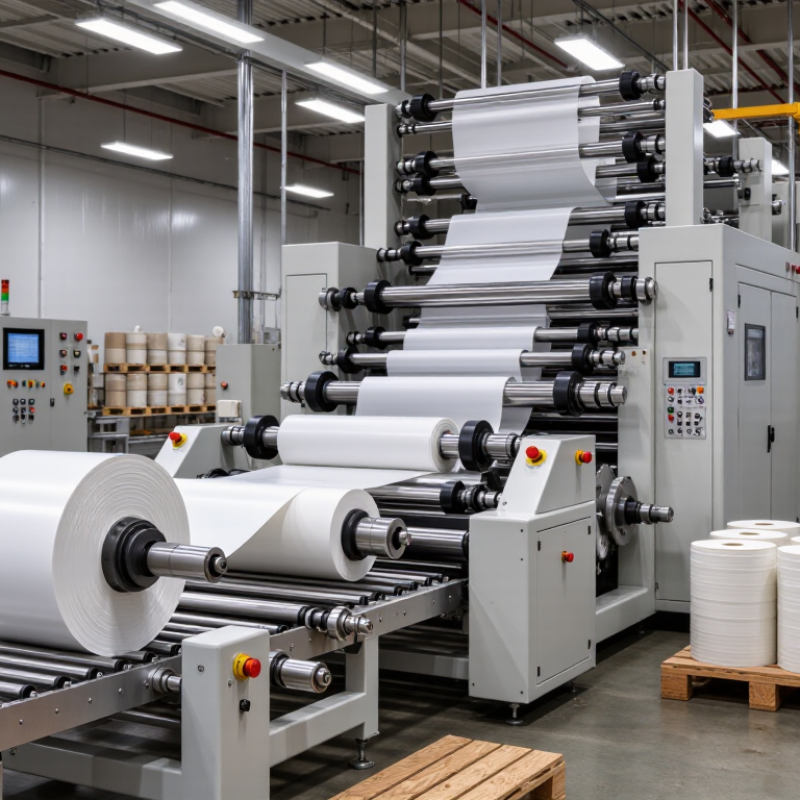
A slitting and rewinding machine turns a wide master roll into narrower rolls ready for converting, packing, or use on another production line. Rotary knives or shear blades cut the moving web, while rewind shafts collect the finished strips. Operators control web tension and alignment to reduce wrinkles, telescoping, and uneven edges. A clean cut matters. Small errors travel.
These machines handle materials such as paper, plastic film, foil, labels, and nonwoven fabric. They are used in packaging, printing, label production, insulation, and other converting work. For example, a packaging plant may slit a wide film roll into several narrower rolls matched to its bag-making equipment. The right setup depends on material thickness, roll width, core size, and the next process. There is no single setting that suits every job.
Tips: Before a run, check blade condition, alignment, and core fit. Watch the first few meters for wandering edges or loose winding. Still, even a setup that looks correct on paper may need small adjustments once the material is moving. Record those changes; they can help the next operator, though notes do not replace a fresh inspection.
Slitting and rewinding machines convert wide rolls of flexible material into narrower rolls. The configurations below represent common machine types and typical applications; working widths, speeds, and capabilities vary by design and material.
| Machine Configuration | How It Slits and Rewinds | Typical Materials | Indicative Web Width | Indicative Operating Speed | Common Uses | Buyer Considerations |
|---|---|---|---|---|---|---|
| Duplex center-surface slitter rewinder | Uses controlled tension and a combination of center and surface winding. Two rewind shafts allow finished rolls to be unloaded while the next set is prepared. | Flexible packaging film, paper, foil laminates, and coated webs | About 1,000–2,000 mm | About 300–800 m/min | Packaging converters, printing plants, and film processors handling medium- to high-volume production | Check tension control across different roll diameters, splice handling, shaft changeover time, and finished-roll diameter requirements. |
| Turret slitter rewinder | Automatically indexes multiple rewind shafts to support continuous production and reduce roll-change downtime. | Packaging films, labelstock, paper, and laminates suited to automated roll changes | About 1,000–2,000 mm | About 400–1,000 m/min | High-volume converting lines with repeat production schedules and frequent roll changes | Assess automation needs, splice and core-loading systems, operator training, guarding, and whether production volume justifies the added complexity. |
| Narrow-web label slitter rewinder | Slits printed or converted narrow webs and rewinds them into smaller rolls; inspection, counting, or waste removal may be integrated. | Pressure-sensitive labelstock, paper labels, thin films, and release liners | About 100–600 mm | About 100–400 m/min | Label converting, roll-label finishing, and preparation of narrow rolls for downstream printing or application | Review minimum slit width, registration and inspection requirements, waste matrix handling, and compatibility with the upstream press. |
| Razor-blade slitter rewinder | Uses fixed razor blades to slit suitable thin webs. Blade holders and web paths are arranged for the material and slit pattern. | Thin plastic films, lightweight paper, and some nonwoven webs | About 500–2,000 mm | About 200–800 m/min | Film and lightweight-web converting where clean, narrow cuts are required | Confirm material suitability, blade-change procedures, edge quality, dust or debris control, and appropriate blade guarding. |
| Shear-knife slitter rewinder | Uses a rotary shear arrangement, typically with a circular knife and a mating lower knife, to produce controlled cuts. | Paper, heavier films, laminates, and selected nonwoven materials | About 500–2,500 mm | About 200–800 m/min | Paper converting, flexible packaging, and applications requiring consistent edge quality over longer runs | Check knife overlap and clearance adjustment, setup time, sharpening or replacement needs, and the range of material thicknesses. |
| Score-crush slitter rewinder | Uses a circular scoring knife pressed against an anvil or roller to separate the web by pressure rather than a fully intermeshing cut. | Paper, paperboard, and selected nonwoven or composite webs | About 500–2,500 mm | About 150–600 m/min | Paper mills and converters processing materials suited to pressure-cutting methods | Test the material for edge appearance, dust generation, compression marks, and acceptable cutting consistency before purchase. |
| Heavy-duty paper slitter rewinder | Combines a robust unwind stand, tension control, slitting section, and rewind system for large or heavy parent rolls. | Printing paper, kraft paper, linerboard, and other paper grades | About 1,500–3,500 mm | About 500–1,500 m/min | Paper mills and large converting operations producing customer-width rolls | Verify parent-roll diameter and mass limits, floor and foundation requirements, roll-handling equipment, and site-specific safety provisions. |
Selection note: Speed and width figures are indicative ranges for broad equipment categories, not guaranteed specifications. Actual performance depends on material properties, slit width, roll diameter, winding method, machine design, and operating conditions. Confirm requirements with a qualified equipment supplier and evaluate a representative material sample.