Why Choose 5 Axis CNC for Precision Manufacturing and Enhanced Efficiency?
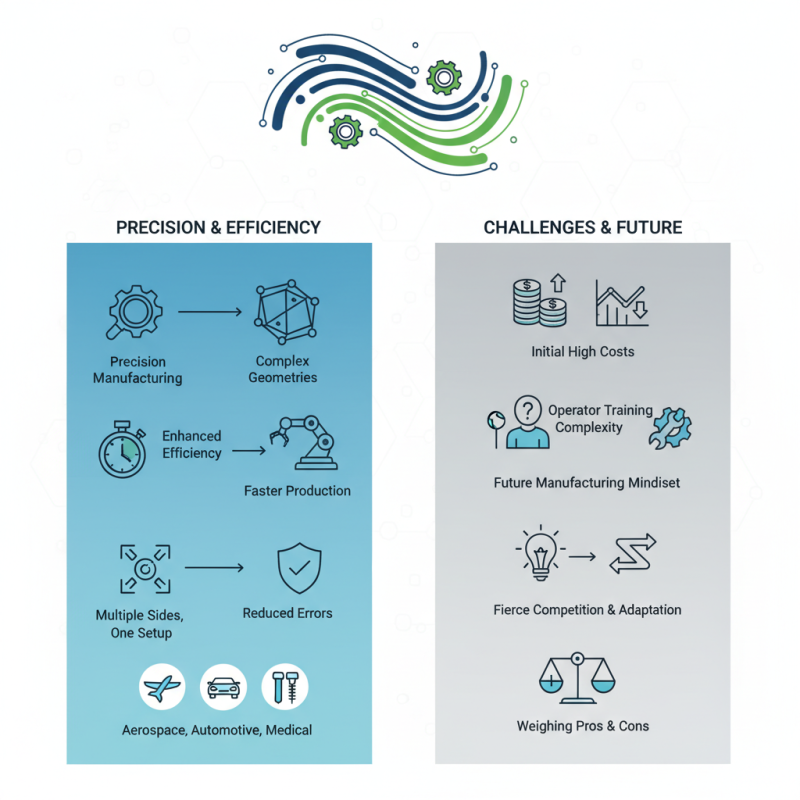
The manufacturing landscape is evolving. Companies seek methods to improve precision and efficiency. Enter 5 Axis CNC technology. This advanced machining solution offers incredible versatility. It allows for complex geometries that traditional machines struggle to achieve.
Many industries benefit from 5 Axis CNC. Aerospace, automotive, and medical fields demand high accuracy and speed. This technology meets those needs with ease. Parts can be produced faster than before. The ability to machine multiple sides in one setup reduces errors. However, challenges exist. Initial costs can be high. Not all operators are trained for this complexity.
Investing in 5 Axis CNC could be revolutionizing. It's not merely about the technology. It's about embracing a mindset for future manufacturing. The competition is fierce, and staying ahead requires adaptation. Companies must weigh the pros and cons of this advanced system.
Benefits of 5 Axis CNC in Precision Manufacturing
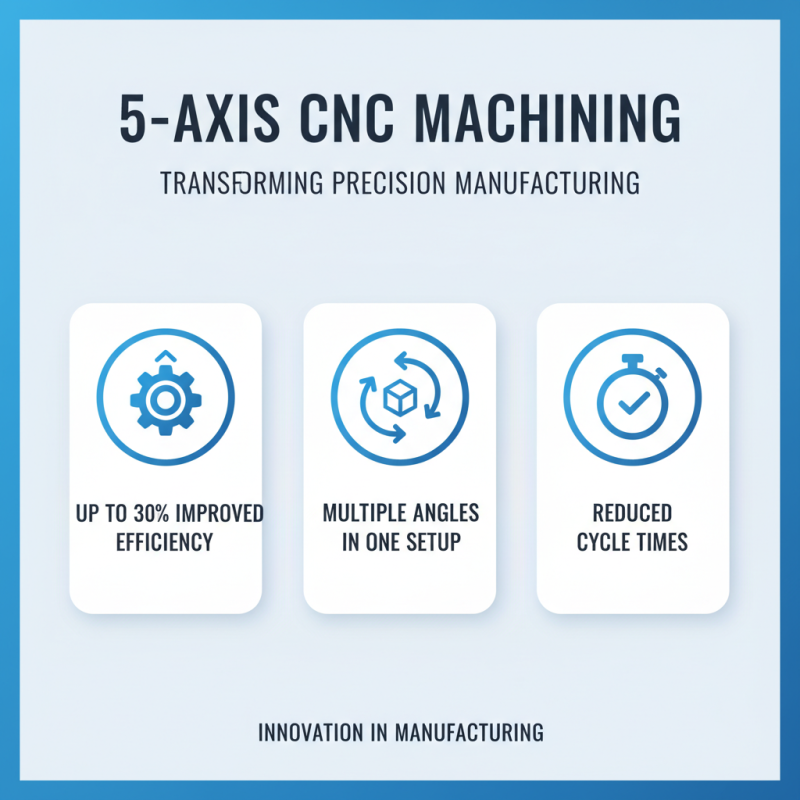
5 Axis CNC machining is transforming the precision manufacturing landscape. According to a recent industry report, this technology can improve production efficiency by up to 30%. It achieves this by allowing multiple angles of approach in one setup. Workpieces can be machined from various sides without needing to re-fixture, significantly reducing cycle times.
Moreover, the precision of 5 Axis CNC is noteworthy. Parts manufactured using this method exhibit tighter tolerances, often within 0.005 mm. This level of accuracy is essential in industries like aerospace and medical device manufacturing. However, adopting this technology requires skilled operators and careful programming. Mistakes can lead to costly errors, which highlights the need for ongoing training and quality control.
While the benefits are clear, implementation can present challenges. Some manufacturers face a steep learning curve when adapting. Complex programming can slow down initial production, which is a concern for many businesses. Embracing 5 Axis CNC is not just about the machines; it's also about investing in human resources. Balancing technology and talent is key to maximizing efficiency.
Comparative Analysis: 5 Axis vs. Traditional CNC Machining
When comparing 5 Axis CNC machining to traditional methods, one immediately notices the differences in efficiency. Traditional CNC typically operates on three axes: X, Y, and Z. While this is effective for many parts, it limits the complexity of designs. Complex contours can require multiple setups, increasing time and potential errors. In contrast, 5 Axis CNC can handle intricate geometries in a single setup. This reduces labor costs and lead times significantly.
Another aspect to consider is precision. Traditional methods often struggle with tight tolerances on multi-faceted parts. The alignment of tools and transfers can introduce errors. However, 5 Axis machines maintain consistent precision. They achieve this through simultaneous movement, allowing for more accurate cuts. Users may find this impressive, yet it’s crucial to note that operating 5 Axis machines demands higher skill levels. Not all operators are trained to exploit their full potential.
While 5 Axis machining offers many benefits, it isn’t without challenges. The initial investment is higher, and programming can be complex. Some shops may find it difficult to adapt. So, while the advantages are clear, the journey to implementing 5 Axis technology requires careful consideration and skill development.
How 5 Axis CNC Enhances Production Efficiency and Speed
5 Axis CNC machining significantly boosts production efficiency and speed in manufacturing. This advanced technology allows for multi-dimensional cutting, reducing the need for multiple setups. According to a recent industry report, companies using 5 Axis CNC can increase their productivity by up to 30%. This improvement is crucial in industries demanding precision, such as aerospace and medical device manufacturing.
Moreover, 5 Axis CNC machines can produce complex geometries in one go. This capability minimizes manual intervention, resulting in fewer errors. Reports show that reducing setup times and enhancing precision can lead to a reduction in production costs by 20%. However, the investment in 5 Axis technology is not without challenges. Companies must address the learning curve associated with programming these machines.
Training personnel can be time-consuming. Misunderstanding machine capabilities may lead to underutilization. Even with the advantages, the transition to 5 Axis requires careful planning. Manufacturers must weigh the upfront costs against long-term gains. The potential for increased profits exists, but only if companies navigate these complexities effectively.
Key Industries Utilizing 5 Axis CNC Technology
The adoption of 5-axis CNC technology is transforming key industries. Aerospace is one of the frontrunners. This sector demands complex parts with high precision. A simple wing bracket can have intricate contours. Traditional machining often falls short in meeting such requirements.
Medical device manufacturing is another critical area. Here, components must fit perfectly for safety and functionality. Even minor errors can lead to significant issues. 5-axis CNC allows for multi-angle machining, reducing setup time and improving accuracy. Precision is non-negotiable in this field, making 5-axis a pivotal tool.
However, the transition isn’t without challenges. Not every facility is equipped for advanced CNC capabilities. Training staff to operate sophisticated machines is essential. Many shops struggle with this aspect. Integrating new technology requires both time and investment, which can be daunting. Balancing efficiency and training is a delicate act.
Key Industries Utilizing 5 Axis CNC Technology
Future Trends in 5 Axis CNC Manufacturing Techniques
The landscape of manufacturing is evolving rapidly, especially with 5 Axis CNC technology. According to a recent report, the global 5 Axis CNC market is projected to grow at a CAGR of 6.7% through 2027. This surge is largely due to increased demand for precision and efficiency across various industries. As businesses strive for higher production standards, 5 Axis CNC machines offer the capability to create complex geometries with minimal setup time.
However, adopting this technology is not without challenges. Many manufacturers face hurdles, such as the need for skilled operators and the cost of initial setup. Training new employees on advanced systems can be time-consuming. Additionally, maintaining precision over time requires regular calibration and consistent workflow processes.
**Tip:** Start small. If you're new to 5 Axis CNC, consider investing in training for just a few key operators. This can help ease the transition and improve overall efficiency.
Trends indicate a shift towards automation in 5 Axis CNC machining. Integrating AI and machine learning can optimize processes further by predicting maintenance needs and improving machining accuracy.
Yet, the potential for errors still exists, particularly in programming and machine setup.
**Tip:** Implement a double-check system during programming. This simple step can mitigate costly mistakes.
Incorporating these evolving techniques is essential, but challenges lurk behind the promise of increased productivity. It's crucial to approach this technology with an open mind and a willingness to adapt.