920-726-4526



Choosing China’s best Power Factor Correction Ckd suppliers requires more than comparing prices. Buyers need to understand what each supplier includes in a CKD package, from capacitor banks and reactors to controllers, enclosures, and wiring documents. The exact scope can vary. Ask for a bill of materials and a clear explanation of what must be assembled locally.
Details matter. A factory floor may look impressive, but product fit depends on your electrical system. Share the operating voltage, frequency, load profile, installation environment, and target power factor before requesting a quotation. Then check whether the supplier can provide test records, component specifications, wiring diagrams, and practical commissioning guidance. These documents help confirm what is being supplied, rather than relying on a polished brochure.
Do not overlook after-sales support. Confirm response times, spare-part availability, warranty terms, and who handles technical questions during assembly. A capable supplier should explain limitations clearly, including how harmonic loads may affect capacitor selection. If answers stay vague, pause. That is useful information.
This guide explores how to compare Chinese CKD suppliers using evidence that can be checked: manufacturing capability, quality controls, customization, documentation, and communication. No single supplier is best for every project. A smaller vendor may offer responsive engineering, while a larger factory may provide broader production capacity; both still need verification. Treat sample testing and reference checks as part of the decision, not as optional extras. The process takes effort. It can also reveal gaps in your own specifications, which are easy to miss when deadlines are tight.
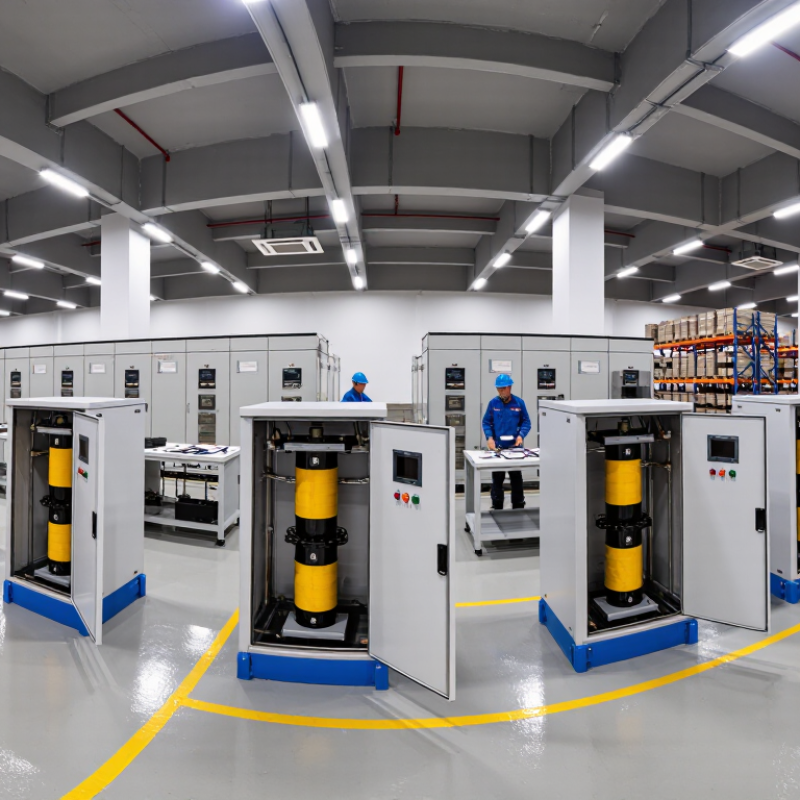
Power Factor Correction CKD Kits: What’s Inside
A power factor correction CKD kit is supplied in separate parts for local assembly. Its core components usually include capacitor units, switching contactors, protective fuses, and a power factor controller. Some configurations add detuned reactors to reduce harmonic-related stress. The exact contents depend on the system design, not just the advertised capacity.
Look for busbars, connection hardware, wiring, and clear assembly drawings. These details matter on the workshop floor. A controller should be compatible with the intended number of switching steps, while capacitors and contactors need suitable electrical ratings. Some kits include an enclosure; others expect the buyer to source one. Check this before ordering. A missing terminal or unclear diagram can delay installation.
When comparing suppliers in China, request a component list, wiring schematic, and test documentation for the quoted configuration. Confirm the stated voltage, frequency, step arrangement, and reactor options match your site conditions. Ask how components are packed and labeled for assembly. Small labels help. A kit may look complete in a quotation but still leave practical questions unanswered. It is worth checking those gaps early, even when the specification seems straightforward.
A CKD (completely knocked-down) power factor correction kit is supplied as parts for local assembly. The exact bill of materials varies by design; confirm the scope, ratings, and required accessories against the project specification.
| Kit component | Typical contents or specification | Purpose | What to verify when sourcing |
|---|---|---|---|
| Power capacitors | Low-voltage power capacitors rated in kvar, for the system voltage and frequency. Supplied as individual units or capacitor assemblies. | Provide reactive power locally to improve power factor and reduce reactive current drawn from the supply. | Check rated voltage, frequency, kvar, capacitance tolerance, permissible temperature, discharge provisions, and applicable product standards. |
| Capacitor-duty switching devices | Capacitor-duty contactors or other specified switching devices, often one device for each automatically controlled stage. | Connect and disconnect capacitor stages while limiting the effects of capacitor inrush current. | Confirm switching-device ratings, switching frequency, stage arrangement, and suitability for capacitor switching—not just ordinary motor duty. |
| Protection devices | Fuses, circuit breakers, or other overcurrent protection selected for the bank design. | Protect circuits and equipment against specified fault and overcurrent conditions. | Verify voltage, current, breaking capacity, coordination, and whether devices are included for each stage or supplied separately. |
| Power factor controller | Automatic controller with a specified number of switching outputs and configurable target power factor. | Measures the installation’s power factor and switches capacitor stages as reactive-power demand changes. | Check output count, measurement inputs, operating settings, alarms, control supply, and compatibility with the planned stage sizes. |
| Current transformer (CT) | A CT with a specified ratio and accuracy class; it may be included in the kit or supplied by the installer. | Provides the current measurement used by the power factor controller. | Confirm the ratio, installation location, polarity, secondary rating, and compatibility with the controller and electrical system. |
| Detuned reactors (optional) | Series reactors selected with capacitor stages to form a detuned bank where the design requires harmonic mitigation. | Help reduce the risk of resonance between the capacitor bank and the electrical network in harmonic-producing installations. | Require a harmonic assessment. Confirm reactor tuning, current and thermal ratings, capacitor voltage selection, and system compatibility; reactors are not automatically included in every kit. |
| Discharge resistors or devices | Discharge components fitted to capacitors or assemblies, as specified by the design. | Reduce retained voltage after disconnection, subject to the equipment design and applicable requirements. | Confirm discharge performance and required waiting time before access or re-energization from the equipment documentation. |
| Busbars and connection hardware | Busbars, terminals, links, mounting hardware, and specified electrical connectors. | Interconnect capacitor stages and connect the assembly to the panel’s power circuit. | Check current capacity, material, clearances, connection sizes, and whether inter-stage wiring and hardware are part of the CKD scope. |
| Enclosure and mounting parts | Cabinet, backplate, mounting rails, or assembly drawings; enclosure supply depends on the CKD package. | Houses and supports the equipment while providing the specified protection against environmental and access conditions. | Verify dimensions, ventilation, ingress-protection rating, installation environment, clearances, and whether the enclosure is included or locally sourced. |
| Wiring, labels, and documentation | Control wiring, terminal markers, circuit labels, wiring diagrams, assembly instructions, and test information as agreed. | Supports correct assembly, inspection, commissioning, and future maintenance. | Agree on document language, drawing format, wiring scope, test records, and the division of responsibility between supplier and local assembler. |