

China has become a major source of equipment for metal roofing production. Its manufacturers offer varied prices, configurations, and delivery options. A Roof Sheet Roll Forming Machine can shape steel coils into consistent roofing panels. However, selecting the best supplier requires more than comparing online prices. “Best” depends on material thickness, panel profile, production speed, factory space, and after-sales support.
This guide examines practical factors used by experienced buyers and machine operators. It considers forming rollers, cutting accuracy, control systems, frame strength, and coil-feeding stability. These details affect daily output and maintenance costs. Factory videos can help, but they cannot replace technical verification. A trustworthy supplier should provide drawings, machine specifications, test records, and clear warranty terms. Ask how the machine performs with the intended steel grade. Request sample panels with visible edges, clean cuts, and accurate dimensions.
Small details matter. A loose guide rail can damage a long sheet. Poor communication can delay installation. A polished website proves little by itself. That weakness matters. Supplier evaluation also requires checking export experience, spare-parts availability, installation guidance, and response time. References from similar roofing projects provide stronger evidence than general promises. Still, no supplier is perfect, and every quotation may contain unclear assumptions. Buyers should review electrical standards, packaging, training, and delivery responsibilities in writing. This article offers a balanced framework for identifying a dependable Chinese manufacturer without treating the lowest price as the safest choice.
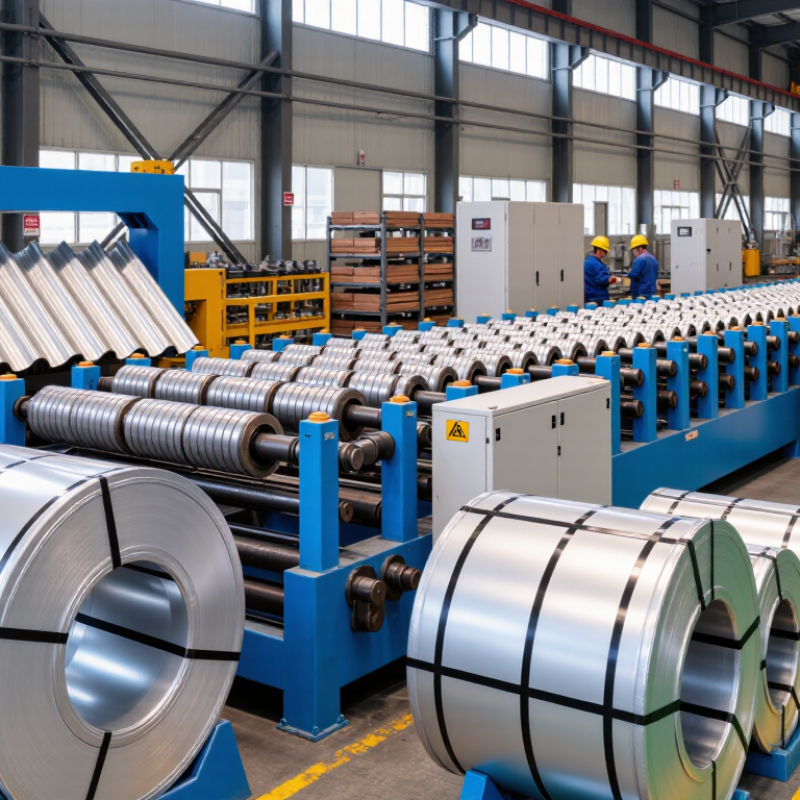
A roof sheet roll forming machine converts coiled metal into continuous roofing panels. The process is steady, mechanical, and highly repeatable. A typical line includes a decoiler, guiding system, forming rollers, hydraulic cutter, and output table. The decoiler releases the coil, while matched rollers gradually shape the sheet. The cutter then produces panels at programmed lengths.
In practical production, operators commonly use galvanized steel, pre-painted steel, or aluminum coils. Material thickness, profile design, and coil width must match the machine specification. Even a small alignment error can create uneven ribs or damaged edges. That problem is easy to miss during a short trial. Longer testing is more reliable.
The control system usually manages speed, length, and emergency stopping functions. Regular checks should cover roller wear, electrical connections, lubrication, and cutting accuracy.
When comparing a China roof sheet roll forming machine supplier, buyers should request sample profiles, machine drawings, test videos, and clear technical parameters. A dependable supplier should explain installation, operator training, spare parts, and service response. Production speed alone is not enough. A fast line with poor alignment may create costly waste. The machine also cannot fix low-quality coils or incorrect settings. This point is often underestimated. Careful inspection before shipment and a documented trial run can prevent avoidable trouble.
China Best Roof Sheet Roll Forming Machine Supplier?
How to Evaluate a Roof Sheet Roll Forming Machine Supplier
Choosing a roof sheet roll forming machine supplier requires more than comparing prices. Visit the workshop if possible. Watch how technicians align rollers, adjust guides, and test finished sheets. A reliable supplier should explain the forming process in clear, practical language. Ask about steel grades, sheet thickness, production speed, and dimensional tolerances. These details affect roof appearance and installation time.
Request a complete machine specification before signing an agreement. It should cover the frame, rollers, drive system, cutting unit, electrical controls, and safety protection. Check whether the supplier provides drawings, operating manuals, spare parts, and installation guidance. Ask for sample sheets made from your intended material. Measure their width, rib height, length accuracy, and edge condition. Small errors can become expensive on a large roof.
Past experience also matters. Speak with several real customers, not only selected references. Ask how quickly the supplier solved faults after delivery. Response time is often more important than impressive brochures. A factory may claim high output, yet the actual speed can depend on coil quality and operator skill. Suppliers should admit these limits. That honesty builds trust.
Do not ignore after-sales support. Confirm training methods, remote assistance, warranty terms, and replacement-part availability. Review payment and delivery documents carefully. I have seen buyers focus heavily on machine price and overlook commissioning costs. That decision can create avoidable delays. A careful evaluation takes longer, but it reveals whether the supplier can support steady production.
A reliable roof sheet roll forming machine should match production data, not only a sales brochure. Fortune Business Insights valued the global roofing market at approximately USD 115.49 billion in 2023. This growth increases demand for stable, repeatable steel-sheet processing.
A practical machine usually handles 0.30–0.80 mm galvanized or pre-painted steel, with working widths around 1,000–1,250 mm. Forming speed commonly reaches 8–15 meters per minute. Faster is not always better.
Key specifications deserve close inspection. A 5.5 kW main motor suits many medium-duty lines, while hydraulic cutting often uses a separate 3–4 kW power unit. The roll stations should use hardened steel rollers and accurately aligned shafts. Shaft diameters near 70–80 mm can improve rigidity, but the final result depends on bearing quality and frame design. Cutting length accuracy should be approximately ±1 mm under controlled conditions. Real factories are less perfect.
The control system should include a PLC, touchscreen interface, encoder feedback, emergency stops, and overload protection. Electrical components should match the installation region and applicable safety requirements.
World Steel Association reported 1.89 billion tonnes of crude steel production in 2023, showing the scale of steel processing behind construction demand. Yet buyers should test actual samples.
A machine may claim 15 meters per minute, but thin painted sheets can scratch, buckle, or drift. Ask for coil trials, noise readings, power consumption, and a written tolerance record before purchase.
A reliable supplier should show quality through process, not promises. Inspect the steel frame, forming rollers, welding points, and electrical cabinet before ordering. Experienced manufacturers use calibrated measuring tools and documented inspections. Ask for material certificates, roller hardness records, and trial-run videos. Small alignment errors can create visible waves in finished roofing sheets.
Certifications also deserve careful checking. ISO 9001 can indicate a controlled quality system, but it does not guarantee every machine performs well. Request valid certificates, test reports, and clear certification scopes. CE documentation may be necessary for certain markets and machine configurations. Verify the issuing body and certificate dates. Do not accept scanned paperwork without questions. That matters.
Customization often separates a practical machine from an expensive compromise. Discuss sheet width, thickness, profile depth, production speed, and coil weight in detail. Options may include automatic length control, punching units, multiple decoilers, and customized cutting systems. A professional supplier should confirm these choices through drawings and sample production.
Still, no design is perfect on paper. Trial runs may reveal noise, feeding variation, or slower changeover times. Honest suppliers record these problems and correct them before shipment. Ask about installation guidance, spare parts, operator training, and response times. Those details support dependable production long after delivery.
China Best Roof Sheet Roll Forming Machine Supplier?
Installation quality can decide whether a roof sheet line performs well or creates monthly losses. The World Steel Association reported 1.882 billion tonnes of crude steel production in 2024, showing the scale of this competitive market. Buyers should compare commissioning procedures, not only machine prices. Ask whether technicians check foundation level, roller alignment, electrical grounding, and trial-production settings on site. Request a written installation schedule and operator training record. Small details matter.
After-sales support needs measurable evidence. Deloitte’s 2024 Smart Manufacturing and Operations Survey found that 86% of manufacturers viewed smart manufacturing as important for competitiveness within three years. A responsive supplier should provide remote diagnostics, spare-parts lists, software backups, and documented response times. Compare warranty coverage for rollers, hydraulic units, control systems, and wear components separately. Ask for service cases from similar sheet thicknesses and profiles. Vague promises are not enough.
I would also inspect the manual before signing. Is it clear enough for a tired technician at 7 a.m.? Maybe not. Translation quality and troubleshooting diagrams are often overlooked. Require video acceptance tests using your material, including speed, length tolerance, cutting accuracy, and emergency-stop checks. A low purchase price can become expensive when one sensor stops production and no replacement is available. Supplier reliability is demonstrated through records, training, and accessible support, not polished quotations.
Recommended procurement weighting for comparing installation, after-sales service, and supplier capability
Installation and commissioning have a high impact on production stability, while after-sales response, spare-parts availability, warranty clarity, and technical documentation reduce operational risk. The percentages represent a practical buyer evaluation framework rather than a ranking of any specific company or brand.
5107 County Road C
Manitowoc, WI 54220
920-726-4526