


Stecker Machine Blog

What Is the Best CHLF Pump Manufacturer in China?

Choosing the best Chlf Pump manufacturer in China requires more than comparing prices or attractive product photos. A CHLF pump is commonly used for water transfer and pressure boosting, where stable flow and dependable operation matter. Yet the right model depends on actual conditions. Consider the required flow rate, head, liquid temperature, installation space, and operating hours. Small details count. A compact pump beside a boiler room may face different demands from one serving a commercial water system.

This guide explains how to assess manufacturers through product specifications, material options, quality controls, and after-sales support. Check whether the manufacturer provides clear performance curves, motor details, seal information, and relevant test records. Ask how the pump is tested and what documentation accompanies an order. A polished catalog is not proof. Look for consistent, verifiable answers, and confirm that stated capacities match your duty point. Experience also matters: responsive technical staff can help identify model limitations before purchase. Still, no single supplier is best for every project, and a low quotation may leave important service or configuration details unclear. Use the comparisons that follow as a practical starting point, then verify claims directly with shortlisted manufacturers. Some questions may remain. That is a reason to investigate further, not to assume.
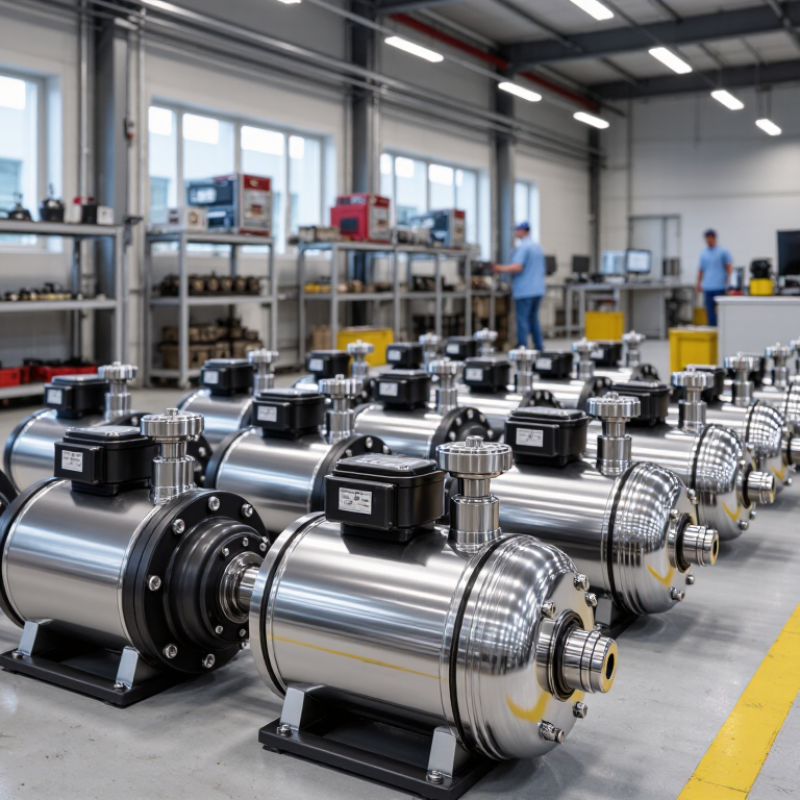
What Is the Best CHLF Pump Manufacturer in China?

What Is a CHLF Pump and How Does It Work?

A CHLF pump is generally a horizontal, non-self-priming multistage centrifugal pump designed for clean water and similar low-viscosity liquids. Exact construction and operating limits vary by model, so check the pump’s data sheet before selecting one. Inside, a motor turns a shaft carrying several impellers. Each impeller accelerates the liquid, while its surrounding diffuser converts much of that velocity into pressure. The stages work in sequence, building pressure as water moves through the pump.

In practical use, the pump needs a flooded inlet or proper priming; it should not run dry. A small air leak on the suction side can interrupt flow, even when the motor sounds normal. Check the flow rate, required head, liquid temperature, and pipe size against the operating curve. Installation details matter. A pump that looks correctly sized on paper may perform poorly if the suction line is restrictive or the system demand changes. I would not choose by model label alone.

Tip: Before startup, confirm the rotation direction, open the inlet valve, and vent trapped air according to the manual. Listen for unusual rattling and watch for unstable pressure. A little vibration can be hard to judge, so measure it if performance concerns persist.

Key Criteria for Evaluating CHLF Pump Manufacturers in China

Choosing a CHLF pump manufacturer in China starts with matching the pump to the actual duty point, not the catalogue headline. Share the required flow, total head, liquid temperature, viscosity, and installation limits. Ask for a performance curve showing the proposed model near its suitable operating range. Confirm wetted materials, seal type, motor rating, voltage, and frequency in writing. Small details matter. A pump that fits a general description may still be unsuitable for hot liquid or a restricted suction line.

Then examine how the manufacturer verifies its claims. Request inspection and test records for the quoted configuration, including pressure or leakage checks and performance results where applicable. Ask how serial numbers, component changes, and spare parts are tracked. Clear drawings, packing details, and realistic lead times reveal more than polished sales language. Ask what the quotation excludes. Get it documented. A responsive technical team should explain trade-offs without promising impossible output. Compare warranty terms and service arrangements, not just price. A factory visit or independent inspection can help, but neither replaces a precise specification. No checklist removes all uncertainty; actual operating conditions may differ from a data sheet’s assumptions. Buyers should also provide complete requirements, since unclear inputs can lead to the wrong pump selection.

What Is the Best CHLF Pump Manufacturer in China?

Key Criteria for Evaluating CHLF Pump Manufacturers in China

Suggested buyer-defined weighting, not market-survey results: prioritize hydraulic performance, materials and construction, and quality assurance. Check each supplier’s model-specific datasheets, test records, certifications, warranty terms, and service capability before making a decision.

Manufacturing Quality, Certifications, and Technical Support

A reliable CHLF pump manufacturer should be judged by more than its catalog or quoted price. Manufacturing quality starts with repeatable processes. Ask how the manufacturer checks impeller dimensions, shaft alignment, and pressure performance. A test record should identify the pump model and measured results, not just say “passed.” Details matter.

Certifications can help, but verify what they actually cover. Check the certificate’s issuing body, validity period, and whether its scope matches the factory and product you are buying. A certificate alone does not prove that every unit performs consistently. Request material specifications and inspection records for the parts that face heat, pressure, or corrosive fluids. If documents are vague, ask for clarification before placing an order. That is a practical test of transparency.

Technical support becomes important after installation, when unusual noise, vibration, or reduced flow appears. A capable team should ask for operating conditions, fluid properties, and system pressure before suggesting a fix. It should also provide usable manuals, clear maintenance intervals, and access to replacement-part information. Response time matters. So does whether advice is specific to your setup. I would not assume every manufacturer handles support equally well; even a good supplier can leave gaps. Discuss escalation procedures and spare-part availability in writing, then judge the answers as carefully as the pump itself.

How to Compare Suppliers and Verify Their Capabilities

When comparing CHLF pump manufacturers, request a performance curve for your exact flow and head—not a catalogue’s best-case rating. Check the duty point, motor power, efficiency, NPSHr, operating temperature, and wetted-part materials. Ask for a recent test report and confirm how the factory measures performance. ISO 9906 provides acceptance criteria for rotodynamic pump tests; ask which grade and tolerances the supplier can document.

Evidence matters. The U.S. Department of Energy’s Improving Pumping System Performance: A Sourcebook for Industry reports that pumping systems can use 25–50% of electricity in some industrial facilities. That range makes efficiency worth checking, but it is not a guarantee of savings for your site. Compare quoted efficiency at your actual operating point, and request material certificates, inspection records, and spare-parts lead times. A polished datasheet is useful; it is not proof of repeatable production quality.

Tips: Ask for a witnessed test using a calibrated flow meter and pressure gauges. Verify the serial-numbered report matches the offered model. Check references for similar fluid, duty cycle, and installation conditions. Small details count. A supplier may answer well on paper, yet leave test procedures vague; note that gap and ask again.

Choosing a CHLF Pump Manufacturer for Your Application

Choosing a CHLF pump manufacturer starts with the duty point, not the catalogue headline. Record the required flow, total head, liquid temperature, and operating hours. Then compare these values with the pump’s certified performance curve. A unit that looks suitable at one point may lose efficiency when demand changes. Fit matters.

Check the wetted materials, seal arrangement, motor rating, and suction conditions against the actual liquid and installation. The U.S. Department of Energy’s Improving Pumping System Performance: A Sourcebook for Industry reports that pumping systems use nearly 20% of global electrical energy demand. That makes efficiency more than a brochure figure. Ask for test records, tolerances, and the method used to establish the stated efficiency. Also confirm spare-part availability and service response times. Small details count.

A reliable manufacturer should explain where its CHLF pump fits—and where it does not. Request a written selection for your operating point, plus clear limits for temperature and pressure. Compare the proposed curve with your system curve; do not assume a larger motor fixes poor sizing. I would still verify the test conditions, since published figures can be difficult to compare. That step is easy to overlook. If the pump will run continuously, estimate energy costs over its service life, not just the purchase price.

What Is the Best CHLF Pump Manufacturer in China? — Choosing a CHLF Pump Manufacturer for Your Application

There is no single best manufacturer for every duty. Compare suppliers against the actual operating point, liquid, installation conditions, and verifiable documentation. CHLF model designations and available specifications can vary between product ranges.

Evaluation Dimension What to Verify Application-Specific Selection Guidance Evidence to Request
Pump design Confirm that the quoted pump is a horizontal, multistage centrifugal design and check its installation orientation and connection arrangement. CHLF pumps are commonly used for clean-water transfer and pressure boosting. Confirm suitability for the actual liquid and duty rather than relying on the model name alone. General arrangement drawing, sectional drawing, and written confirmation of the quoted configuration.
Required flow and head Match the required flow rate and total dynamic head to the pump curve. Include elevation difference, pipe friction, fittings, and required outlet pressure in the system calculation. Choose a model whose curve covers the required duty point. Check that the operating point is within the stated allowable range and, where practical, near the best efficiency point. Model-specific performance curve showing flow, head, efficiency, power, and the proposed operating point.
Liquid and wetted materials Identify the liquid composition, concentration, solids, viscosity, and any cleaning chemicals. Verify the material of every wetted part, not just the pump casing. Stainless-steel grades such as 304 and 316 have different corrosion resistance; neither is universally suitable for every chemical or chloride concentration. Confirm compatibility for the actual service. Bill of materials covering casing, impellers, shaft, seals, and elastomers, plus material certificates when required.
Temperature and pressure limits Check the pump’s specified liquid-temperature range, maximum working pressure, and the pressure limits of the mechanical seal and connections. Use the limits for the exact model and configuration. Account for inlet pressure and system pressure; do not assume all pumps in a range share identical limits. Model datasheet stating temperature and pressure limits, together with the proposed operating conditions.
Suction conditions and cavitation Compare available net positive suction head (NPSHa) with the pump’s required NPSH (NPSHr) at the intended flow. NPSHa should exceed NPSHr by an appropriate engineering margin. Consider liquid temperature, site altitude, suction-pipe losses, and the liquid level at the pump inlet. NPSHr curve and the supplier’s review of the project’s suction conditions.
Motor and electrical supply Verify rated power, voltage, frequency, phase, starting method, insulation class, enclosure protection, and motor speed. Specify the site supply and environment. Check that motor protection and the selected enclosure rating suit the installation location. Motor nameplate data, motor datasheet, wiring diagram, and applicable test records. IEC 60034 is a relevant motor standards series; IEC 60529 defines IP enclosure ratings.
Efficiency and energy use Compare pump efficiency and input power at the required operating point, not only at the pump’s maximum or nominal rating. Estimate energy use using the expected operating hours and duty profile. A correctly sized pump can reduce avoidable throttling and operation far from its preferred range. Performance curve with efficiency and power data at the specified flow and head.
Performance testing Ask how flow, head, power, and acceptance tolerances are measured and reported. Agree on the applicable test procedure and acceptance grade before ordering. ISO 9906 is an international standard for rotodynamic pump hydraulic performance acceptance tests. Test procedure, inspection and test plan, and a pump test report traceable to the supplied unit.
Mechanical seal and serviceability Confirm seal type and materials, bearing arrangement, expected maintenance access, and availability of replacement parts. Seal selection depends on the liquid, temperature, pressure, and operating conditions. Confirm the maintenance procedure is practical for the installation. Seal specification, maintenance instructions, parts list, and parts-availability terms.
Quality and supplier verification Assess manufacturing and inspection capability, document control, traceability, and the supplier’s experience with comparable duties. Evaluate the actual production site and the exact product configuration being quoted. A certificate or brochure alone does not establish performance for a specific application. Relevant quality-system certificates, inspection records, references for comparable applications, and written technical responses.
Commercial and after-sales support Compare delivery scope, commissioning support, warranty conditions, response arrangements, and the cost and lead time of wear parts. Clarify what is included in the quotation and what operating conditions are required for warranty coverage. Itemized quotation, warranty terms, commissioning scope, service contact details, and spare-parts list.