Stecker Machine Blog

7 Best Die Casting Mold Manufacturers for Global Buyers

Choosing a supplier for a Die Casting Mold is more than comparing prices or polished factory photos. The mold must withstand repeated heat, pressure, and production cycles while holding the dimensions your part requires. Small details matter: cooling channels, vent locations, steel selection, and the finish of a machined cavity can affect both consistency and tool life.

Casting researcher John Campbell has emphasized, “The quality of a casting is determined by the quality of the liquid metal.” His point also reminds buyers that a mold cannot solve every process problem. Material control, machine settings, and supplier experience matter too. There is no single manufacturer that suits every project.

This guide introduces seven Die Casting Mold manufacturers for global buyers. It considers practical factors such as engineering support, production capabilities, quality controls, customization, and communication across time zones. A supplier’s stated capabilities are useful, but buyers should verify them against drawings, sample parts, references, and documented inspection practices. That takes effort. It is easy to overlook.

The right choice depends on your alloy, annual volume, part geometry, budget, and delivery needs. Some buyers need a fast prototype; others need a durable tool for long production runs. The comparison ahead can help narrow the field, not replace technical review. A careful question today may prevent an expensive mold change later.
7 Best Die Casting Mold Manufacturers for Global Buyers

Understanding Die Casting Molds and Their Role in Manufacturing

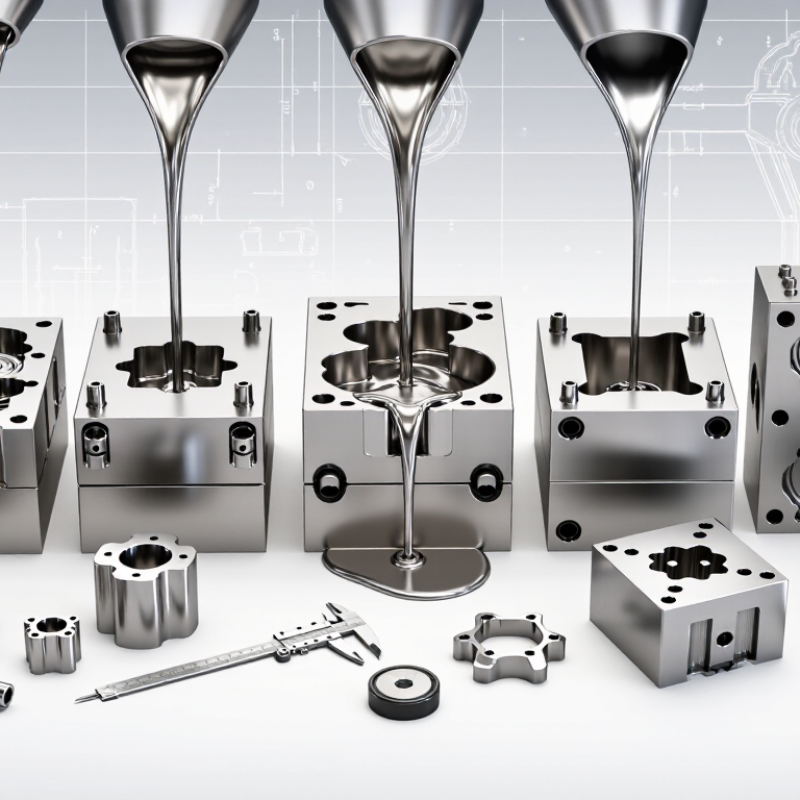
A die casting mold is a precision tool that shapes molten metal under pressure. Its cavity defines the part, while gates guide metal flow and vents release trapped air. Cooling channels control heat; ejector pins help release the casting. Small details matter. A poorly balanced gate can leave porosity or uneven surfaces, even when the machine settings look correct. Mold design also affects cycle time, tool life, and the amount of finishing work required.

Grand View Research estimated the global die casting market at about US$80.9 billion in 2023 and projected 6.2% annual growth from 2024 to 2030. That figure signals broad industrial demand, not guaranteed mold quality. Buyers should examine a supplier’s material selection, cooling layout, dimensional checks, and maintenance plan. Ask how the tool will handle repeated heating and cooling, and how wear will be detected. A mold is not magic. Even a sound design can disappoint if its vents clog or its temperature control is inconsistent. Market forecasts also have limits; they cannot tell a buyer how a specific mold will perform on a real production line.

Key Criteria for Evaluating Die Casting Mold Manufacturers

Choosing a die casting mold manufacturer starts with evidence, not a polished sales presentation. Ask how the team translates part drawings into gate, runner, vent, and cooling layouts. A useful design review should flag thin walls, trapped air, and uneven wall sections before steel is cut. Request sample mold-flow findings and a clear explanation of proposed changes. Details matter.

Check tooling capability against your part’s material, dimensions, and expected production volume. Ask about mold steel grades, heat treatment records, machining tolerances, and inspection methods. During a trial, look for flash near the parting line, uneven filling, and difficult ejection. A few acceptable samples do not prove stable production. Ask for measurements across repeated shots, not just one carefully selected piece.

Delivery and support deserve equal scrutiny. Confirm who owns design updates, how repairs are handled, and whether spare inserts can be supplied. Ask for realistic lead times that include design approval, machining, assembly, and testing. Clear milestone reports help, but they cannot replace direct technical discussion. One overlooked cooling channel can affect cycle time for years. Still, no checklist removes every risk; compare documented results with your own part requirements, and question assumptions that seem too convenient.

Seven Die Casting Mold Manufacturers Serving Global Buyers

Global buyers encounter seven common die casting mold supplier profiles: integrated design-and-tooling shops, high-pressure aluminum specialists, zinc-alloy toolmakers, large-part mold producers, precision-insert makers, prototype-to-production suppliers, and export-focused service teams. These are useful distinctions, not a universal ranking. A buyer should match a supplier’s actual process experience to the part’s alloy, geometry, and expected production volume.

Look beyond polished presentations. Request cavity-layout drawings, cooling-channel plans, mold-flow findings, and examples of comparable parts. A capable manufacturer can explain how it handles draft angles, thin ribs, ejector marks, and areas likely to trap heat. Ask how sample castings are measured and how design changes are documented. Small details matter. A clear revision record can prevent a costly mismatch between approved samples and production tooling.

Global projects also depend on communication and after-sale support. Confirm who owns the design files, how trial feedback reaches the toolroom, and whether spare inserts can be supplied later. Response times and shipping arrangements deserve attention, especially when a mold needs repair across time zones. Even experienced teams sometimes focus too heavily on quoted price. A lower initial offer may not include enough trials, inspection, or maintenance planning, so compare the full scope before choosing a partner.

Comparing Supplier Capabilities, Quality, and Lead Times

When comparing seven die casting mold manufacturers, look beyond the quoted tool price. A capable supplier should explain how part geometry, alloy choice, and production volume shape the mold design. Ask who reviews draft angles, cooling channels, and ejection points before machining begins.

Small details matter. A clear design review can prevent costly changes after steel is cut.

Quality claims need evidence. Request sample inspection records, material certificates, and results from a trial shot. Check how each supplier measures critical features, such as a thin wall or a threaded boss. Photos can help, but they do not replace documented measurements.

Lead-time estimates deserve equal scrutiny. Ask for a schedule that separates design approval, machining, sampling, and corrections. A supplier promising a very short delivery may be counting only machining days.

No scorecard is perfect. I would leave room for judgment, since a neat spreadsheet can still hide a rough handoff. Compare response times, revision procedures, and who owns each action when a trial part misses specification. A few direct questions often reveal more than a polished capability brochure.

Global Sourcing Factors for Selecting a Mold Manufacturer

Global mold sourcing is a technical decision, not just a price comparison. Ask how the supplier controls mold-steel certificates, cavity balance, cooling channels, and dimensional checks. Request sample parts and inspection records from a project with similar alloy, part size, and production volume. A polished presentation is useful, but it cannot prove a mold will hold tolerances after repeated thermal cycles.

Logistics matter too. The World Bank’s 2023 Logistics Performance Index rates countries on a 1-to-5 scale; Singapore scored 4.3. This is a useful signal, not a guarantee for your exact shipping route. UNCTAD’s Review of Maritime Transport 2024 reported that maritime trade grew 2.4% in 2023, while containerized trade grew only 0.3%. Ask for realistic shipping estimates, packing details, and a plan for spare inserts or urgent repairs. Small details matter.

During supplier review, compare engineering response times, trial schedules, maintenance support, and the clarity of change-control records. Request a live walkthrough of machining and inspection processes, then verify key claims with documented evidence. A remote audit has limits. It may miss a crowded toolroom or a bottleneck between machining and sampling. Still, a lower quotation can be reasonable when scope and acceptance criteria are clearly defined. The uncomfortable question is whether the supplier can explain what happens when the first trial fails.

7 Best Die Casting Mold Manufacturers for Global Buyers - Global Sourcing Factors for Selecting a Mold Manufacturer

Brand-neutral evaluation framework: compare suppliers using documented capabilities, verifiable quality records, and project-specific evidence.

No. Global Sourcing Factor What to Verify Useful Evidence to Request Buyer Consideration
1 Process and alloy experience Confirm experience with the required process—high-pressure, low-pressure, or gravity die casting—and the specified casting alloy. Relevant project examples, process capability details, and a proposed tooling approach for the part and alloy. Mold design and operating conditions differ by process and alloy; experience in one process does not automatically demonstrate capability in another.
2 Tool steel and heat treatment Check whether the proposed mold material and heat-treatment plan are appropriate for the alloy, thermal loads, and expected production conditions. Material certificates, steel grade, heat-treatment records, and the supplier’s material traceability process. H13 is a commonly used hot-work tool steel, but the suitable grade and treatment should be agreed for the specific tool and application.
3 Design engineering and simulation Assess how the supplier reviews gating, runners, vents, cooling, ejection, shrinkage, and part manufacturability before cutting steel. Design-for-manufacturing review, mold layout, simulation assumptions, and a documented plan for addressing identified risks. Simulation can help evaluate filling and solidification behavior, but it does not replace mold trials and inspection of actual castings.
4 Dimensional quality and inspection Confirm that critical dimensions, datum strategy, measurement methods, and acceptance criteria are defined before production. Inspection plan, measuring-equipment calibration records, sample dimensional reports, and agreed drawing revision control. ISO 8062-3 provides a system of dimensional tolerances and machining allowances for castings; tolerances should be specified for the actual part and drawing.
5 Quality management and traceability Review the quality system, nonconformance handling, document control, and traceability of materials and tooling changes. Current certificates where applicable, audit information, corrective-action examples, and quality records for comparable work. ISO 9001 specifies quality-management-system requirements. IATF 16949 is an automotive quality-management standard and may be required by automotive customers or supply-chain contracts.
6 Trials, validation, and approval support Define trial stages, sample quantities, inspection scope, defect resolution, and approval responsibilities in the project plan. Trial schedule, sample inspection results, corrective-action log, and—when required by the customer—PPAP documentation. PPAP is used in automotive supply chains to demonstrate that production processes can meet customer requirements; its use depends on customer and contract requirements.
7 Lifecycle support and international delivery Clarify spare inserts, maintenance guidance, repair response, packaging, shipping terms, export documents, and ownership of mold data. Written service terms, maintenance schedule, spare-parts list, delivery plan, and agreed procedures for tool transfer or repair. Mold life varies with alloy, part geometry, process settings, maintenance, and operating conditions; compare documented assumptions rather than relying on an unqualified life estimate.

Note: These are general sourcing criteria, not a ranked list of named manufacturers. Confirm applicable standards, tolerances, certifications, and approval requirements against the project specification and customer contract.