Best Explosion Proof Emergency Light for 2026?
Choosing the best Explosion Proof Emergency Light for 2026 is not simply a question of brightness. In hazardous work areas, a dependable unit must illuminate escape routes, and its enclosure and certification must suit the specific location. A machine shop, fuel-handling area, and dusty processing room can have very different needs. Details matter: mounting height, battery runtime, beam spread, temperature range, ingress protection, and access for inspections. Small omissions may become obvious during a power failure. Quickly.
Safety researcher James Reason wrote, “We cannot change the human condition, but we can change the conditions under which humans work.” This is a broad safety principle, not a product endorsement. It offers a useful lens for evaluating emergency lighting: dependable equipment and thoughtful placement can help make evacuation conditions clearer. This guide will compare practical features, explain which specifications deserve close attention, and consider how product claims can be checked. There is no universal winner. A light suited to one site may be a poor fit elsewhere. One point deserves extra scrutiny: “explosion proof” on a product page does not, by itself, establish suitability for every hazardous location. Buyers should verify the unit’s documented ratings, backup performance, installation requirements, and maintenance guidance against their site’s needs. Evidence matters more than a polished label.
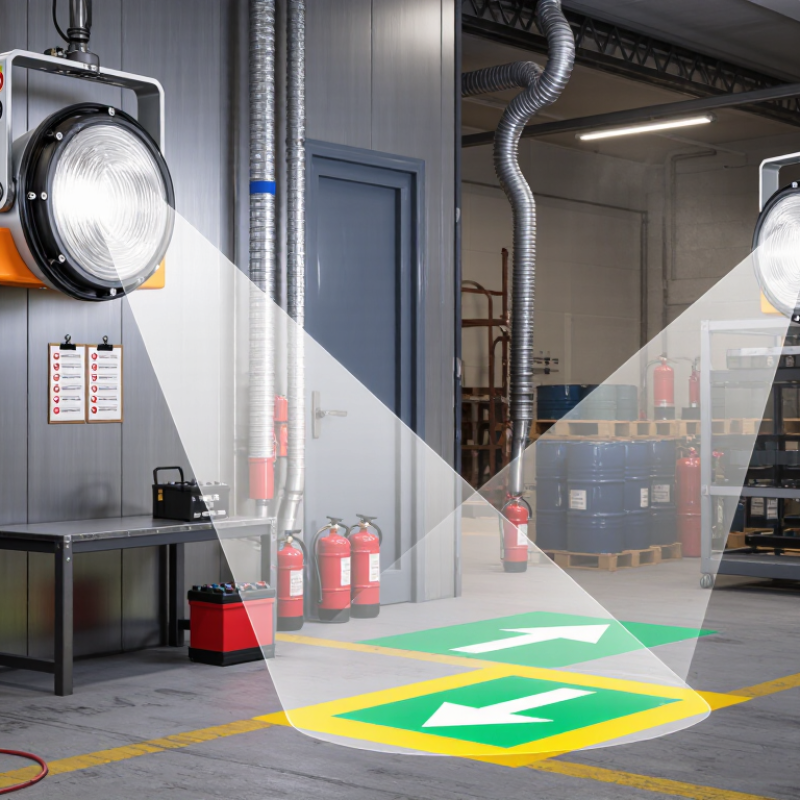
What Defines an Explosion-Proof Emergency Light?
Best Explosion Proof Emergency Light for 2026?
What Defines an Explosion-Proof Emergency Light?
An explosion-proof emergency light is designed to contain an internal ignition and prevent it from igniting gases or dust outside its enclosure. “Explosion-proof” does not mean indestructible. The fixture must suit the specific hazardous-area classification, including the material group and temperature rating. UL 844 covers luminaires for hazardous (classified) locations; OSHA 29 CFR 1910.307 also requires equipment appropriate to the classified area. Check the nameplate and certification, not just a product description.
Emergency lighting must also provide usable illumination during a power failure. NFPA 101, Life Safety Code, specifies 90 minutes of emergency operation and sets illumination criteria for egress paths. Those figures make battery performance and tested output important—not merely a bright-looking lens. In a plant corridor, consider whether workers can see floor markings and exit signs through dust, glare, or smoke. A small detail, easily missed.
Tips: Match the fixture’s hazardous-area rating to the site classification, then verify its emergency runtime and light output against applicable standards. Test batteries and inspect seals regularly. Field conditions can be messier than the specification suggests, so document real test results.
How Hazardous-Area Ratings and Certifications Are Classified
Best Explosion Proof Emergency Light for 2026?
How Hazardous-Area Ratings and Certifications Are Classified
“Explosion-proof” is not one universal rating. It describes equipment tested for specific hazardous conditions. In the Class/Division system, locations are grouped by the type of hazard and how often it may be present. Zone systems use different categories for gases, vapors, and combustible dust. A gas-rated light is not automatically suitable for a dust hazard. Temperature class matters, too: the light’s hottest surface must stay below the ignition temperature of the surrounding material. Small details matter.
Certification shows that a specific product configuration was assessed against defined requirements. Depending on the region, relevant schemes may include UL, CSA, IECEx, or ATEX. Check the certificate and equipment marking, not just the product description. Confirm the hazardous-area group, zone or division, temperature class, ambient-temperature range, and approved mounting options. An IP rating indicates resistance to dust or water ingress; it does not, by itself, prove explosion protection. A tidy label can still conceal a mismatch, so verify the exact installation with a qualified safety professional and the applicable local requirements.
Tips: Photograph the equipment label before ordering replacements. Compare it with the site classification and certificate. Check battery and charging details, too; emergency performance can vary with temperature and maintenance. Don’t guess.
Which Performance Features Matter for Emergency Lighting in 2026?
In 2026, the best explosion-proof emergency light is not simply the brightest one. It must match the site’s hazardous-area classification and keep escape routes visible when normal power fails. NFPA’s 2018 report, Fires in Industrial or Manufacturing Properties, estimated 37,910 such fires annually in the United States from 2011 to 2015. That scale makes dependable backup lighting a practical safety consideration, not a decorative extra.
Check the certification, battery duration, and light output together. The housing must suit the actual gas or dust group, temperature class, and exposure conditions. NFPA 101 provides commonly used emergency-illumination criteria, including minimum light levels along egress paths; confirm the edition adopted for your project. Look for clear test indicators, a self-test function, and accessible battery replacement. Small details matter. A bright lamp is not automatically a safe one.
Ask for performance data at the end of the rated backup period, not only fresh from the charger. Test operation in the site’s expected heat, cold, vibration, and moisture. Also check whether the beam reaches floor-level hazards, such as a raised threshold or a spill near a doorway. There is a trade-off: more output may shorten battery runtime. Catalog figures can look reassuring; real installations can be less tidy.
How to Match a Light to Site Conditions and Safety Requirements
Best Explosion Proof Emergency Light for 2026?
Choosing an explosion-protected emergency light starts with the actual hazard, not the highest lumen number. Check the site’s hazardous-area classification, including gas or dust group and temperature class. IEC 60079-10-1 and IEC 60079-10-2 provide guidance for classifying explosive gas and dust atmospheres. Match the light’s certification to that documented area and the requirements of your location. Small details matter. A unit suitable for a gas-processing room may not suit a grain-dust handling area. Confirm ambient temperature, ingress protection, mounting height, and whether the battery can provide the required emergency duration. An IP rating alone does not demonstrate explosion protection.
Then test the practical escape route. Measure illuminance at floor level, especially beside stairs, turns, and exit signs; a bright fixture can still leave shadows under pipes or equipment. Check the product’s emergency output and duration against the site’s risk assessment and applicable fire-safety requirements. The U.S. Bureau of Labor Statistics reported 5,283 fatal work injuries in 2023 in its Census of Fatal Occupational Injuries. That figure is not specific to hazardous locations, but it reinforces why egress planning deserves careful attention. A common selection trap is treating a catalog specification as proof of site suitability. Verify certificates, installation limits, battery performance, and inspection access with a qualified safety or electrical professional. The paperwork can feel tedious. It is worth checking.
Best Explosion-Proof Emergency Light for 2026? Match IP Protection to Site Conditions
How to read this: The digits are IEC 60529 protection-level codes, not performance scores. The first digit describes protection against solid particles; the second describes protection against water. For example, IP66 is dust-tight and tested against powerful water jets, while IP67 adds protection against temporary immersion under specified test conditions.
Important: An IP rating does not certify a light for hazardous locations. Confirm the required Ex marking, gas or dust group, temperature class, and zone or division for your site, along with emergency runtime and other local code requirements.
Protection descriptions: IEC 60529. Select ratings and hazardous-area approvals based on the actual installation conditions and applicable regulations.
How to Compare, Install, and Maintain Suitable Fixtures
Compare fixtures by the hazardous-area rating required at the installation site, not by appearance alone. Confirm the certification covers the specific gas or dust hazard and operating conditions. A rugged housing is not proof of suitability. Check emergency-mode light output, rated duration, ambient-temperature limits, ingress protection, and battery type. A bright normal-mode rating can be misleading. Ask for current test documentation and verify requirements with a qualified site safety professional.
Installation affects reliability. Have a qualified electrician follow the fixture instructions and applicable site requirements. Confirm the mounting position lights escape routes, doorways, and changes in floor level. Keep the lens clear of pipes or stored materials. Use only approved cable entries and sealing components; a damaged seal can undermine the enclosure. Small detail, big consequence. Isolate power before work, and inspect the finished installation for secure mounting and visible damage.
Build a simple maintenance schedule around the manufacturer’s instructions and site risk. Test the emergency function at the required intervals, and record dates, failures, and repairs. Check lenses, seals, fasteners, and battery condition. Dust can hide a cracked lens. Replace aging batteries with specified types, not merely similar-looking ones. Test results may vary with temperature and battery age, so a brief visual check is not enough. Keep records accessible to the people responsible for inspections.