
China Best French Style Wall Light Manufacturers?
A French Style Wall Light can change a room with a modest pool of warm light. Picture an aged-brass arm, a pleated linen shade, and soft shadows falling across plaster. Those details look simple, but they depend on careful proportions, finish quality, and electrical design. Choosing a manufacturer in China therefore takes more than comparing catalogue photos or unit prices.
French architect Le Corbusier wrote, “Light creates ambiance and feel of a place, as well as the expression of a structure.” His observation offers a useful lens for evaluating wall lights: a fitting should complement the room, not merely decorate it. For this guide, the focus is on manufacturers’ design range, material consistency, customization options, production checks, and communication. These factors help buyers distinguish convincing French-inspired detailing from a surface-level imitation. Ask how finishes are tested, how shade dimensions are confirmed, and whether sample pieces match production specifications. Small checks matter.
There is no single best supplier for every project. A boutique hotel may need coordinated finishes across dozens of rooms, while a home renovation may require only two sconces. And a polished website proves little. Supplier claims should be checked against samples, clear specifications, and documented quality procedures. This comparison aims to make that process more grounded, while recognizing a limitation: product appearance can vary under different lighting and photography. Use the shortlist as a starting point, then confirm the details that matter to your installation and design brief.
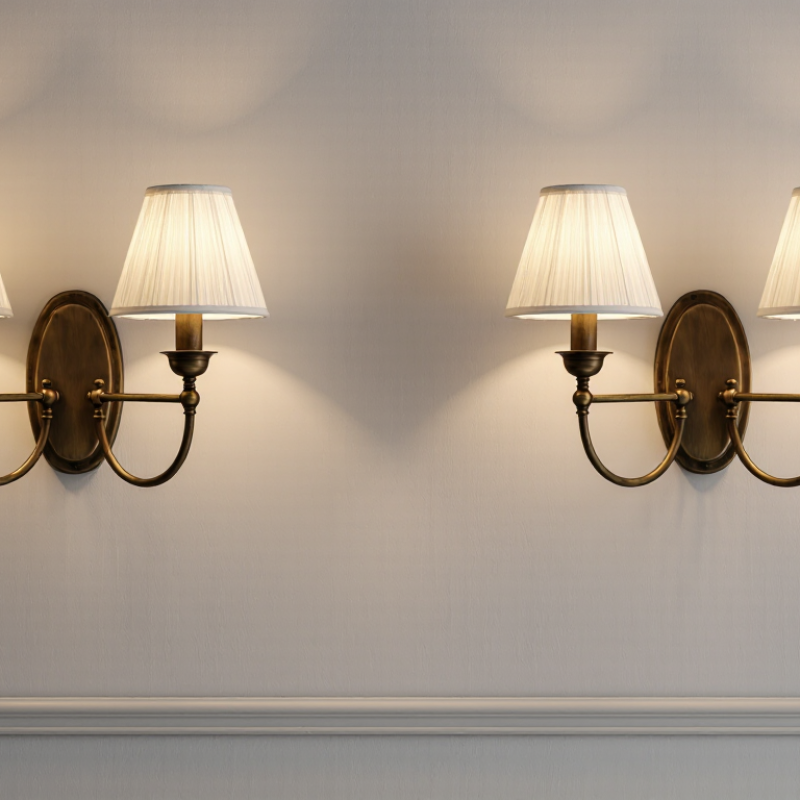
A French-style wall light is defined by balance, ornament, and the way it softens a room. Common details include curved metal arms, small decorative leaves, and shades in glass or fabric. The silhouette often feels formal without being heavy. Think of warm light falling across a plaster wall beside a framed mirror.
Materials shape the look and performance. Brass or iron can provide a substantial frame, while clear glass reveals the bulb and patterned glass diffuses it. A fabric shade creates a gentler glow, but may collect dust more easily. Finish matters, too: aged brass can feel traditional, while polished metal looks sharper. Small differences show.
Proportion is easy to overlook. A fixture with two arms may suit a wide hallway, while a compact single-light design can fit beside a bed. Check the wall plate, projection, and shade size against the available space. The light should not crowd a doorway or sit awkwardly beside furniture. It is not always easy to judge from a product image; viewing dimensions and finish samples can prevent a costly mismatch. A French influence is a design reference, not a fixed recipe.
French-style wall lights often pair curved metal arms with rounded shades, leaf details, or small crystal accents. Their silhouettes may feel formal, but restrained versions suit modern interiors too. Look closely at the backplate, joints, and finish. These details shape the fixture’s appearance and can affect how well it fits beside a mirror or bed. Antique brass and aged bronze create warmth, while painted finishes offer a quieter look. The shade matters. Fabric softens the light; clear glass produces a brighter, sharper effect.
Proportion is easy to overlook. A wide fixture can crowd a narrow hallway, while a small one may disappear beside a tall mirror. Check the wall space, shade diameter, and mounting height before choosing a design. Warm, diffused light usually works well in bedrooms and sitting areas, though actual results depend on bulb choice and shade material. Not every room needs crystal. A simpler French-inspired light can preserve the graceful curves without making a compact space feel busy. For manufacturers, consistent finishing, secure assembly, and clear installation guidance are practical signs of careful production. Small flaws show. A slightly uneven arm or rough edge can interrupt an otherwise elegant design.
French-style wall lights made in China usually begin with a drawing, a sample, and decisions about scale. Curved arms may be cast from zinc alloy or shaped from steel, while brass components receive polishing or an aged finish. Glass shades are pressed or blown, then checked for bubbles, uneven edges, and color variation. Small details matter. A slightly misaligned arm can change the whole silhouette.
At the factory, workers assemble the frame, socket, wiring, and shade, then inspect joints and surface finish. Practical checks include grounding, insulation, and heat rise, with requirements depending on the destination market. The U.S. Department of Energy’s LED guidance says LEDs use at least 75% less energy and can last up to 25 times longer than incandescent bulbs. That matters when selecting compatible light sources and thermal designs. Still, production is not perfectly uniform: hand-applied patinas can vary between batches, and this deserves honest sample approval before larger orders. Manufacturers can record material lots, test assembled units, and compare finished samples under consistent lighting. A warm workshop lamp can hide a finish mismatch.
A practical overview of common materials, production steps, and quality checks used to manufacture French-style wall lights in China. Specifications vary by design, supplier, and destination market.
| Production Stage | Typical Work | Common Materials or Equipment | Practical Quality Checks |
|---|---|---|---|
| Design and specification | Develop the wall-light shape, proportions, mounting arrangement, finish, and shade. French-inspired designs commonly use curved arms, decorative details, and balanced, symmetrical forms. | Drawings, 3D models, sample components, and finish samples. | Confirm dimensions, wall-mounting points, lamp-holder type, and customer-approved samples before production. |
| Metal component forming | Form the backplate, arms, decorative parts, and brackets. Depending on the design, components may be stamped, bent, cast, spun, or machined. | Common choices include steel, iron, brass, and aluminum; equipment may include presses, bending tools, casting equipment, and CNC machines. | Check part dimensions, alignment, sharp edges, surface defects, and the fit of assembled components. |
| Surface preparation and finishing | Clean and prepare metal parts, then apply the specified decorative finish. Options may include paint, powder coating, plating, or a brushed or polished surface. | Abrasives, cleaning processes, coating materials, and finishing equipment selected for the substrate and finish specification. | Inspect color and sheen against an approved sample; check for uneven coverage, visible blemishes, and finish damage. |
| Shade and decorative-part production | Make or source shades and decorative elements to suit the design. Depending on the model, these may be glass, fabric, ceramic, or metal. | Cut or formed glass, shade frames, fabric, ceramic parts, and suitable fasteners. | Check appearance, dimensions, secure attachment, and any visible chips, cracks, or stitching defects. |
| Electrical assembly | Install the lamp holder, internal wiring, terminals, and mounting hardware; route and secure wires inside the fixture. | Insulated wire, lamp holder, terminal block or connectors, grounding hardware where required, and mounting screws. | Check wiring connections, wire routing, strain relief where specified, and secure assembly before electrical testing. |
| Electrical and functional testing | Test the completed fixture using procedures appropriate to its design and intended market. Checks may include operation, continuity, insulation, and dielectric strength. | Electrical safety and functional test equipment; test criteria depend on product construction and applicable destination-market requirements. | Record test results and verify that the fixture operates as intended. Required certification and tests vary by market and product type. |
| Final inspection and packaging | Inspect the assembled light, protect fragile finishes and shades, and pack the fixture with installation components and product information as specified. | Protective sleeves, molded or partitioned inserts, cartons, and packing materials selected for the product and shipping method. | Check appearance, included parts, packaging protection, and carton identification against the approved order requirements. |
Note: Material selection, finish, electrical components, testing procedures, and regulatory documentation should be confirmed for each specific product and destination market.
Evaluating Chinese wall light manufacturers requires more than comparing catalogue photos. For French-style designs, examine the curve of each arm, the proportions of the backplate, and the consistency of the finish. Ask for dimensioned drawings, material specifications, and clear photos of completed production. A brass finish may look warm online but appear too yellow under cool showroom lighting. Request a sample before approving a large order. Check its weight, joints, shade alignment, and surface details in person.
Ask how the manufacturer controls quality between the approved sample and mass production. Request relevant test reports for your destination market, and confirm the lamp holder, wiring, and installation instructions match your requirements. A factory visit or live video tour can help you understand equipment and inspection steps. Also discuss minimum order quantities, production timelines, packaging, and how defects are handled. A polished sample can still hide uneven batch finishing; that detail is easy to overlook, even with careful checks.
Tips: Compare the same specifications across suppliers. Keep written records of finish codes and approved samples. Ask direct questions, and note how clearly the team responds.
For French-style wall lights, compare more than catalog photos. Ask each manufacturer for drawings, material specifications, and a production sample. Check whether the brass, iron, or glass finish matches your intended interior; small differences in patina can change the whole look. Confirm dimensions, wall-mounting details, wiring options, and packaging before requesting a quotation. A polished sample can still hide uneven welds or loose fittings.
For LED models, compare the light source, driver, color temperature, color rendering, and dimming performance. The U.S. Department of Energy reports that LEDs use at least 75% less energy and can last up to 25 times longer than incandescent lighting. That figure is a useful benchmark, not a guarantee for every fixture. Request test reports and ask how the manufacturer checks aging, finish consistency, and electrical performance. Clear answers matter.
Tips: Compare like with like. Send every supplier the same specification sheet and ask for the same sample photos and test documents. Check response times, too. A supplier who explains a limitation is often more useful than one who promises everything. I would still verify the first production batch; specifications can drift.
5107 County Road C
Manitowoc, WI 54220
920-726-4526