
Stecker Machine Blog

China Top 10 Cable Swaging Tool Manufacturers for Buyers

Choosing a Cable Swaging Tool is not simply a matter of comparing prices. Buyers need to match the tool’s capacity, die profile, and operating method to the cable and fitting specifications. A mismatch can leave an uneven swage, visible gaps, or a connection that fails inspection. Small details matter.

This guide reviews ten Chinese manufacturers through practical buying considerations: product range, material quality, customization options, documentation, and after-sales support. Product claims should be checked against samples, technical documents, and clear answers about testing. A polished catalog is useful, but it cannot prove consistent production. That deserves scrutiny.

A transparent editorial note: the following quotation is an original illustrative statement, not a verified remark from a named industry expert: “A reliable swage begins with the right die, a controlled process, and proof that the finished connection meets its specification.” It reflects the kind of technical question buyers should ask suppliers. The comparison that follows is a starting point, not a substitute for application-specific engineering review. Some supplier details may change; confirm current specifications before ordering.
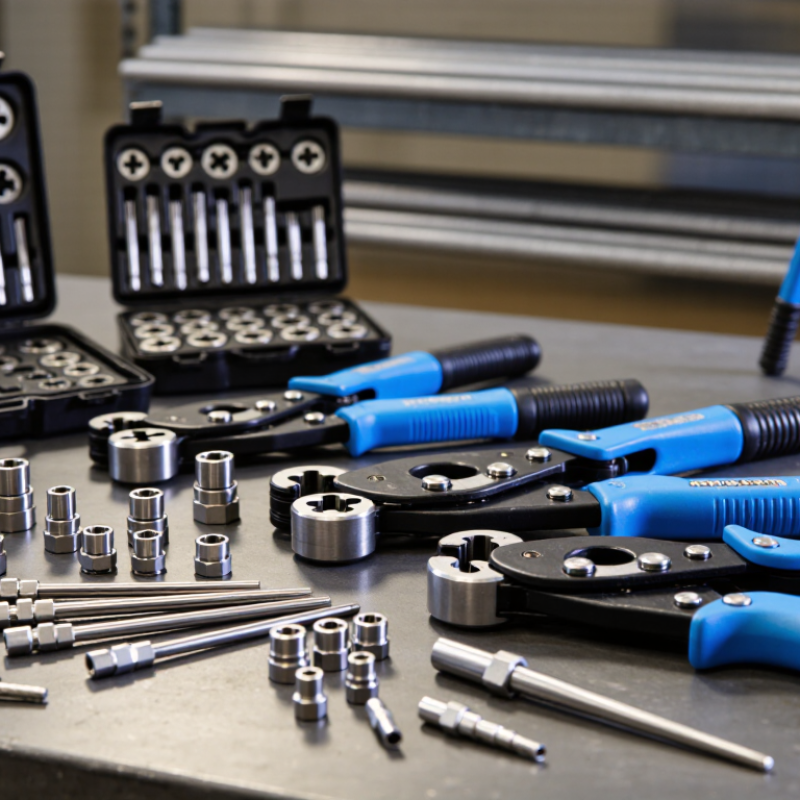
China Top 10 Cable Swaging Tool Manufacturers for Buyers

Understanding Cable Swaging Tools and Their Applications

Cable swaging tools permanently compress a metal sleeve or terminal around a wire rope. The pressure forms a load-bearing connection, not a removable clamp. Tool choice depends on rope diameter, sleeve material, and the fitting’s specified compression profile. A mismatched die can leave a sleeve loose or visibly distorted. Small marks matter.

Applications range from railing cables and lifting assemblies to marine rigging and architectural supports. In practice, technicians check rope construction, clean the die, and position the sleeve before each press. Hydraulic tools suit larger fittings; hand-operated models are often used for smaller jobs. The finished assembly should be inspected and, where required, proof-tested according to its design and applicable standards. A neat-looking crimp alone does not confirm strength.

The market context helps explain the need for consistent joining methods. Grand View Research’s Wire Rope Market report estimated the global market at USD 10.6 billion in 2022 and projected a 4.6% compound annual growth rate from 2023 to 2030. This figure describes wire rope, not swaging tools, so it should not be read as tool-sales data. Still, it points to broad demand across construction, transport, and industrial uses. A practical limitation remains: field conditions can make repeatable crimping harder than workshop demonstrations suggest.

How to Evaluate Cable Swaging Tool Manufacturers in China

When evaluating cable swaging tool manufacturers in China, start with the workpiece, not the catalog. A tool must suit the cable diameter, strand construction, sleeve material, and required finish. Small mismatches can leave uneven sleeves or damage wires. Ask for a written range of compatible sizes and die specifications. A polished catalog is not proof. Details matter.

Review how the manufacturer checks tool performance. Ask whether sample swages can be inspected for consistent compression and visible damage. For powered equipment, request clear information on force, cycle limits, maintenance, and calibration where applicable. Check whether parts and replacement dies are available, and how quickly technical questions receive specific answers. Vague replies may signal weak process control, though one slow response alone is not conclusive.

Before placing a large order, request a sample and test it with your actual cable and sleeves. Compare the finished swage across several attempts, not just one. Confirm inspection records, material information, and agreed tolerances in writing. I would not judge a factory by its equipment photos alone; those images say little about routine quality. Even a careful review cannot remove every risk, so leave room for a practical trial.

How to Evaluate Cable Swaging Tool Manufacturers in China

Suggested evaluation weights for comparing suppliers. These are a practical buyer-defined framework, not results from a manufacturer survey; adjust them to match your project requirements.

Score each supplier against the same criteria, verify claims with documentation and sample testing, then apply these weights to compare overall suitability.

Profiles of 10 Chinese Cable Swaging Tool Manufacturers

Grand View Research estimated the global wire-rope market at USD 10.3 billion in 2023, with projected growth through 2030. This is useful context, not a direct measure of swaging-tool sales. Profile 1: A coastal hardware maker may suit marine terminals and corrosion-resistant fittings. Profile 2: A hydraulic-tool specialist often serves workshops needing repeatable compression. Profile 3: A compact-tool producer can support field repairs and tight access. Profile 4: A custom-machining shop may handle unusual sleeve sizes. Profile 5: A high-volume factory can offer consistent production runs. Fit matters more.

Profile 6: An export-focused supplier may provide clearer drawings and packing records. Profile 7: A testing-oriented maker can document pull-test procedures. Profile 8: A service-led workshop may offer replacement dies and maintenance guidance. Profile 9: A small-batch producer can adapt tools for specific cable diameters. Profile 10: A general rigging-equipment maker may offer broader sourcing convenience. Ask each supplier for die dimensions, rated capacity, sample results, and material specifications. Check whether the stated capacity matches your cable and sleeve combination. A polished catalogue is not proof. Request a witnessed sample crimp, inspect its shape, and confirm that records identify the tested setup. These checks take time, but tool descriptions alone can leave important gaps.

China Top 10 Cable Swaging Tool Manufacturers for Buyers - Profiles of 10 Chinese Cable Swaging Tool Manufacturers
Buyer-oriented overview of common cable-swaging equipment categories—not verified profiles of individual companies. Confirm supplier-specific capabilities and specifications before purchasing.
No. Equipment Profile Typical Process Common Applications Key Details to Verify with a Supplier
1 Manual hand swager Applies mechanical force through hand-operated levers or handles to compress a compatible fitting onto wire rope. Light-duty installations, small cable assemblies, and occasional field work. Compatible cable and fitting dimensions, die availability, operating instructions, and intended duty level.
2 Bench-mounted manual swager Uses a fixed frame and a manually operated mechanism to form fittings in a workshop setting. Small workshops and repeat assembly work where a stationary tool is suitable. Frame capacity, supported fitting types, die change method, and installation requirements.
3 Portable hydraulic swager Uses hydraulic force to compress a fitting; portable designs may be operated by a separate pump or power unit. On-site assembly and maintenance where a large stationary machine is impractical. Hydraulic pressure and force ratings, hose and pump compatibility, tool weight, and approved fitting range.
4 Bench hydraulic swaging press Uses a hydraulic cylinder and matched dies to form fittings under controlled press force. Workshop production of wire-rope assemblies and other compatible cable terminations. Rated force, working stroke, die set, power-unit requirements, and safety features.
5 Electro-hydraulic swaging machine Combines an electric motor-driven hydraulic system with a press and matched tooling. Production environments that need powered operation for recurring swaging tasks. Electrical supply, rated force, cycle controls, maintenance needs, and supported die profiles.
6 Wire-rope terminal swager Compresses compatible terminals, sleeves, or ferrules around wire rope using a specified die profile. Wire-rope assemblies used in rigging, railing, and other applications requiring suitable engineered terminations. Approved terminal and rope combinations, finished dimensions, inspection method, and applicable standards.
7 Hydraulic hose crimping machine Radially compresses a hose fitting around a hose using a crimping die; this is a related process but not the same as wire-rope swaging. Hydraulic hose assembly production and repair. Hose and fitting compatibility, crimp diameter range, die sets, and calibration procedure.
8 Multi-die or interchangeable-die press Uses replaceable die sets to accommodate different compatible fitting sizes or profiles. Shops producing multiple assembly sizes with one press frame. Available die profiles, changeover method, die identification, and the machine’s approved capacity for each setup.
9 Production-line swaging system Integrates a powered press with workholding or feeding arrangements for repeated assembly operations. Higher-volume manufacturing where process consistency and production workflow are important. Cycle controls, guarding, operator workflow, quality checks, service support, and integration requirements.
10 Custom or application-specific swaging setup Pairs a press, tooling, and workholding with a defined cable-and-fitting assembly and production method. Assemblies with non-standard dimensions or process requirements, subject to engineering review. Written confirmation of the cable, fitting, die, finished dimensions, validation method, and acceptance criteria.

Comparing Product Range, Quality, and Manufacturing Capabilities

When comparing China’s cable swaging tool manufacturers, look beyond catalog size. A broad range may include hand tools, hydraulic models, dies, and replacement parts. Check whether the listed tools cover your cable diameters and fitting types. A polished catalog is useful, but it cannot confirm production quality.

Ask how manufacturers control dimensions, material hardness, and swaging consistency. Request sample tools and inspect die alignment, handle movement, and finish. For hydraulic models, check rated pressure and service-part availability. Manufacturing capability matters too: Can the supplier maintain repeatable tolerances across batches? Can they explain inspection steps clearly? These details are more useful than a vague claim of “high quality.” Comparisons are imperfect; specifications may use different test methods, so verify critical figures directly.

Tips: Send a sample cable and fitting for a trial swage. Measure the finished connection, and ask for the inspection record. Check lead times for replacement dies before ordering. Small details matter. A tool that feels sturdy may still need adjustment, and that is worth discussing before production.

Choosing and Verifying a Supplier for Your Buying Needs

A reliable swaging-tool supplier should explain which cable diameters, materials, and die profiles each tool supports. Ask for the rated force, maintenance interval, and inspection method in writing. Details matter. The ISO Survey 2022 recorded 1,265,216 ISO 9001 certificates across 189 countries and economies. That figure shows how widespread certified quality systems are, not that every certified supplier makes suitable tools. Treat certification as one check, not a verdict. Request a sample inspection record and confirm that calibration documents identify the tool, date, and measurement standard.

Before ordering, send a representative cable and fitting for a trial swage, if practical. Check the finished sleeve for cracks, slippage, and dimensions against the fitting specification. Ask how the supplier verifies pull-test results and whether the test setup matches your application. Keep the test conditions, sample identification, and results together; otherwise, a passing number may be hard to interpret. I would not rely on a polished catalogue alone. A small detail can be missed. Compare the supplier’s written limits with your own operating needs, then clarify any gap before purchase. The ISO Survey is published by the International Organization for Standardization.