How to Choose Telemecanique Sensors for Industrial Applications
Choosing Telemecanique Sensors for an industrial application starts with the task, not the product catalogue. What must the sensor detect: a metal part, a moving carton, a machine position, or a pressure change? The answer helps narrow the sensing technology. Inductive sensors suit many metal targets, while photoelectric models can detect objects across a gap. Limit switches provide physical contact when a machine part reaches a defined position. Details matter. A small bracket can change the sensing distance. A glossy package may behave differently from a matte one.
Before selecting a model, check target material, operating distance, response speed, mounting space, and exposure to dust, moisture, vibration, or washdown. Then confirm the supply voltage, output type, connector, and compatibility with the control system. A sensor that fits the application on paper may still be difficult to install or maintain. That is easy to overlook. Compare the current manufacturer datasheet with the machine’s actual conditions, and verify any required protection ratings or safety functions rather than assuming them. If a sensor supports a safety-related task, confirm its suitability through the machine’s design documentation and qualified review. There is rarely one perfect choice. A practical selection balances reliable detection, straightforward integration, and replacement needs, while leaving room to test the sensor under real operating conditions.
Define the Application Requirements and Sensing Task
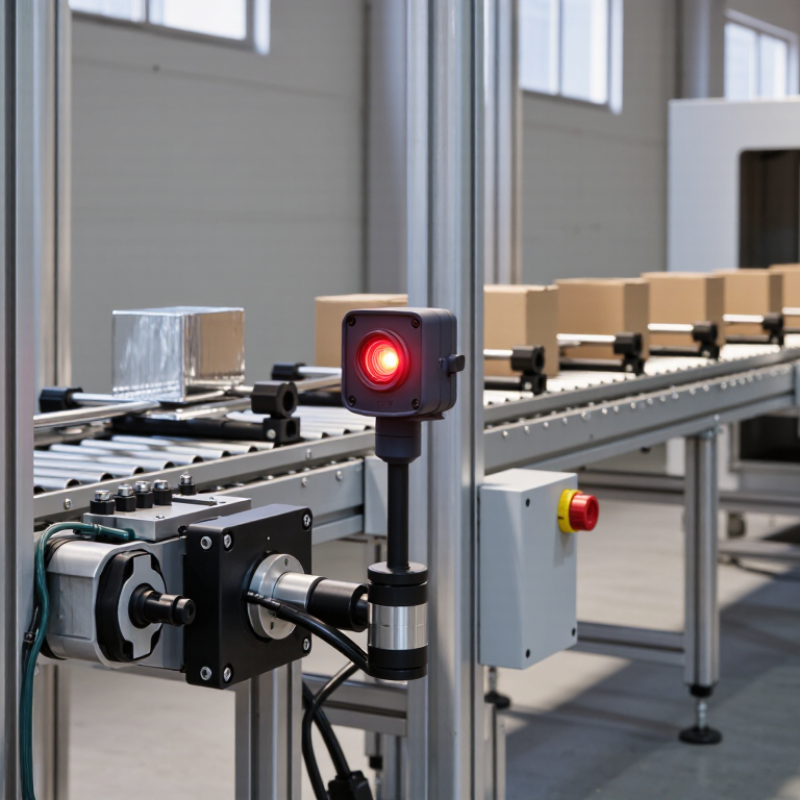
Start at the machine. Define what must be detected: a metal part, a clear bottle, a liquid level, or a moving target. Then record target size, material, sensing distance, travel speed, and required response time. A sensor that detects a stationary test piece may miss it on a fast conveyor. Note the installation details too: available space, mounting angle, vibration, washdown, dust, and temperature. Small details matter.
Choose the sensing principle around the task, not convenience. Inductive sensing suits nearby metal targets; photoelectric sensing can detect many materials, but surface finish and ambient light may affect performance. For level or distance checks, assess whether the target’s shape or surroundings could disrupt the reading. The U.S. Department of Energy’s Operations & Maintenance Best Practices guide reports potential predictive-maintenance savings of 8–12% compared with preventive maintenance. Treat this as a reported estimate, not a guaranteed result; site conditions and implementation matter. A missed detection still has a cost.
Tips: Test with the actual target, at operating speed. Check readings under real lighting and temperature. Record the detection margin, not just pass or fail. If the signal is unstable, reconsider alignment, range, or sensing method before increasing sensitivity.
Compare Sensor Types for the Target Industrial Process
Compare sensor types against the actual process, not just a catalog description. Inductive proximity sensors detect metal parts without contact, useful near oily conveyors or stamping fixtures. Capacitive sensors can detect plastics, powders, and liquids, but residue or moisture may cause false signals. Photoelectric sensors offer longer detection distances and work with varied materials. Dust, glare, and transparent packaging can complicate alignment. Ultrasonic sensors measure distance with sound, helping detect dark targets or uneven surfaces. Soft materials and turbulent air can reduce reliability. Limit switches provide a clear mechanical position, though repeated contact can cause wear. Distance matters.
The process environment often decides the best fit. Check target material, sensing range, response speed, mounting space, and exposure to washdown, vibration, or heat. Also confirm the sensor’s output matches the control system. A specification sheet can look convincing, yet an installed sensor may behave differently near metal frames or moving equipment. Test it onsite.
Tips: Trial the sensor with the real target and operating conditions. Watch for missed detections during startup and speed changes. Keep a note of mounting distance and alignment; small adjustments can make a noticeable difference.
How to Choose Sensors for Industrial Applications
Compare sensing principles against common process requirements.
A value of 1 means the sensor type is generally suitable for the requirement; 0 means it is not a usual choice. Transparent-object detection typically requires a photoelectric sensor designed for transparent targets. Actual suitability depends on target material, geometry, mounting, and environmental conditions.
Match Sensor Specifications to Operating Conditions
Choose a sensor by mapping its specifications to the machine’s real conditions. Check target material, sensing distance, response time, repeatability, and output type. A metal target passing through oil needs a different approach from a clear bottle on a dry conveyor. Ambient heat, vibration, washdown, and nearby electrical noise can also change performance. An enclosure rating alone does not confirm chemical compatibility or reliable operation under every cleaning routine.
McKinsey’s 2018 manufacturing analysis estimated that predictive maintenance could reduce machine downtime by 30–50%. That figure describes program-level potential, not a guaranteed result from installing a sensor. Still, dependable measurements are a useful starting point. Set the sensing range with margin, then test the device at the slowest and fastest process speeds. A spec sheet cannot capture every mounting error. That is easy to overlook.
Tips: Record temperature, moisture, dust, target size, and switching frequency at the installation point. Confirm the sensor’s supply voltage and control-system input before ordering. Test with the actual target and cable route; nearby motors may introduce interference. If detection becomes unstable, review alignment and mounting distance before assuming the sensor has failed.
Assess Installation, Maintenance, and Lifecycle Needs
Choosing a sensor starts at the mounting point, not the catalog. Check the target material, sensing distance, ambient temperature, vibration, and washdown exposure. A few millimeters of bracket movement can cause intermittent readings. Confirm cable routing and connector access before installation; a sensor that is difficult to reach may be difficult to maintain. For dusty or wet areas, verify the enclosure rating against actual cleaning conditions, not assumptions.
Maintenance planning matters over the full service life. The U.S. Department of Energy’s Operations & Maintenance Best Practices Guide reports typical predictive-maintenance savings of 8–12% compared with preventive maintenance. These are broad estimates, not a guarantee for an individual sensor. Still, they show why accessible diagnostics and replaceable connections can matter. Record baseline readings, expected replacement intervals, and the time needed to realign a unit. I have seen installation details overlooked in planning; they can become recurring maintenance work.
Tips: Keep one compatible spare for critical points. Label cables at both ends. Test detection with the real target, at operating speed, before handover. Review failure logs after the first month; the initial settings may be wrong. A short inspection checklist often beats a complicated schedule. Compare total lifecycle cost, including downtime and labor, rather than purchase price alone.