
Choosing the best Battery Powered Pruning Saw starts with the trees you actually maintain. A small saw may handle dead branches and routine garden trimming, while thicker limbs demand greater cutting capacity. Check the manufacturer’s stated cut size, but treat it as a guide, not a promise. Hard, green, or awkwardly positioned wood can slow a saw more than a neat product specification suggests.
Battery life matters when several trees need attention. Compare the battery’s voltage and amp-hour rating, then check whether the pack works with tools you already own. A spare battery can help, though it adds cost and weight. Feel the saw’s balance, handle shape, and trigger access if you can; a tool that feels manageable in a shop may tire your wrist after repeated cuts. That matters.
Safety features deserve close attention. Look for a chain brake or guard, a secure grip, and clear instructions for tensioning and lubrication. Wear suitable eye and hand protection, and keep other people clear of the cutting area. Maintenance is part of ownership, too: chains need proper tension, and cutting parts eventually wear. A low purchase price may not tell the whole story.
No single model fits every garden. Compare weight, cutting performance, battery compatibility, maintenance needs, and warranty terms against your typical jobs. Reviews can reveal recurring issues, but user experiences vary. The right choice is the saw you can control comfortably and maintain reliably—not simply the one with the biggest battery or boldest claims.
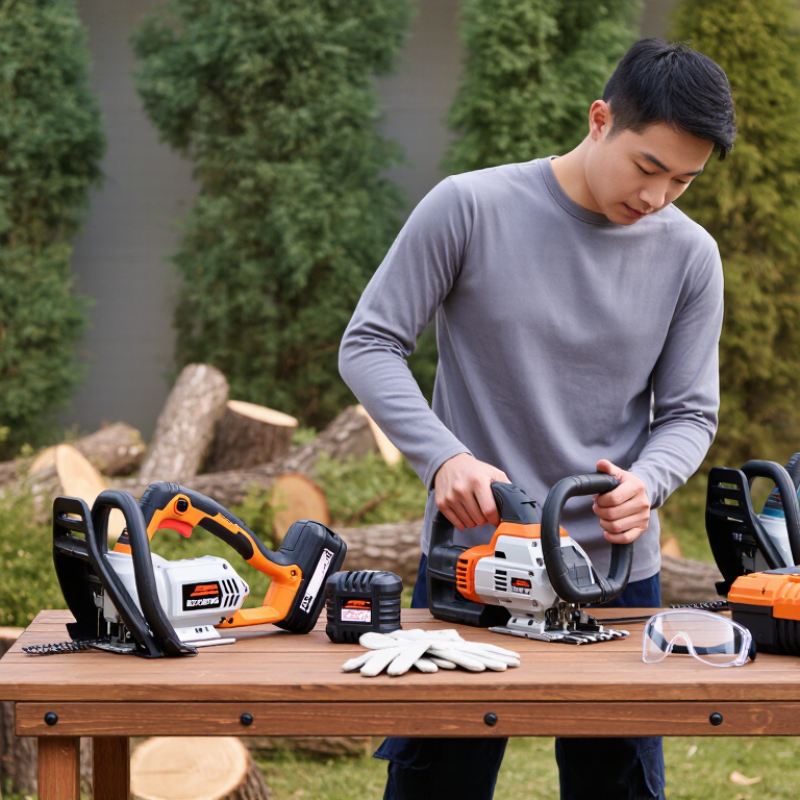
A compact handheld chain saw suits close, controlled cuts on shrubs and small branches. Its short bar is easy to guide around crowded limbs, and the tool is usually lighter than a pole model. Check the cutting capacity in the manual rather than guessing from the saw’s appearance. A thicker branch can pinch the bar or strain the motor. Keep a firm grip, and let the chain reach speed before cutting.
A battery-powered pole saw is designed for branches overhead or beyond comfortable arm’s reach. It reduces the need to climb, but the extended shaft can feel unwieldy, especially near the tip. A branch may shift as it separates. Stand clear of its fall path, and do not cut above your ability to control the tool. Reach is useful. It is not always safer.
A reciprocating pruning saw uses a back-and-forth blade instead of a chain. It can be handy for occasional cuts in tight spaces, though its motion may feel less smooth on larger limbs. Blade choice affects how cleanly it cuts. Consider branch size, working height, tool weight, and battery runtime together. The trade-off is easy to underestimate: a longer reach or faster cut may bring more weight and fatigue. There is no perfect type; the best fit depends on the trees and tasks you actually have.
Assess the branches before comparing saws. A few pencil-thin shoots need a different tool from a dense, wrist-thick limb. Check the saw’s stated cutting capacity, but treat it as a limit, not a daily target. A blade working near its maximum may cut slowly, especially through hard or dry wood. For occasional small cuts, a compact model can be easier to guide between crowded branches. For thicker limbs, look for enough capacity and a comfortable grip that keeps the saw steady. Small limbs are different.
Tips: Measure a representative branch, not just the largest one. Note whether the wood is fresh, dry, or awkwardly angled. Keep cuts within the tool’s rated capacity.
Think about the actual pruning tasks, too. Removing several light branches overhead can make weight and balance more important than maximum cutting size. Trimming a few heavier limbs may call for a longer bar and a battery that lasts through repeated cuts. If branches are tangled, a smaller saw may offer better control in tight spaces. A larger saw is not automatically better. It can feel tiring after repeated overhead work, and that detail is easy to overlook when comparing specifications.
A battery-powered pruning saw should match the branches you actually cut, not just the largest diameter printed on its package. For clean cuts on fresh, narrow limbs, compare cutting speed and how smoothly the chain moves under pressure. Dense or thicker wood can slow a small saw and drain its battery faster. A useful field check is to cut several similar branches, around wrist thickness, and note the time, effort, and cut quality. Look for a steady cut without forcing the tool. Slow down. A rough or pinched cut may reflect technique, blade condition, or wood type—not only motor power.
Battery life depends on more than the amp-hour number. Compare capacity alongside voltage, and check whether the maker states runtime under a clear test condition. A higher-capacity battery may add weight, which matters during overhead work. Charging deserves the same attention: compare the listed recharge time, charger output, and whether a spare battery can keep up with your usual pruning session. If you work in short bursts, a longer charge may be manageable; for a full day, it can become frustrating. These comparisons are not perfect, since branch hardness and cutting habits vary. Still, matching real tasks beats relying on one impressive specification.
Energy values are calculated from nominal voltage × battery capacity. Charging times are ideal estimates for a 2 A charger, calculated as capacity ÷ 2 A; actual charging can take longer. More watt-hours can support more cutting before recharging, but cutting speed and the number of cuts also depend on the saw, blade, wood type, and branch diameter.
Weight affects control, especially when trimming at shoulder height or reaching between branches. Compare the saw’s weight with its battery installed, not just the bare tool. A compact model may feel easier to guide, but a very short handle can make awkward cuts harder. Hold it in a natural working position if you can. A lighter saw is not automatically the safer choice; balance matters too.
Check for a trigger lockout, hand guard, and chain brake, then read the manual to understand how each feature works. These features reduce some risks, but they do not replace protective eyewear, gloves, and secure footing. Look for tool-free chain tensioning and clear oil-level markings. After use, disconnect the battery before cleaning, remove packed sawdust around the bar, and check chain tension as directed. Maintenance is easy to overlook when a cut takes only seconds.
Tips: Choose a saw you can steady without straining. Keep the chain sharp, and inspect it before each session. A dull chain can make cutting slower and less controlled. If a feature feels confusing, pause and check the manual before operating the saw.
Set a firm price range before comparing battery-powered pruning saws. Include the battery and charger in your calculation; some kits include both, while others do not. If you already own compatible batteries, a tool-only option may cost less. Check replacement battery prices too. A low upfront price can become less appealing later.
Match the saw to the branches you actually trim. For a few thin limbs near a patio, a compact model may be easier to control and store. Larger, denser branches call for more cutting capacity, but a heavier saw can tire your wrist quickly. Check the stated cutting capacity and leave some margin. Dry wood can be tougher than a product chart suggests. Real yards are messy. Consider battery runtime, and remember that cold weather or frequent cuts may reduce how long a charge lasts. It is tempting to buy extra power “just in case.” I would pause and weigh that against the added cost and weight. Look for clear safety instructions, a hand guard, and a chain brake, then choose a model you can hold comfortably with eye protection and gloves.
| Yard Need | Typical Saw and Battery | Suitable Branch Size | Typical Kit Budget (USD) | Best For | What to Check Before Buying |
|---|---|---|---|---|---|
| Occasional light pruning | Compact 4–6 in. bar; commonly a 18/20V-class battery system | About 1–3 in. diameter | $70–$160 | Small gardens, shrubs, and a few seasonal cuts on thin branches | Check that the kit includes a battery and charger, and compare the saw’s weight with the battery installed. |
| Regular home-yard maintenance | Mid-size 6–8 in. bar; commonly a 18/20V-class system | About 2–5 in. diameter | $120–$280 | Routine pruning of fruit trees and established garden trees | Look for a chain brake or hand guard, a trigger lock, tool-free chain adjustment if available, and readily available replacement chains. |
| Frequent pruning and thicker limbs | 8–10 in. bar; higher-capacity 18/20V-class or 36/40V-class system | About 3–7 in. diameter, depending on wood and saw capacity | $200–$450 | Larger yards with repeated cuts and occasional thicker branches | Compare battery capacity in amp-hours (Ah), replacement-battery cost, tool weight, and the manufacturer’s stated cutting capacity. |
| Long work sessions | A saw compatible with a battery platform for which you already own spare batteries | Choose the bar length to suit the branch sizes you actually cut | Varies; a bare tool may cost less than a complete kit | Users who need to rotate batteries rather than pause to recharge | Confirm battery compatibility. Voltage alone does not guarantee that batteries from different product lines will fit. |
| Lowest purchase cost | Entry-level compact saw, often sold with a smaller battery | Best kept to thin branches within the stated cutting capacity | About $40–$100 for a bare tool; kits generally cost more | Infrequent, light-duty pruning when a compatible battery is already available | Compare the complete cost, including battery and charger, and check warranty coverage and availability of replacement chains. |
Buying note: Prices are broad US retail estimates and vary by seller, included battery, and seasonal discounts. Branch-size ranges are practical guidelines, not guaranteed cutting capacities; follow the saw manufacturer’s instructions. Wear eye, hearing, hand, and leg protection, and use a stable working position.
5107 County Road C
Manitowoc, WI 54220
920-726-4526
