
Stecker Machine Blog

How to Choose the Best Steel Frame Carport?

A Steel Frame Carport is not just a roof on posts. It is a structure that must suit your vehicle, site, and local weather. The right choice begins with practical questions: How much clearance does your truck need? Will the roof face drifting snow, driving rain, or strong gusts? Small details matter. A low beam can make daily parking awkward, while poorly placed supports may restrict door access.

Weather data helps explain why careful selection matters. NOAA’s 2024 U.S. Billion-Dollar Weather and Climate Disasters report recorded 27 events, with estimated losses of $182.7 billion. Those figures describe broad economic impacts, not damage to carports specifically. Still, they show why buyers should examine wind and snow requirements rather than relying on appearance alone. Check the product’s stated design loads, anchoring method, roof profile, and corrosion protection. Ask for documentation tied to the exact model and configuration.

Compare more than the purchase price. A galvanized frame, reinforced connections, and suitable foundations may affect durability and installation needs. The best choice depends on your location and how you use the space. A compact shelter for one sedan has different demands from a taller unit protecting a work van. Be honest about trade-offs: wider spans can improve access, but may require stronger structural members. This guide explains how to assess materials, dimensions, load ratings, installation, and maintenance before choosing a Steel Frame Carport. There is no universal winner. The details decide.
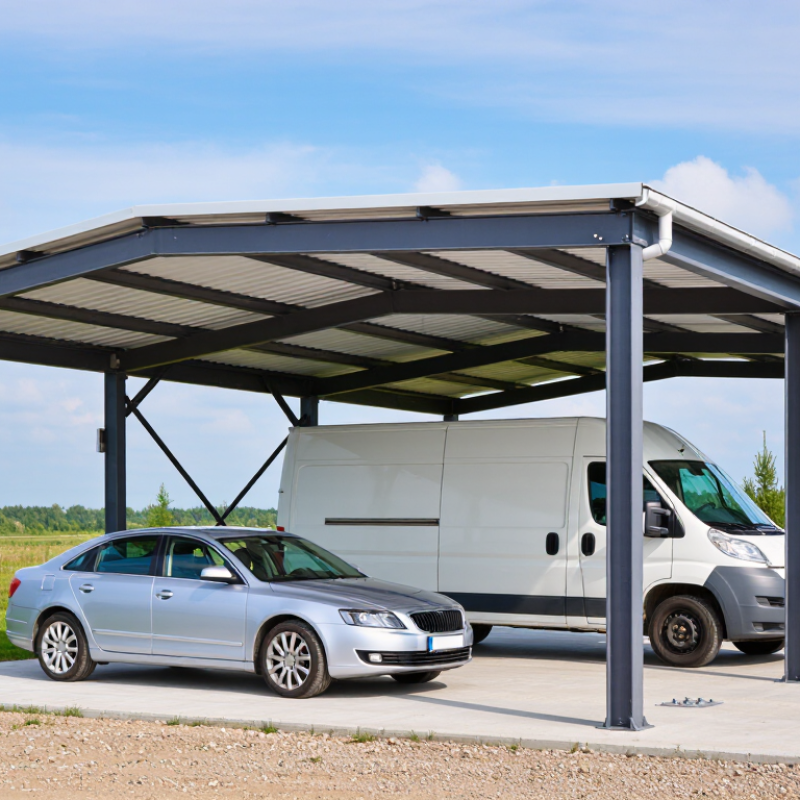
How to Choose the Best Steel Frame Carport?

Define Your Vehicle, Space, and Storage Requirements

How to Choose the Best Steel Frame Carport?
Define Your Vehicle, Space, and Storage Requirements

Start with the vehicles you actually own. Measure their length, width, and height, including mirrors, roof racks, or a raised tailgate. Then allow room to open doors and walk around without squeezing past a wall or post. A carport that fits the vehicle on paper may still feel awkward in daily use. Check clearance at the entrance, too.

Think beyond parking. Will you store bicycles, garden tools, bins, or a small workbench under the roof? Sketch where each item might go, and leave a clear path to the vehicle. Be realistic about future needs, but avoid paying for empty space you are unlikely to use. One easy-to-miss detail is turning room: a driveway that looks wide enough can feel tight when backing in. Recheck measurements from the driver’s approach, not only from above. Also consider the site’s slope, drainage, and typical weather when discussing frame and roof specifications with a qualified installer. A quick sketch is helpful, though it will not capture every obstacle. Walk the space with a tape measure before settling on dimensions.

Compare Frame Design, Steel Gauge, and Structural Capacity

A steel-frame carport should be compared by its load path, not by appearance alone. Check how roof purlins connect to rafters, how each frame anchors to the ground, and whether braces resist side-to-side movement. Thin, widely spaced members may look substantial in a product photo but still flex under wind or snow. Look for documented design loads and connection details.

Gauge is not capacity. The Manufacturers’ Standard Gauge for Sheet Steel lists 14-gauge sheet at about 0.075 inch thick; confirm actual base-metal thickness, since coatings and gauge conventions can confuse comparisons. AISI’s AISI S100-20 design standard evaluates cold-formed steel using material strength, thickness, and member shape—not gauge alone. Ask for those specifications and the engineering basis for the frame.

Local loads matter. ASCE/SEI 7-22 sets methods for determining site-specific wind, snow, and other structural loads, which vary with location and exposure. Compare a carport’s stated capacity with the loads applicable to your site, and check whether the rating covers the complete structure, including anchors. A practical review can get messy: brochures rarely show every connection clearly. Request drawings, and have a qualified local professional verify the design where conditions are severe or uncertain.

Evaluate Roofing, Corrosion Protection, and Weather Resistance

Roofing choice affects more than appearance. A steep, ribbed metal roof sheds rain and light snow more readily than a shallow profile. Check the panel overlap and fastener washers; gaps around screws can become leak paths after repeated temperature changes. Polycarbonate panels admit daylight, but they may need more frequent cleaning and can feel noisy in heavy rain. Small details matter.

Corrosion protection deserves close inspection, especially near cut edges, welds, and ground-level joints. A galvanized coating helps shield steel, while a sound paint or powder-coated finish adds another barrier. Look for chips before assembly, and avoid scraping panels together during installation. In coastal or persistently damp areas, rinse off salt and debris periodically. I have seen small scratches ignored because the frame looked sturdy; that is an easy mistake to make.

Weather resistance depends on the whole structure, not just the roof sheet. Compare the stated wind and snow capacity with local conditions, and ask how those ratings were tested. Check that posts can be anchored securely to the intended surface. A carport exposed to gusts may need different anchoring from one beside a sheltered wall. After storms, inspect loose bolts, bent edges, and standing water. No steel frame is maintenance-free.

Check Site Conditions, Building Codes, and Installation Needs

A steel frame carport should fit the site, not just the vehicle. Measure the parking area, including door clearance and room to walk around an open tailgate. Check the ground after rain. Low spots can collect water, while sloped or soft soil may complicate anchoring. Look overhead, too: tree limbs, roof edges, and service lines can affect placement. A tape measure helps. So does a second measurement; small errors happen.

Before ordering materials, check local building requirements with the relevant permit office. Rules may address setbacks, height, anchoring, drainage, and snow or wind loads. Requirements vary by location and site exposure, so do not rely on a neighbor’s older structure as proof. Ask what drawings or load details are needed. If the property has an easement or unclear boundary, confirm it before setting posts.

Installation needs deserve equal attention. A compact kit may still require several people, lifting equipment, and clear access for delivery. Confirm the foundation type suits the soil and frame design; concrete is not automatically right for every site. Ask the installer how anchors will be checked and how runoff will be directed. Keep a little extra clearance where practical. I might be tempted to size the carport tightly to save space, but future vehicles or repairs can make that choice inconvenient.

How to Choose the Best Steel Frame Carport? — Check Site Conditions, Building Codes, and Installation Needs

Decision factor What to check How it affects your choice Useful next step
Local building requirements Permit rules, zoning setbacks, height limits, property-line restrictions, and any required structural documents. Local rules may limit the carport’s location, dimensions, or design. Requirements vary by jurisdiction. Contact the local building department before ordering. Ask which plans, permits, and inspections apply.
Wind exposure Local design wind criteria, nearby open terrain, coastal exposure, and whether the site is sheltered or exposed. Wind loads influence frame design, bracing, connections, and anchorage. A design suitable for one location may not suit another. Use site-specific design information and confirm that the proposed structure is rated for the applicable local requirements.
Snow and ice Local roof snow-load requirements, drifting areas, and whether snow commonly accumulates or slides from nearby roofs. Roof framing and support spacing need to match the required loading. Do not select a frame based on appearance alone. Ask the building department or a qualified design professional what snow-load criteria apply at the site.
Ground and drainage Soil firmness, slope, standing water, erosion, buried utilities, and the intended locations of footings or anchors. Weak, sloped, or waterlogged ground can affect foundation stability and installation. Poor drainage can also accelerate corrosion. Locate underground services before digging. Plan drainage away from the structure and confirm the foundation requirements.
Foundation and anchorage Whether the design calls for concrete footings, a slab, ground-installed anchors, or another approved foundation system. Anchors and connections must be compatible with both the frame and the actual supporting surface; a slab is not automatically suitable for every anchoring method. Check anchor specifications, concrete requirements, and edge distances in the plans and installation instructions.
Vehicle size and access Vehicle height, width, door-opening space, turning approach, and clearance for mirrors or roof-mounted equipment. The required clear opening and overall dimensions depend on the vehicles and how they enter and exit. Measure the largest vehicle and allow practical clearance for access. Verify the finished opening dimensions before purchase.
Roof style and coverage Roof slope, water runoff direction, nearby buildings, and whether the structure needs open sides or wall panels. Roof shape affects drainage and may affect wind or snow performance. Enclosing sides can change how wind acts on the structure. Choose a design that directs runoff appropriately and confirm that any planned side panels are included in the structural design.
Steel protection Coating type, cut-edge protection, fastener material, and exposure to moisture, salt, or industrial pollutants. Protective coatings help reduce corrosion; the suitable protection depends on the environment and maintenance conditions. Review coating and maintenance details. Repair scratches or coating damage according to the specified instructions.
Installation conditions Required tools, crew size, access for deliveries, working space, and whether lifting equipment is needed. Site access and assembly complexity can affect installation time, safety, and total project cost. Review the full installation sequence in advance and arrange qualified help or equipment where required.
Future changes Possible addition of storage, lighting, gutters, solar equipment, or partial enclosure. Added components can change loads, connections, drainage, or permit requirements. Include intended additions in the initial design review rather than modifying the frame without approval.

Selection reminder: Confirm site-specific structural requirements, permits, foundation details, and installation instructions before construction. When requirements are unclear, consult the local building department or a qualified design professional.

Compare Warranties, Maintenance, and Overall Value

A steel-frame carport can look inexpensive until its warranty and upkeep are compared. Read the exclusions. Check whether coverage applies to the frame, roof panels, paint, and labor, and whether it transfers to a new owner. Note required installation methods and limits for wind, snow, or coastal exposure. A long warranty is less useful if rust, fading, or installation errors are excluded.

Maintenance affects value, too. Inspect welds, fasteners, anchors, and drainage channels after severe weather. Clear leaves before water sits against the frame, and touch up scratched coatings promptly with a compatible product. The 2016 NACE IMPACT study estimated corrosion costs the global economy US$2.5 trillion annually, or 3.4% of global GDP. It also estimated that better corrosion-management practices could save 15–35% of those costs. Those figures cover many industries, not carports specifically, but they show why coating quality and routine checks matter.

Compare the purchase price with likely upkeep, replacement parts, and warranty support over time. Ask for the frame’s steel thickness, coating specification, and written design-load ratings; vague claims are hard to assess later. I would still inspect the anchors myself after a storm. A warranty cannot tighten a loose bolt. Small details matter.

How to Choose the Best Steel Frame Carport

Example 1–5 ratings are a decision-making framework, not a market survey. Compare written warranty coverage, exclusions, and required upkeep for each specific product. A higher maintenance-ease score means less routine upkeep; overall value considers both upfront and expected ownership costs.