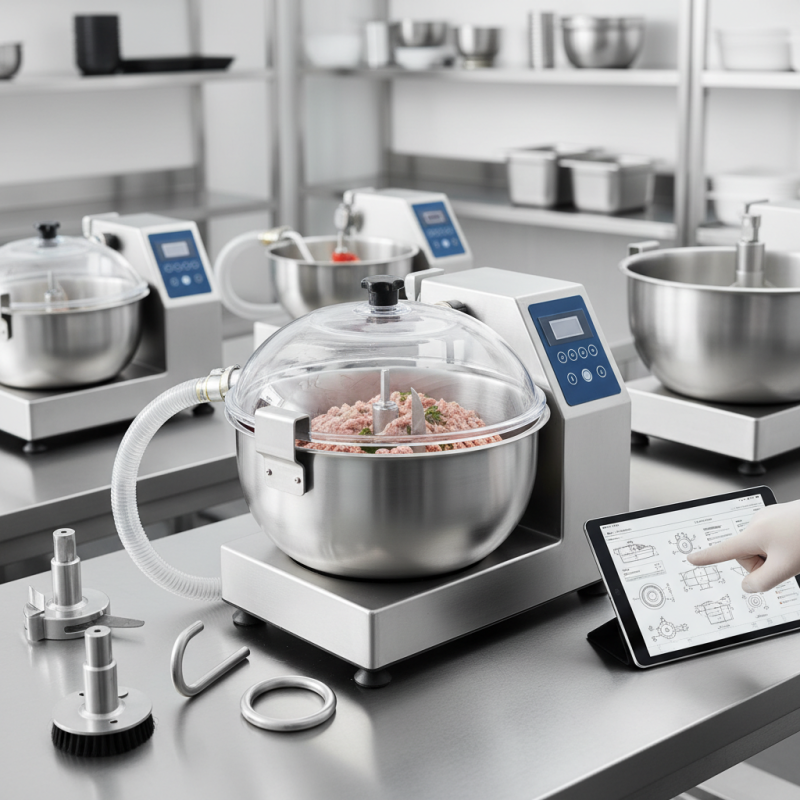
How to Choose the Best Vacuum Bowl Cutter for Your Needs?
Choosing the right vacuum bowl cutter can greatly enhance your food processing experience. These machines are essential for creating smooth blends and consistent textures. However, selecting the best one for your needs can be challenging.
There are many options available. Each model varies in size, power, and features. You might feel overwhelmed by the choices. Perhaps you have specific requirements for your kitchen. Traditional mixers can't always achieve the precision of a vacuum bowl cutter.
Consider your budget and how often you’ll use it. A higher price tag does not always guarantee quality. Think about the size of the bowl. Will it fit your workspace? Reflect on what you prioritize—ease of cleaning, noise level, or durability? Each aspect matters. Take your time to research and compare options. An informed choice will help you get the most out of your investment.
Understanding the Importance of a Vacuum Bowl Cutter in Food Processing
A vacuum bowl cutter plays a crucial role in food processing. This equipment is designed to chop, mix, and emulsify various ingredients while minimizing air exposure. By creating a vacuum, it helps maintain the freshness and flavor of the food. Removing air also prevents oxidation, which can spoil delicate ingredients. Users often overlook these benefits, focusing instead on capacity or speed.
Understanding how a vacuum bowl cutter enhances product quality is essential. It ensures uniformity in texture and consistency, which is vital for many recipes. Without this tool, achieving the desired outcome can be challenging. Yet, not all vacuum bowl cutters are the same. Each model varies in features, and users may find themselves overwhelmed by options.
When choosing a cutter, consider the volume and type of food processed. Some models excel with soft ingredients, while others handle tough materials better. Think about efficiency as well; a slower machine might work for smaller batches. However, it could frustrate larger operations. Balancing these factors often requires reflection and experimentation. Such considerations are vital in making the right choice for your food production needs.
Comparison of Features in Vacuum Bowl Cutters
This chart demonstrates the comparison of various features of vacuum bowl cutters that could influence your decision when selecting the best one for your food processing needs.
Key Features to Look for in a Vacuum Bowl Cutter
Choosing the right vacuum bowl cutter can seem overwhelming. Different models offer various features. Knowing what to look for can simplify your decision.
Key features to consider include the motor power, blade type, and bowl capacity. A strong motor, preferably over 1,000 watts, ensures efficient cutting. Sharp, stainless steel blades are crucial for even results. An optimal bowl capacity ranges from 20 to 50 liters, depending on your needs. Larger bowls save time when processing large batches.
Tips: Consider noise levels too. A model operating below 70 decibels is ideal for quieter environments. Additionally, check if the machine comes with safety features like automatic shut-off.
Look for user-adjustable speed settings. This allows for more control and precision in your food preparation. Many users appreciate this flexibility, yet some models lack this important feature. An essential aspect is ease of cleaning, as machines without removable parts can complicate maintenance.
Incorporate the right features into your vacuum bowl cutter choice. This will greatly enhance your cooking experience and efficiency.
Evaluating Different Types of Vacuum Bowl Cutters for Your Needs
When choosing a vacuum bowl cutter, consider the various types available. Different styles suit different needs. Some cutters are perfect for small batches, while others excel with larger volumes. Assessing your production scale is crucial. A model designed for high-speed operations may not be ideal for a small kitchen.
Look into specific features that cater to your workflow. For example, some cutters have adjustable speeds that allow for versatility. Others may focus on ease of cleaning—an essential detail often overlooked. The right balance between capacity and convenience can significantly impact efficiency.
Think about the material quality, too. A well-constructed cutter lasts longer, but it might come at a higher cost. You might find yourself torn between price and durability. Reflecting on these aspects is vital. Be prepared for some trial and error. Making an informed choice often involves testing different models before settling on the best fit for your needs.
Comparing Brands and Models: What You Should Know
Choosing a vacuum bowl cutter involves careful consideration of various brands and models. According to recent industry reports, different models can significantly affect workflow efficiency. For example, models with higher RPM may improve processing speeds in a busy kitchen. A study indicated that businesses using high-quality cutters report a 20% increase in output.
When comparing brands, focus on specifications like blade material and size. Certain stainless steel blades offer durability and better slicing. Some models provide interchangeable blades for versatility, ideal for various ingredients. It's worth noting that a more expensive cutter doesn’t always guarantee superior performance. User reviews often highlight maintenance challenges.
Capacity is another essential factor to consider. Many cutters cater to varying bowl sizes. A 5-liter bowl may suffice for smaller operations, while larger businesses might require up to 20 liters. However, larger capacity models can be cumbersome. Despite their higher output potential, they may lack the precision needed for certain recipes. Reflecting on these aspects ensures you choose a vacuum bowl cutter that truly meets your evolving needs.
Maintenance Tips for Extending the Life of Your Vacuum Bowl Cutter
Maintaining your vacuum bowl cutter is crucial for its longevity and efficiency. Regular cleaning is essential. After each use, remove any food particles or residues inside the bowl. Use a soft cloth to wipe it down. This can prevent buildup that may affect performance later. Neglecting this step often leads to poor results.
Inspect the blades regularly for signs of wear. Dull blades can impact the quality of your cuts and may require more force to operate. It's important to sharpen or replace them when needed. Always refer to the manufacturer’s guidelines, but if you're unsure, take time to learn the right procedure. This knowledge can save you from future frustrations.
Lastly, keep the equipment in a dry environment. Humidity can lead to corrosion over time. If you're using the cutter frequently, consider a dedicated storage space. This can keep it safe from unnecessary damage. Take note of these tips and reflect on your routine. Small adjustments to your care can lead to significant improvements in performance.
How to Choose the Best Vacuum Bowl Cutter for Your Needs? - Maintenance Tips for Extending the Life of Your Vacuum Bowl Cutter
| Feature | Importance | Maintenance Tips | Expected Lifespan |
| Motor Power | High power ensures efficient cutting | Regularly check for wear and overheating | 5-10 years |
| Bowl Material | Durability and resistance to scratches | Clean regularly to avoid scratches | 5-15 years |
| Cutting Speed | Faster cuts save time | Use proper cutting techniques | 3-10 years |
| Ease of Cleaning | Reduces build-up and enhances hygiene | Disassemble parts for thorough cleaning | Indefinite with proper care |
| Warranty | Protection against defects | Understand warranty coverage to avoid issues | Varies by manufacturer |