How to Choose the Right Energy Storage Connector for Your Needs?
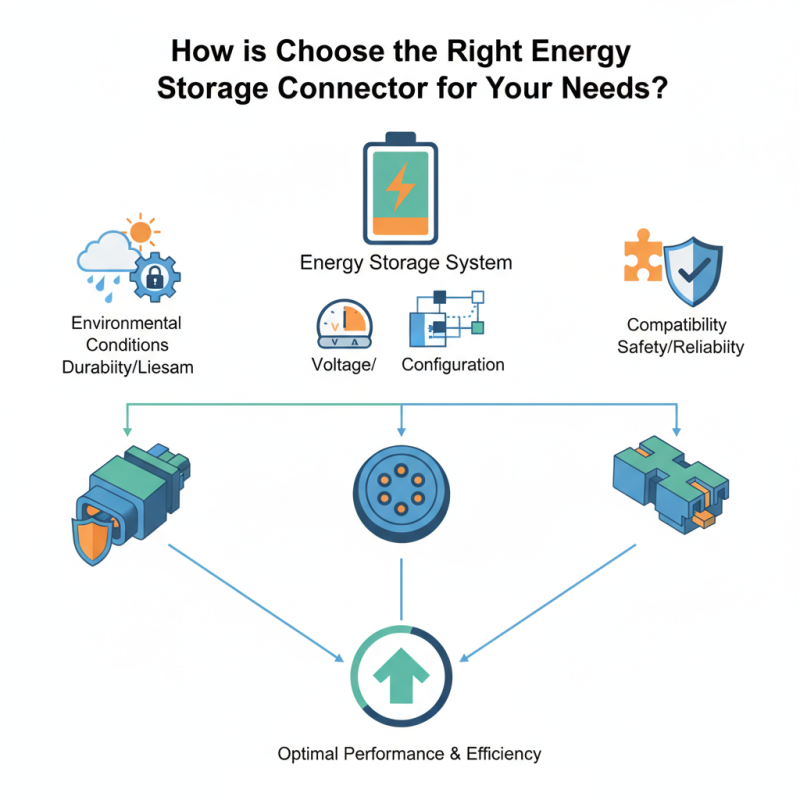
Choosing the right Energy Storage Connector is crucial for your energy systems. It influences performance and efficiency. Various options exist, each designed for specific applications.
Understanding your needs is essential. Different connectors cater to different voltages and configurations. Selecting the wrong connector can lead to inefficiencies. You could face compatibility issues or safety risks. Thus, assessing your system is vital.
Evaluating factors like environmental conditions and durability is important. Some connectors perform better under harsh conditions. Others might have limited usage lifespans. Making an informed choice ensures reliability and enhances overall functionality.
Understanding Different Types of Energy Storage Connectors
When selecting an energy storage connector, understanding the different types is crucial. Connectors come in various forms, each tailored for specific applications. For instance, there are DC connectors, like MC4 connectors, widely used in solar applications. According to industry reports, the solar connector market is expected to grow at a CAGR of 12% from 2021 to 2027.
AC connectors, on the other hand, cater to applications like electric vehicle charging. They must handle high current loads efficiently. Studies reveal that the EV market's growth demands reliable connectors. By 2030, there will be over 200 million electric vehicles on the road globally. This surge necessitates robust solutions for power transfer.
Moreover, the rise of battery energy storage systems (BESS) has increased the need for effective energy storage connectors. Options like Anderson connectors are worth considering for their durability and dependability. However, users often overlook compatibility issues, leading to inefficiencies. It's vital to ensure that the selected connector meets the technical specifications of the system, as mismatches can lead to performance deficits.
Evaluating Compatibility with Your Energy Storage System
Choosing the right energy storage connector involves evaluating compatibility with existing systems. Different energy storage solutions have specific connector requirements. Standards vary, and understanding these nuances is critical for seamless integration.
A report from the International Energy Agency highlights that over 50% of energy storage projects face compatibility issues. This often arises from mismatched connector types or voltages. A thorough compatibility assessment ensures that the connector will support the intended load without overheating or causing inefficiencies.
Take into account your energy storage capacity and voltage levels. For instance, connectors rated for 600 volts might not suit systems aiming for higher efficiency at 1000 volts. An oversight here can lead to reduced performance. Additionally, future scalability should factor into your decision. Many systems require connectors that can adapt to evolving energy needs. Test different setups to identify the most reliable options before finalizing any choice.
Assessing Performance and Efficiency Requirements
When choosing an energy storage connector, performance and efficiency are critical factors. The efficiency of a connector can directly influence the overall system performance. Research indicates that connectors with an efficiency rating of 95% or above significantly reduce energy losses. This translates to considerable savings, especially for large-scale installations.
Consider the ampacity and voltage ratings of connectors. Industry reports show that a mismatch in ratings can lead to overheating and system failures. For instance, connectors with lower ratings often result in energy losses of 10% or more. This not only affects efficiency but could also raise safety concerns.
Furthermore, environmental factors significantly impact performance. High temperatures can reduce the lifespan of connectors. A recent study highlighted that connectors operating in harsh conditions could lose up to 20% of their efficiency over time. Investing in connectors designed for specific environmental conditions may yield better long-term results. Balancing these aspects is essential for a reliable energy storage system.
How to Choose the Right Energy Storage Connector for Your Needs? - Assessing Performance and Efficiency Requirements
| Connector Type | Voltage Rating (V) | Current Rating (A) | Efficiency (%) | Temperature Range (°C) | Applications |
| Anderson SB Series | 60 | 175 | 95 | -40 to 85 | Electric Vehicles, Solar Energy |
| XT60 Connector | 22 | 60 | 90 | -20 to 120 | RC Models, Drones |
| Molex Micro-Fit | 12 | 30 | 92 | -40 to 105 | Consumer Electronics, Appliances |
| Battery Power Connector | 48 | 50 | 93 | -30 to 90 | Energy Storage Systems, UPS |
Considering Safety Standards and Regulations
When selecting an energy storage connector, safety standards cannot be overlooked. Proper connectors must comply with local and international regulations. These standards set the foundation for electrical performance and overall safety. Each connection type has specific requirements, which can vary by region. Understanding these regulations is critical for ensuring safe operation.
For example, connectors for high-voltage applications must withstand extreme conditions. They should feature safeguarding mechanisms to prevent accidental disconnections. Inspectors often look for certifications that validate compliance with safety standards. However, navigating these requirements can often feel overwhelming for newcomers in the industry. It is essential to consult safety guidelines and technical documentation thoroughly.
Sometimes, the choice may boil down to trial and error. Not all connectors perform equally well under different conditions. Documenting experiences can help refine future choices. Learning from mistakes is part of the journey. Ensure that every decision aligns with established safety protocols. Building a reliable energy storage system requires diligence and familiarity with standards. Consider reaching out to industry experts when in doubt.
Energy Storage Connector Types and Their Importance
This bar chart demonstrates the safety standard compliance percentages of various energy storage connector types. Ensuring that your chosen connector meets safety regulations is crucial for maintaining system integrity and reliability.
Budgeting for Energy Storage Connector Options
When budgeting for energy storage connectors, it’s crucial to assess your specific needs first. Various options are available, each with unique features and costs. The type of connector you choose will directly impact your expenses and performance. Consider the power requirements of your system. Higher capacity connectors may offer better efficiency but come with a higher price tag.
Think about installation costs as well. Cheaper connectors may save money upfront but can lead to issues down the line. Cheap components might not withstand harsh conditions. Researching reliability is essential. Some connectors are known for durability under various environmental factors. Check user reviews and expert opinions to find connectors that offer the best value.
Flexibility is another key aspect of budgeting. While it may be tempting to opt for the least expensive option, consider future needs. A cost-effective connector today could limit your expansion options tomorrow. Investing a bit more upfront might save headaches later. Evaluate your choices carefully and do not rush. This process warrants thoughtful consideration. Ultimately, a balanced approach between cost and quality will yield the best long-term benefits.