
Closed mold hot machining brings together two ideas that are often confused: forming a part inside a closed mold and machining material while it is hot. In closed-mold processes, matched mold surfaces contain the material during shaping or curing. Heat and pressure may be applied, depending on the material and process. The phrase itself is not used consistently across industries, so its meaning should be checked in the project context.
In many workflows, machining happens after the part leaves the mold and cools. A technician may trim flash, drill mounting holes, or finish an edge to a drawing. These operations need suitable tooling, stable workholding, and measurements tied to the part’s final dimensions. Small changes in temperature can affect fit. Details matter.
Machining a hot part is different. Heat can soften some materials, alter dimensions, or cause tool wear, so process limits must be verified before production. “Machining Hot Mold Closed” may appear as a search phrase, but it does not define one universal method. Not always. Engineers should clarify whether the work involves a heated workpiece, mold tooling, or a closed-mold manufacturing cycle. That distinction helps readers assess the equipment, quality checks, and safety controls involved. It also prevents a practical mistake: assuming that every closed-mold part is machined while still hot.
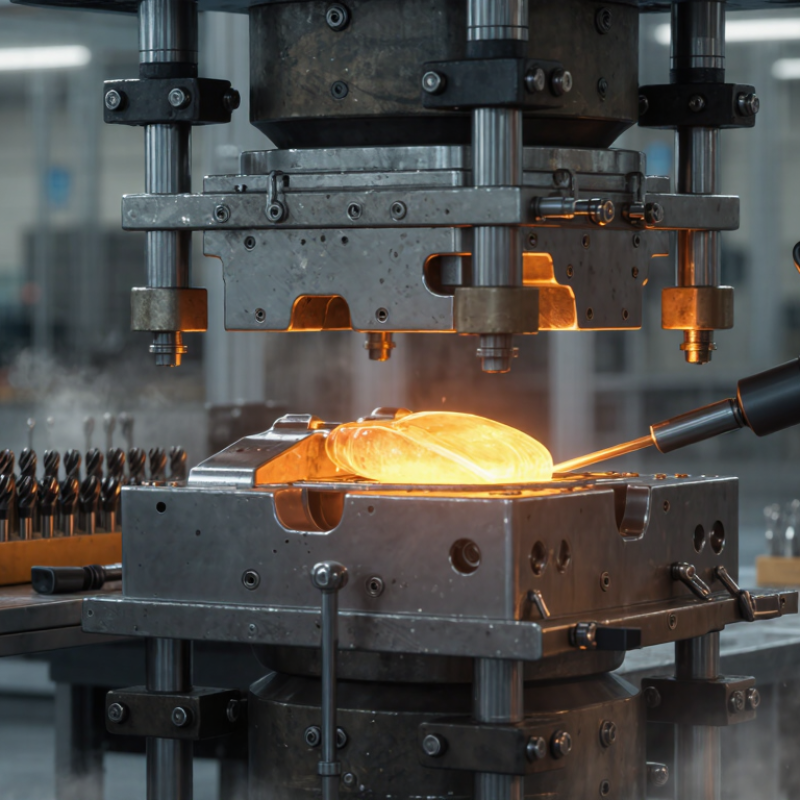
Closed mold hot machining describes working on a part while it is heated and held inside closed tooling. The mold supports the part as a cutting or trimming tool removes material. The heat may soften a polymer or composite matrix, making selected operations easier. The exact meaning can vary between industries, so the process should be defined clearly in any project specification.
It is different from ordinary molding, where material takes shape inside a mold without a separate machining step. In hot machining, temperature, clamping pressure, and cutting speed must work together. Too much heat can deform an edge or damage the surface. Too little may leave a rough cut or increase tool wear. A technician should check the part’s material data and test a small area before production. That matters. Results can shift with wall thickness, tool sharpness, and how evenly the mold warms.
Tips: Measure the part temperature near the cutting zone, not only at the heater. Use a sharp tool and inspect the first cut for burrs, softening, or distortion. Record settings, but treat them as starting points; real parts can behave differently.
The term “closed mold hot machining” is not used uniformly across manufacturing. Here, it describes machining a mold component while it is enclosed in a fixture and held at a controlled elevated temperature. The setup keeps the workpiece stable and limits heat loss. Operators first inspect the mold, secure it, and warm the target area gradually. Temperature sensors check for uneven heating before cutting begins. A tool then removes material in shallow passes, with cutting speed and feed adjusted to suit the alloy and temperature. The cavity may look ready before it is dimensionally stable. That difference matters.
Heat can soften difficult materials and lower cutting forces, but it can also distort thin walls or damage tooling. A peer-reviewed Inconel 718 study published in the Journal of Materials Processing Technology reported cutting-force reductions of up to about 50% under selected laser-assisted heating conditions. That result is specific to its material and setup, not a guaranteed outcome for every mold. For reliable results, record temperature, tool wear, and cavity measurements between passes.
Tips: Use a gradual heat-up, verify temperature near the cutting zone, and leave a small finishing allowance. Recheck dimensions after cooling; hot measurements can mislead. One practical limitation remains: uneven heating is easy to miss.
What Is Closed Mold Hot Machining?
The term closed mold hot machining can describe processes that heat material while it is shaped or worked inside a closed tool. Its exact meaning varies by industry, so the process should be defined before selecting materials or equipment. In many applications, the mold controls the part’s shape while heat makes the material easier to form. Not every process removes material like conventional machining. That distinction matters.
Materials and Equipment Used in the Process
Common workpieces include thermoplastic sheets, resin-based composite laminates, and other materials suited to heat-assisted forming. Their temperature limits differ. A laminate may need controlled heating to soften its resin without scorching fibers, while a thermoplastic sheet must reach a workable temperature without sagging. Check supplier data and test a small sample; material behavior can vary with thickness and prior processing.
The equipment typically includes a matched mold, a heated platen or heating elements, and a press that applies steady closing force. Temperature sensors help track heat near the tool surface, while a controller limits fluctuations. Some setups use release film to reduce sticking and protect the mold. Keep the mold clean, and inspect its mating surfaces for wear. Small gaps can leave uneven edges. One practical uncertainty remains: heat measured at the platen may differ from heat inside the workpiece, so trials should guide the final settings.
| Category | Material or Equipment | Purpose in the Process | Practical Notes |
|---|---|---|---|
| Process definition | Closed-mold heated forming with machining operations | Uses a closed, heated mold to shape or cure a workpiece; machining may be used for features or finishing when the material and process allow it. | The phrase “closed mold hot machining” is not a universally standardized process name. In many production workflows, machining takes place after the part is removed from the mold. |
| Mold material | H13 hot-work tool steel | Provides a durable mold or die surface for processes involving elevated temperatures and repeated thermal cycling. | Commonly used for hot-work tooling. The suitable heat treatment and operating limits depend on the mold design and process conditions. |
| Mold material | P20 prehardened mold steel | Used for mold bases and cavities where machinability and a prehardened supply condition are useful. | Often selected for plastic molds and moderate-duty tooling; suitability depends on the material being processed, temperature, pressure, and required tool life. |
| Workpiece material | Thermoset fiber-reinforced composites | Can be shaped or cured in a closed mold; trimming, drilling, or edge finishing is commonly performed after molding. | Glass- and carbon-fiber composites can produce abrasive dust. Use suitable extraction and tooling. Excessive heat during cutting can damage the resin or cause delamination. |
| Workpiece material | Engineering thermoplastics | May be formed in heated tooling and machined for holes, slots, or dimensional finishing. | Cutting while a thermoplastic is hot can cause softening, smearing, or dimensional change. Many parts are machined after cooling and stabilization. |
| Workpiece material | Aluminum alloys and steel alloys | May be used as workpieces in thermally assisted machining or as components made with heated closed-die processes. | Machinability and safe cutting conditions vary by alloy and temper. Hot-worked parts are commonly allowed to cool or receive the specified heat treatment before finish machining. |
| Molding equipment | Matched heated mold halves | Enclose and shape the material while controlling the cavity geometry. | Mold alignment, venting, surface finish, and release method affect part quality. The mold must be designed for the process temperature and clamping load. |
| Molding equipment | Hydraulic or mechanical press and clamping system | Applies and maintains the force needed to close the mold during forming or curing. | Required force depends on projected part area, material behavior, cavity pressure, and tooling design; it should be determined by process engineering rather than a generic setting. |
| Temperature control | Heaters, temperature controllers, and thermocouples | Heat the mold and monitor temperature at selected locations. | Sensor placement and calibration matter because mold temperature can vary across the tool. Follow the material supplier’s processing window. |
| Machining equipment | CNC milling machine, router, or drilling system | Creates precise holes, edges, pockets, and other features in the part or tooling. | For many molded composites and polymers, CNC machining is performed after demolding and cooling. Fixturing should support the part without causing distortion. |
| Cutting tools | Carbide or diamond-based cutting tools | Remove material while maintaining edge quality and tool life. | Tool geometry and material should match the workpiece. Abrasive fiber composites often require wear-resistant tooling and frequent inspection for edge wear. |
| Safety equipment | Local exhaust ventilation, guarding, and heat-resistant PPE | Controls dust, chips, hot surfaces, and other hazards during molding and machining. | Composite dust and hot-work hazards require task-specific controls. Use the equipment manufacturer’s safety instructions and applicable workplace requirements. |
| Process note: A closed mold is generally used for forming or curing, not for cutting while the mold remains clamped shut. Whether machining is performed hot, warm, or after cooling depends on the material, part geometry, and validated process plan. | |||
What Is Closed Mold Hot Machining?
Benefits and Limitations of Closed Mold Hot Machining
Closed mold hot machining uses heated material and enclosed tooling to shape a part, often followed by machining to refine critical surfaces. The mold contains the material during forming, helping control its shape and reduce unwanted movement. Exact methods vary with the material and equipment, so the term may describe different production setups.
A key benefit is repeatability. When temperature, pressure, and mold conditions stay consistent, parts can emerge with similar dimensions and fewer forming defects. The mold can also support complex shapes that would be difficult to produce through machining alone. Less material may need to be removed later, which can save time and reduce scrap. For example, a near-net-shape component may need only its mounting faces and holes finished.
There are trade-offs. Heated tooling requires careful temperature control, and uneven heating can cause distortion or internal stress. Tooling can be costly, especially for small production runs or frequent design changes. Not always. Some materials respond poorly to heat, and tight tolerances may still require slow, precise finishing. Operators should inspect trial parts and track process conditions; a promising first sample is not proof of stable production. It is also worth questioning whether the reduced machining offsets the setup and tooling costs for a specific part.
What Is Closed Mold Hot Machining?
Common Applications of Closed Mold Hot Machining
Closed mold hot machining is used when heat and a closed tool help shape a part before its edges or features are machined. The mold controls the part’s form during heating and pressure. Depending on the material, finishing may happen while the part remains warm or after it cools. The timing matters: a warm component can be easier to cut, but it may also soften or distort.
A common application is trimming composite panels and molded polymer parts. Technicians may remove flash, smooth edges, or drill mounting holes in components for vehicles, equipment, and enclosures. Rubber seals and gaskets can also need precise trimming after molding, especially where they must sit evenly against a mating surface. In each case, the mold helps maintain the intended shape while excess material is removed.
Fit matters here. A small edge variation can affect sealing or assembly. The process is also useful for prototypes and short production runs, where a molded blank can be finished to specific dimensions without redesigning the mold for every detail. Still, it is not ideal for every material. Heat can change dimensions, and cutting forces can mark a thin wall. Trial cuts, temperature checks, and dimensional inspection help reveal those issues before regular production. Sometimes, the simplest setup needs adjustment.
What is closed-mold hot machining? The phrase can refer to different processes. This chart uses closed-mold injection molding as a practical example and shows representative melt-processing temperature ranges for common thermoplastics. Temperatures vary by grade and processing conditions; these are melt temperatures, not mold temperatures.
5107 County Road C
Manitowoc, WI 54220
920-726-4526