
Stecker Machine Blog

Top Dishwasher Stamping Die Manufacturers in China

Choosing a Dishwasher Stamping Die manufacturer is not just a price comparison. The die must form panels consistently, hold tight dimensions, and withstand repeated production cycles. A dishwasher door panel may look simple, yet its bends, corners, and mounting features leave little room for drift. Small errors matter.

W. Edwards Deming, a leading manufacturing quality expert, wrote, “Quality comes not from inspection, but from improvement of the production process.” That principle applies directly to tooling. A reliable supplier should explain how it controls die design, machining, tryout, and inspection—not merely promise a smooth first sample. Ask for evidence, such as measured trial parts, material specifications, and examples of similar appliance projects. Details count.

This guide introduces notable Dishwasher Stamping Die manufacturers in China and the capabilities buyers should compare. Look beyond polished catalogs. Review engineering support, press compatibility, die life expectations, maintenance access, and communication during revisions. A tool that runs well in a factory trial can still require adjustment after installation. That is worth remembering. No supplier is a perfect fit for every line, and published claims deserve careful checking. The goal is a practical shortlist, grounded in verifiable experience, clear technical answers, and the actual needs of your production process.
Top Dishwasher Stamping Die Manufacturers in China

Dishwasher Stamping Dies: Their Components and Role in Appliance Production

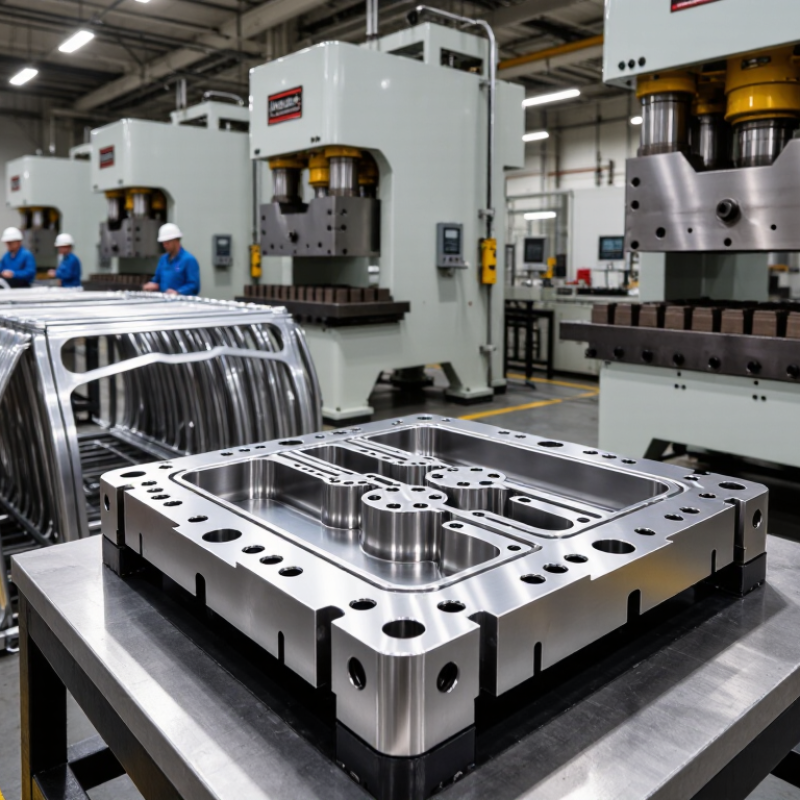
Dishwasher stamping dies shape flat sheet metal into the panels and structural parts used in appliance production. A typical die set includes an upper shoe, lower shoe, punches, die blocks, guide pillars, and a stripper plate. Each component has a practical job. Guide pillars keep the two halves aligned, while the stripper plate helps release the sheet after each press stroke.

The die’s working surfaces determine how metal is cut, bent, or formed. For example, a door panel may need clean edges and shallow formed features, while an inner tub component may require several controlled bends. Die designers consider sheet thickness, material behavior, press capacity, and the sequence of operations. Small details matter. A slight misalignment can leave burrs, uneven flanges, or marks that become visible during assembly.

In production, stamping dies support repeatable parts at a useful manufacturing pace. They can reduce variation between components and limit time-consuming manual correction. Still, the tool is not automatically perfect. Operators may need to adjust clearance, lubrication, or press settings after trial runs, and wear can gradually affect cut quality. Careful inspection of the die and sample parts helps catch problems early. Even experienced teams can overlook a small change in sheet condition, so ongoing checks remain important.

How Die Design Shapes Dishwasher Panel Quality and Form

A dishwasher door panel may look simple, but its broad, shallow surface is difficult to form consistently. Die design controls how sheet metal flows into the cavity, where it stretches, and whether the finished panel sits flat. Small errors matter. A tight corner radius can thin the metal, while uneven blank-holder pressure may leave wrinkles near the edges.

Experienced die designers check material thickness, panel geometry, and forming direction before cutting steel. They use draw beads and carefully adjusted clearances to manage metal flow, then inspect trial parts for springback, oil-canning, and surface marks. A panel that measures correctly at one point can still distort after release. That is why measurements across the full surface matter, not just at the mounting holes.

Tryout feedback should guide changes to the die, rather than being treated as a final inspection formality. Adjustments to radii or pressure may improve one area while affecting another. Not always. In practice, repeatable results depend on testing with the intended material and reviewing parts under consistent lighting. Even a well-designed tool can need correction; the useful question is whether the manufacturer can identify the cause and verify the change.

Core Capabilities of Chinese Dishwasher Stamping Die Manufacturers

Dishwasher stamping dies must produce large, repeatable panels while controlling flatness, holes, and edge quality. Experienced Chinese manufacturers typically build capability across product review, die design, machining, assembly, and tryout. They can assess sheet thickness, forming direction, springback, and likely wrinkling before cutting steel. This early review can reduce costly changes later. Fit matters.

For complex inner tubs and door panels, manufacturers may use progressive or transfer dies, depending on part geometry and production needs. CNC machining supports accurate die components, while spotting and press trials reveal uneven contact or material flow issues. Inspection may include dimensional checks on critical features and sample parts. Small details count. Still, a polished trial does not guarantee stable production; maintenance routines and operator feedback matter too. Some suppliers communicate these limits better than others.

Tips: Ask for a clear tryout plan, sample inspection records, and guidance on die maintenance. Share the target material and press conditions early. If a supplier promises perfect output without discussing tolerances or adjustment time, ask how those results are verified. A practical answer is more useful than a glossy presentation.

How to Compare Manufacturers by Technology, Quality, and Service

Top Dishwasher Stamping Die Manufacturers in China

Comparing manufacturers takes more than reviewing machine lists. Ask how they design progressive or transfer dies, check forming simulations, and manage springback in stainless-steel panels. Request a sample tryout report with dimensional measurements, press speed, and scrap rate. Small details matter: a flange that drifts by a fraction of a millimeter can complicate assembly. A polished sample is not enough.

The International Federation of Robotics’ World Robotics 2024 report recorded 276,288 industrial robot installations in China in 2023, about 51% of global installations. This is useful context, not proof that any die shop is highly automated. During a factory visit, check whether automation supports stable die machining and inspection, rather than serving as showroom decoration. Ask to see calibration records and actual production parts.

Quality comparisons should include tool steel traceability, heat-treatment records, dimensional inspection plans, and documented die-life assumptions. The World Steel Association reported China produced about 1,005 million tonnes of crude steel in 2024. That figure says little about a supplier’s material control, so request certificates for the specific steel used in your die. Service deserves equal scrutiny: confirm spare-insert availability, repair procedures, and response times during production stoppages. I would still treat promised die life cautiously; operating conditions can change the result.

Top Dishwasher Stamping Die Manufacturers in China – How to Compare Manufacturers by Technology, Quality, and Service

Use this scorecard to compare suppliers consistently. The benchmarks below are evaluation criteria, not claims about any specific manufacturer. Set technical acceptance limits in the RFQ according to the part, material, press, and production volume.

Evaluation area What to compare Evidence to request Practical comparison guide Weight
Engineering and die design Experience with the required die type, part geometry, forming sequence, and springback control. Anonymized project examples, design review process, simulation outputs where applicable, and a proposed process layout. Compare the supplier’s proposed process against the part drawing and production requirements. Ask how risks such as wrinkling, cracking, and dimensional variation will be addressed. 20%
Manufacturing technology In-house machining, electrode and wire-cut capability, measurement equipment, and control of outsourced operations. Equipment list, relevant process flow, maintenance records, and identification of subcontracted work. Assess whether the equipment and process controls match the die’s size, complexity, tolerances, and delivery schedule. Verify critical capabilities during an audit if needed. 15%
Materials and traceability Suitability and traceability of die blocks, inserts, wear parts, and heat-treated components. Material certificates, purchase records, heat-treatment reports, and a method for linking records to components. Confirm that material grades and heat-treatment requirements are specified in the quotation or technical agreement, and that documentation can be supplied for critical components. 10%
Quality management Document control, inspection planning, nonconformance handling, corrective action, and change management. Quality-system certificate and scope, inspection records, sample corrective-action report, and revision-control procedure. Verify certificates with the issuing body and confirm that the certified scope covers the relevant manufacturing activities. A certificate alone does not establish die performance. 15%
Tryout and validation Availability of a suitable press, sample-part inspection, dimensional reporting, and correction rounds. Tryout plan, press specifications, measurement method, sample inspection report, and sign-off criteria. Agree in advance on the material, press conditions, sampling plan, drawing revision, and acceptance criteria. Tolerances and capability targets should be part-specific. 15%
Delivery and project control Milestone planning, design approval, progress visibility, risk escalation, and packaging for shipment. A project schedule, milestone definitions, sample progress report, and shipping or export packing plan. Compare lead times only when scope, tryout rounds, approval responsibilities, and delivery terms are equivalent. Ask how schedule changes are communicated. 10%
After-sales service and spare parts Remote troubleshooting, on-site support, spare-part availability, maintenance guidance, and warranty terms. Written service and warranty terms, response-time commitments, spare-parts list, and maintenance documentation. Compare contractual response times, service coverage, travel-cost rules, warranty exclusions, and the availability of replaceable wear components. 10%
Total evaluation weight 100%

Suggested scoring: Rate each area from 1 to 5 using the same evidence standard for every supplier, multiply each rating by its weight, and record any unverified claims as open items. Final acceptance criteria should be documented in the RFQ, technical agreement, and inspection plan.

From Supplier Selection to Die Testing and Production Approval

Selecting a dishwasher stamping die manufacturer starts with the part, not the price. Share approved drawings, material grade, sheet thickness, target output, and critical dimensions. Ask how the supplier manages design revisions and records inspection results. A clear answer matters. Review sample project records, machining capabilities, and the proposed schedule. If details remain vague, clarify them before ordering; assumptions can become costly steel changes later.

During design reviews, check forming sequence, locating features, scrap removal, and access for maintenance. For a stainless-steel tub panel, even a small locating error can affect fit with neighboring components. Request a simulation or documented review of likely wrinkle, split, and springback risks. These checks reduce uncertainty, but they cannot replace trials. No checklist catches everything.

At die testing, use the intended material and press conditions where practical. Measure key features on trial parts, inspect edges for burrs, and record adjustments between runs. Keep the results traceable to the die revision. Production approval should follow repeatable output, acceptable part dimensions, and a workable maintenance plan—not one successful sample. It may feel slower. Still, approving too early can leave operators correcting problems on every shift. Define acceptance criteria together, then document any remaining limitations before routine production begins.