How to Choose Double Glass Solar Panels?
Choosing Double Glass Solar Panels is not simply a matter of selecting modules with glass on both sides. The right choice depends on your site, mounting system, climate, and expected service life. A rooftop installer may care most about weight and handling. A project near salty air or frequent moisture may place greater value on tested resistance to corrosion and water ingress. Details matter.
NREL analyst Michael Woodhouse is known for techno-economic analysis of solar technologies. A practical paraphrase of that approach is: “Compare lifetime value, not one specification.” This is a guiding principle, not a verbatim quotation. Check the product datasheet for power output, temperature behavior, degradation assumptions, dimensions, and weight. Then confirm that the mounting structure and installation plan can support the module safely. A glass-glass design may offer useful durability advantages, but it is not automatically the best fit for every roof or budget. Not the label.
This guide explains how to compare construction, performance data, warranty terms, and real installation needs. It also highlights a common blind spot: buyers may focus on module price while overlooking transport, handling, and structural requirements. Ask suppliers for test documentation and clear warranty conditions, and compare like-for-like models. A specification sheet can look reassuring. Verify the details.
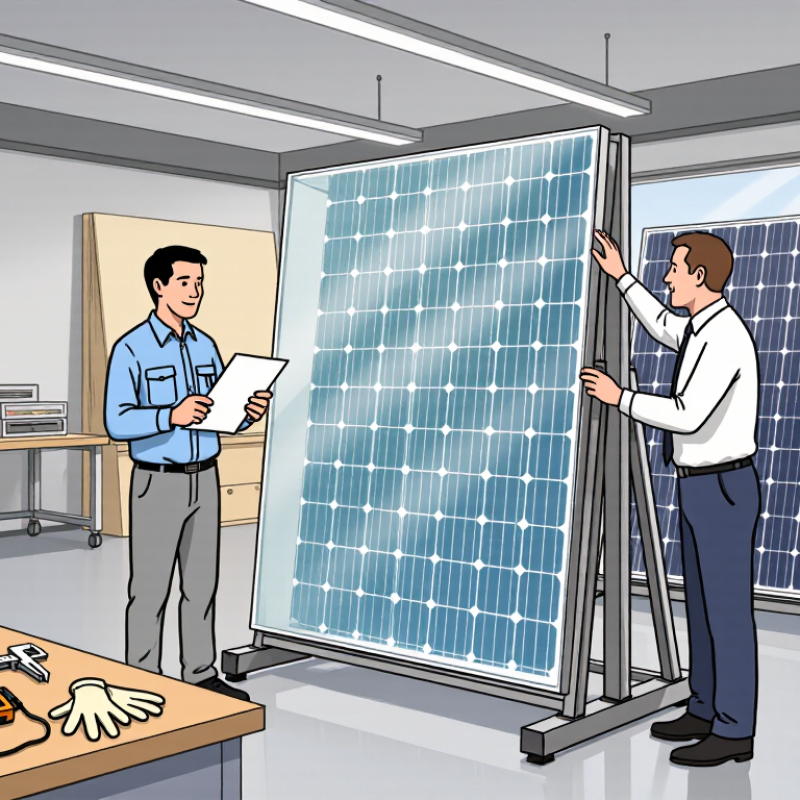
Understand the Structure and Performance of Double Glass Solar Panels
How to Choose Double Glass Solar Panels?
Understand the Structure and Performance of Double Glass Solar Panels
A double glass module places solar cells and encapsulant between front and rear glass sheets. The edge seal helps limit moisture entry, while the rear glass replaces the polymer backsheet used in conventional modules. Some designs support bifacial generation, but rear-side gains depend on reflected light, ground cover, and panel height. Glass alone does not guarantee better output.
Durability depends on the whole assembly. IEA PVPS Task 13 reliability studies identify moisture, temperature cycling, and mechanical stress as important module failure factors. The NREL review “Photovoltaic Degradation Rates” analyzed nearly 2,000 reported rates and found a median decline of about 0.5% per year. That figure is a broad historical benchmark, not a promise for a specific module. Not a magic shield. When comparing options, check glass thickness, edge-seal design, module weight, and mounting-load requirements. Ask for independent test results and field-performance data, not just a long warranty. I would also check whether the installation structure can safely handle the added weight; that detail is easy to overlook.
Assess Your Site Conditions and Energy Requirements
Before choosing double-glass solar panels, map the roof’s usable area, direction, tilt, and shade throughout the day. A chimney’s narrow afternoon shadow can reduce output more than a quick midday inspection suggests. Check roof age, structure, and access too; glass on both sides does not remove installation constraints. If the module is bifacial, light reflected from pale gravel or a bright roof may add energy, but dark shingles usually offer less benefit. Verify the exact module design rather than assuming every double-glass panel captures rear-side light.
Then compare modeled generation with actual electricity use, including seasonal peaks. The U.S. Energy Information Administration’s 2020 Residential Energy Consumption Survey reported average household electricity use of 10,566 kWh per year. Treat that as a reference, not a design target: local climates and household habits vary widely. Use NREL’s PVWatts Calculator with your location, tilt, azimuth, and shading assumptions to estimate production. Add recent utility bills and note planned changes, such as an electric vehicle or heat pump. Small assumptions matter. I have seen a tidy annual estimate obscure winter shortfalls; check monthly output and your evening demand before sizing the system.
Compare Efficiency, Power Output, and Temperature Ratings
How to Choose Double Glass Solar Panels?
Compare efficiency, rated power, and temperature coefficient rather than judging a panel by glass construction alone. Fraunhofer ISE’s Photovoltaics Report (2024) places leading commercial crystalline-silicon module efficiencies around 22–24%. Higher efficiency can help when roof space is tight, but it does not guarantee more annual energy. Check the power rating under standard test conditions, then compare usable roof area and expected shading. Numbers need context.
For double-glass bifacial panels, rear-side output depends on light reflected from the surface below. NREL’s bifacial PV resources identify albedo, mounting height, and rear shading as important system factors. A bright, open installation may gain energy; a close, dark roof may offer little benefit. Temperature matters, too: NREL’s PVWatts documentation uses a crystalline-silicon default power temperature coefficient of −0.37%/°C. A less negative coefficient generally means smaller power losses as modules heat up. Check the exact datasheet value, not just the panel’s rated watts.
Tips: Compare temperature coefficients on the same basis, and ask for modeled annual output using your roof’s tilt, shade, and surface. Measure the site. Real-world estimates can still miss; that uncertainty is worth discussing before choosing.
How to Choose Double Glass Solar Panels? - Compare Efficiency, Power Output, and Temperature Ratings
Compare the cell technologies commonly used in double-glass modules. The figures below are indicative ranges for current full-size modules, generally around 1.9–2.0 m²; actual specifications vary by module design and manufacturer.
| Cell Technology | Typical Module Efficiency | Typical Rated Power | Pmax Temperature Coefficient | Typical Bifaciality | What to Consider |
| PERC | About 20.5–22.0% | About 400–440 W | About −0.34 to −0.40%/°C | About 70–80% | A mature option; compare its lower-light and high-temperature performance with newer cell designs. |
| TOPCon | About 21.5–23.0% | About 430–460 W | About −0.30 to −0.35%/°C | About 75–85% | Often offers a balance of power, efficiency, and bifacial response; check the exact datasheet values. |
| HJT | About 21.5–23.5% | About 430–460 W | About −0.24 to −0.30%/°C | About 85–95% | Generally has a strong temperature coefficient and high bifaciality; compare cost and system-level yield. |
Selection tip: Compare modules of similar dimensions and use the listed Pmax temperature coefficient to assess heat-related power loss. A more negative coefficient means a greater reduction in power as cell temperature rises. Bifacial energy gain depends on rear-side light, mounting height, surface reflectivity, and system design, so it is not guaranteed by the module rating alone.
Check Durability, Safety Certifications, and Warranty Coverage
How to Choose Double Glass Solar Panels?
Check Durability, Safety Certifications, and Warranty Coverage
Double-glass modules place solar cells between two sheets of glass, reducing reliance on a polymer backsheet. This construction can improve resistance to moisture and some environmental stresses, but it does not make a panel unbreakable. Inspect the glass, edge seals, frame, junction box, and cable connections. Ask for test results covering the exact module configuration, not merely a similar product family. Mounting instructions matter, too; installation stress can undermine sound materials.
Check whether the specific model has been evaluated to IEC 61215 for design qualification and IEC 61730 for safety qualification. Verify the model numbers and testing laboratory on the documentation. Certification is useful evidence, not a lifetime guarantee. A 2013 National Renewable Energy Laboratory review of nearly 2,000 photovoltaic degradation rates reported a median rate of about 0.5% per year for crystalline-silicon modules. Treat that as an industry benchmark, not a prediction for every double-glass panel. Details matter.
Compare product and performance warranties separately. Check the start date, exclusions, claim process, and remedy. Does coverage include labor, shipping, or removal? Those costs can change the practical value of a long warranty. Ask how hail or transport damage is handled, and whether replacements must match the original electrical specifications. I would not assume that “25 years” answers these questions; warranty language can leave practical gaps. Keep the complete warranty document with the invoice and installation records.
How to Choose Double-Glass Solar Panels
Typical advertised warranty ranges for solar modules (years). Actual terms vary by product and market.
Use warranty length as a comparison point, not a guarantee of service life. Check the written warranty for coverage, exclusions, and claim requirements. Also verify applicable IEC 61215 design-qualification and IEC 61730 safety certifications; certification and warranty terms should be confirmed for the specific panel.
Confirm System Compatibility, Installation Needs, and Total Cost
Choosing double-glass solar panels starts with checking whether the module fits your system. Compare its voltage, current, connector type, and temperature limits with the inverter and other panels. Ask the installer to verify roof loading, mounting zones, cable routing, and grounding. Glass on both sides can make handling and support details different. Check the panel’s installation manual, not just the product summary. Small details matter.
If the panel is bifacial, site conditions affect its extra output. IEA PVPS Task 13’s 2021 report describes bifacial energy-yield gains of roughly 5% to 30%, depending on factors such as ground reflectivity and mounting height. A dark roof may offer little rear-side benefit. Model your actual roof, not an ideal test site. For total cost, compare installed quotes that include mounting hardware, labor, wiring, inverter changes, and any structural work. NREL researcher Dirk Jordan and co-authors reported a median module degradation rate near 0.5% per year in their 2013 review of field data; use this as broad planning context, not a guarantee for a specific double-glass panel. I would also ask for a clear warranty and replacement plan. Quotes can hide awkward assumptions.






