How to Implement a Forklift Collision Detection System?
Forklift operations are critical in logistics and warehousing. However, they pose significant risks. According to the National Safety Council, forklift accidents account for over 20,000 injuries annually in the United States alone. These accidents can lead to costly damages and, more importantly, severe injuries or fatalities.
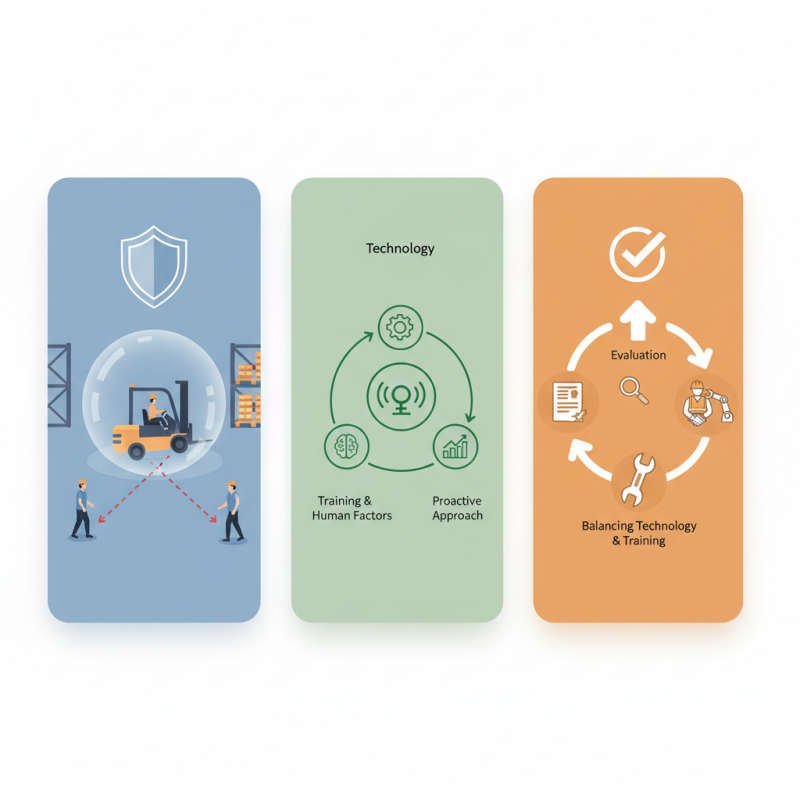
To address these challenges, implementing a Forklift Collision Detection System is essential. Such systems enhance workplace safety. They use sensors and technology to identify potential collisions. This proactive approach can significantly reduce accident rates. However, it’s important to recognize that no system is perfect. Training and human factors can influence effectiveness.
Investing in a robust Forklift Collision Detection System provides substantial long-term benefits. Yet, organizations must consistently evaluate its performance. Regular assessments will help identify areas for improvement. Ignoring these factors may lead to a decline in safety standards over time. Ultimately, balancing technology with continuous training will ensure safer work environments.
Overview of Forklift Collision Detection Systems
Forklift collision detection systems are essential in busy warehouses. These systems help prevent accidents involving forklifts and pedestrians. They use various technologies, such as cameras and sensors. The goal is to enhance safety and efficiency in the workplace. The technology can alert operators to nearby obstacles or people. However, the implementation may face challenges.
One common issue is system calibration. If the sensors are not accurately set up, false alarms can occur. This may lead to issues in trust among operators. Training is also crucial. Workers must understand how to use the system effectively. Their input can improve system performance. Nevertheless, some workers might resist new technology. Change is hard, and some prefer traditional methods. These human factors can impact the system's effectiveness.
Regular maintenance is vital for these systems. Malfunctioning sensors can create blind spots. This could lead to accidents, counteracting the system's purpose. In addition, the environment can affect system performance. Dust or debris might obscure sensors and cameras. It's important to address these factors for optimal performance. Continuous evaluation and feedback can enhance safety measures in forklift operations.
Key Technologies Used in Collision Detection Systems
Forklift collision detection systems rely on several key technologies to enhance workplace safety. One major technology is LiDAR, which uses laser pulses to create a detailed map of the surroundings. This allows for precise distance measurement and obstacle identification. LiDAR sensors can detect other vehicles, pedestrians, or hazards in real time. However, this technology can sometimes misinterpret non-static objects, leading to false alarms.
Another important component is vision-based systems, which use cameras and advanced algorithms. These systems analyze the video feed to identify potential collisions. They offer a wide field of view and can recognize various shapes and movements. Yet, they struggle in poor lighting conditions. The effectiveness may drop significantly in low visibility or harsh weather.
Additionally, RFID technology can play an essential role in collision detection. By using tags and readers placed throughout the facility, proximity alerts can be generated. This system helps forklifts to be aware of their environment. However, its reliance on infrastructure can be a limitation. It requires careful planning and setup, which can be challenging in dynamic environments. Testing and ongoing adjustments may be needed for optimal performance.
How to Implement a Forklift Collision Detection System? - Key Technologies Used in Collision Detection Systems
| Technology | Description | Advantages | Typical Use Cases |
| LiDAR | Uses laser beams to create a 3D map of the environment. | High accuracy, works well in diverse lighting conditions. | Warehouse navigation, perimeter monitoring. |
| Ultrasonic Sensors | Emits ultrasonic waves to detect nearby objects. | Cost-effective, easy to integrate into existing systems. | Close-proximity detection, obstacle avoidance. |
| Camera Systems | Uses computer vision to identify and track objects. | Provides rich visual information, can detect complex objects. | Traffic monitoring, object classification. |
| Radar | Uses radio waves to detect the distance and speed of objects. | Effective in poor weather conditions, long-range detection. | Long-range collision avoidance, speed tracking. |
| Infrared Sensors | Detects heat emitted by objects to identify presence. | Works in total darkness, simple installation. | Blind spot monitoring, pedestrian detection. |
Steps to Assess Your Facility for Collision Risk
Assessing your facility for collision risk is essential to ensure safety. Start by observing the layout. Identify areas with high foot traffic. Narrow aisles and tight corners are often problematic for forklifts. Mark these areas clearly and consider using mirrors to enhance visibility. Regularly check for clutter. Obstructions can lead to unexpected incidents.
Next, gather data on past incidents. Reviewing accident reports can give insights into common collision scenarios. Speak to your forklift operators. They can share firsthand experiences and highlight hazardous zones. Involving the team creates awareness. It might reveal hidden risks many overlook.
Finally, consider equipment upgrades. Modern detection systems can alert operators to nearby obstacles. Evaluate your current safety measures regularly. This will help in finding gaps in your system. Reflection on these aspects can prevent future accidents. Safety should always be a priority.
Implementation Process of a Collision Detection System
Implementing a forklift collision detection system is essential for enhancing safety. A robust system reduces accidents significantly. According to industry reports, about 25% of workplace injuries involve forklifts. Proper implementation can mitigate this risk effectively.
The process starts with assessing your facility. Review the layout and identify high-traffic areas. Install sensors strategically in these zones. Sensors can detect obstacles and prevent collisions. They may include cameras, ultrasonic sensors, and LiDAR technologies. Data shows that up to 60% of accidents occur in blind spots. Addressing these areas is crucial.
Tips: Regularly calibrate the sensors to ensure accuracy. Human factors can lead to errors. Operators should be trained to recognize and respond to warnings. Check system functionality often, as this is vital. A poorly maintained system risks failure.
Remember, engagement from your team is necessary. Address any resistance to new technologies. Facilitate workshops to discuss safety improvements. Collaboration can uncover blind spots in the process. Always seek feedback to enhance system performance over time.
Best Practices for Training and Monitoring Operators
Training forklift operators is crucial for safety. Regular training sessions help employees understand the risks involved. Engaging simulations are effective for hands-on learning. Supervisors should monitor operators in real environments. This provides direct feedback and identifies areas for improvement.
Incorporating real-life scenarios in training can help operators think critically. Some operators may overlook small details, leading to dangerous situations. Therefore, regular assessments are vital. Monitoring gives insight into proper techniques. Mistakes should be discussed openly. This fosters a culture of safety and accountability.
Using technology can enhance training effectiveness. Video recordings of operations can be used to critique performance. Operators may not realize their blind spots until they see themselves in action. Engaging employees in discussions about their experiences can lead to valuable insights. Continuous improvement is a journey, not a destination. Keeping an open mind will help create a safer environment for everyone.