
Stecker Machine Blog

7 Tips for Choosing the Right Zeolite Rotor?

Choosing the right Zeolite Rotor begins with the pollutant, not the equipment brochure. VOC concentration, airflow, humidity, solvent type, and operating temperature all influence performance. A rotor handling dry ethanol vapors may behave differently with humid ketones or mixed solvents.

The U.S. EPA Air Pollution Control Cost Manual explains that adsorption performance depends heavily on adsorbent properties, regeneration conditions, and process stability. Its guidance also shows that high control efficiency requires correct sizing and continuous monitoring. Industry analyses from Grand View Research and MarketsandMarkets identify stricter VOC rules, energy efficiency, and factory decarbonization as major drivers for adsorption-based control systems. The market is growing. Yet market growth does not guarantee a suitable rotor.

Zeolite researcher Dr. S. Kulprathipanja has emphasized a central principle: “Adsorption performance depends on the interaction between the adsorbate and the adsorbent.” That point deserves attention. A Zeolite Rotor is not a magic box. It is a process component.

The following seven tips examine capacity, zeolite type, humidity tolerance, concentration ratio, regeneration energy, pressure drop, and maintenance access. EPA guidance commonly associates well-designed VOC control systems with efficiencies above 90 percent, although actual results vary with inlet conditions and testing methods. Small details matter. A blocked filter can raise pressure drop. Poor sealing can release untreated air. An attractive energy estimate may also omit fan power, heater losses, or replacement costs.

This guide aims to support a practical decision. Some assumptions may need revision after pilot testing. That is not a weakness. It is responsible engineering.
7 Tips for Choosing the Right Zeolite Rotor?

Understand Zeolite Rotor Structure and Operating Principles

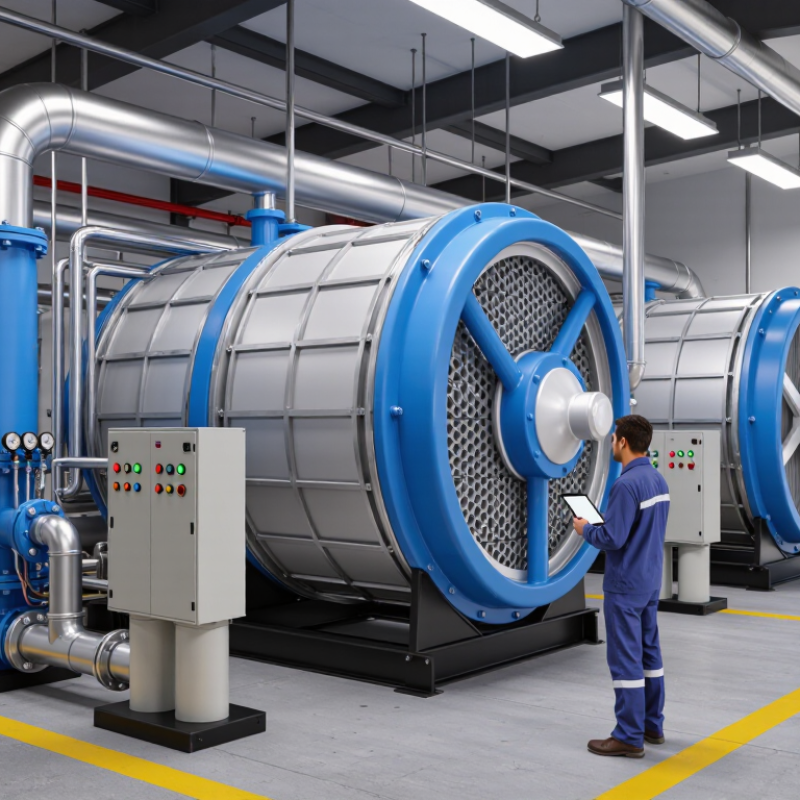
Choosing the right zeolite rotor starts with understanding its internal structure. A rotor is usually a honeycomb wheel coated with hydrophobic zeolite. Thousands of narrow channels create high contact area while limiting pressure drop. The coating attracts volatile organic compounds from passing air. Moisture resistance matters because humid air can reduce adsorption performance.

During operation, the wheel turns slowly between process and regeneration zones. The process air enters the adsorption section, where zeolite captures target molecules. Heated regeneration air then passes through another section. It releases the captured compounds and prepares the surface for reuse. Seals divide these airflow zones. Even small gaps can cause untreated air to bypass the rotor.

Real-world selection requires more than checking airflow capacity. Measure temperature, humidity, contaminant concentration, and required removal efficiency. A larger rotor may reduce face velocity, but it also needs more space and energy. Check the rotor’s pressure drop at the actual operating airflow. Laboratory data can look excellent. Field conditions are less polite.

Inspect the substrate, coating uniformity, drive system, and seal design. Ask how performance changes during startup and high humidity. A rotor can look clean and still underperform. I have seen maintenance teams focus on dust while ignoring air leakage. That mistake is easy to repeat. Leave room for inspection, cleaning, and future process changes. The best choice fits the whole air-treatment system, not only its catalog capacity.

7 Tips for Choosing the Right Zeolite Rotor: Operating Temperature Guide

Zeolite rotors use a rotating honeycomb structure with adsorption and regeneration zones. Selecting a rotor requires matching the process air temperature with the regeneration temperature and moisture load.

The chart shows representative engineering temperature ranges commonly used when evaluating zeolite rotor systems. Adsorption air is typically near ambient conditions, while regeneration air is heated to release the moisture captured by the zeolite. Actual values depend on humidity, airflow, rotor depth, wheel speed, and required outlet dew point.

Define Airflow, VOC Load, and Removal Performance Requirements

Tip 1: Define the airflow before selecting a zeolite rotor. Measure actual process flow, not only the fan’s rated capacity. Include temperature, humidity, pressure, and operating hours. A rotor sized for average airflow may struggle during production peaks. Face velocity also matters. Excessive velocity can reduce contact time and removal efficiency. Leave practical capacity margin. It is often overlooked.

Tip 2: Quantify the VOC load with reliable field data. Record inlet concentration, chemical types, flow rate, and daily variation. VOC mixtures can compete for adsorption sites. High humidity may reduce performance for some compounds. One sample is rarely enough. Continuous monitoring provides stronger design evidence. A neat spreadsheet can still be wrong if the sampling point is poorly chosen. Recheck unusual readings before final sizing.

Tip 3: Set removal performance requirements in measurable terms. Specify the target outlet concentration or percentage removal, then define acceptable pressure drop and energy use. Ask for test conditions that match your application. Laboratory results may use a cleaner gas mixture than the real process. Confirm breakthrough behavior, regeneration temperature, and desorption airflow. Pilot testing is valuable when VOC loads change frequently. The “best” removal rate is not always the best operating choice. Reliable decisions combine supplier data, site measurements, and commissioning checks.

Compare Rotor Materials, Configurations, and Adsorption Capacity

7 Tips for Choosing the Right Zeolite Rotor

Compare rotor materials before comparing prices. Hydrophobic zeolite suits solvent-rich streams and tolerates humidity better. Standard zeolite can deliver strong adsorption, but moisture may occupy active sites. Check the supplier’s capacity curve at your actual temperature, humidity, and solvent concentration. Dry laboratory data can mislead.

Match the rotor configuration to the exhaust pattern. A larger rotor lowers face velocity and pressure drop, while a smaller rotor saves space but may increase fan energy. Select sealing, purge, and regeneration zones carefully. The U.S. EPA Air Pollution Control Cost Manual, Seventh Edition, discusses rotary concentrators achieving roughly 10:1 to 20:1 concentration ratios in suitable applications. Your result may differ. Measure it.

Review adsorption capacity in grams per kilogram, not only removal percentage. A rotor with high capacity may still underperform during solvent spikes. Compare working capacity, desorption temperature, cycle time, and pressure drop. The European Commission’s Best Available Techniques documents emphasize site-specific gas flow, contaminant loading, and energy evaluation for waste-gas treatment. Ask for breakthrough curves using your compounds. Seven practical checks help: material resistance, humidity tolerance, rotor diameter, zone ratio, seal design, regeneration heat, and maintenance access. I would not trust a single capacity figure. Field conditions are rarely so polite.

Evaluate Energy Use, Regeneration Methods, and System Compatibility

7 Tips for Choosing the Right Zeolite Rotor

A zeolite rotor is not automatically an energy-saving device. Its performance depends on airflow, VOC concentration, humidity, and regeneration temperature. Check the real operating profile, not only the design maximum. The U.S. Department of Energy’s 2022 Industrial Decarbonization Roadmap identifies process heating as roughly 51% of manufacturing energy use. Regeneration heat deserves close attention. Compare direct-fired, electric, and indirect-heated options. Waste heat may reduce energy demand, but its temperature and availability can fluctuate.

The U.S. EPA Air Pollution Control Cost Manual identifies fan power, regeneration energy, and media replacement as recurring cost drivers. Ask suppliers for power consumption at your actual pressure drop. A low-temperature system may look attractive, yet humid air can reduce adsorption capacity. Small details matter. Review solvent compatibility, inlet dust, airflow variation, duct dimensions, control signals, and fire protection requirements. European Commission JRC guidance also stresses matching abatement equipment to concentration and operating conditions. Technical guidance commonly reports 90–99% VOC removal for suitable adsorption systems, but this range is not guaranteed. Treat it as a reference, not a promise. A spreadsheet can still miss seasonal changes, startup losses, and maintenance access. That is where many designs become expensive.

7 Tips for Choosing the Right Zeolite Rotor? - Evaluate Energy Use, Regeneration Methods, and System Compatibility

The values below are practical engineering reference ranges for preliminary selection. Actual performance depends on zeolite type, VOC composition, humidity, airflow, rotor geometry, and operating conditions.

Tip Evaluation Dimension Practical Reference Data What to Check Why It Matters Recommended Verification
1 Match the rotor to the airflow and VOC load Design the rotor around the actual process airflow, VOC concentration, temperature, and operating hours. Common adsorption applications use VOC concentrations from tens to several thousand ppmv. Confirm normal, minimum, maximum, and upset airflow; VOC mass loading in kg/h; inlet temperature; and whether the stream is continuous or intermittent. An undersized rotor can cause breakthrough and poor removal efficiency, while an oversized rotor increases capital cost, pressure drop, and energy use. Use measured plant data over representative production cycles rather than relying only on nameplate airflow.
2 Evaluate energy use and heat recovery Thermal regeneration commonly operates in the approximate range of 120–220 °C, depending on the adsorbate and zeolite formulation. Rotor drive power is usually much smaller than regeneration heat demand. Compare regeneration-air flow, heater duty, temperature control, start-up energy, insulation, and sensible-heat recovery from the hot regeneration stream. Heating the regeneration air is often the largest operating-energy item. Heat recovery can materially reduce fuel or electrical demand. Request a heat-and-mass balance showing kW or MJ/h at design load, part load, start-up, and summer/winter conditions.
3 Select the appropriate regeneration method Thermal regeneration is widely used for VOC removal. Other options, such as steam or pressure-assisted regeneration, may be suitable only for compatible adsorbates and process conditions. Review VOC boiling point, flammability, condensation behavior, oxidation risk, water affinity, and whether the recovered VOC must remain concentrated or separated. The regeneration method affects recovery quality, downstream treatment requirements, corrosion risk, safety controls, and operating cost. Require laboratory or pilot testing with the actual VOC mixture, including desorption behavior and regenerated-air composition.
4 Check humidity and water resistance Zeolite adsorption performance can change substantially when the inlet contains high relative humidity or liquid water. Condensed water should not enter the rotor. Measure relative humidity, dew point, liquid carryover, wash-down exposure, and the presence of water-soluble or strongly polar compounds. Water can compete for adsorption sites, increase pressure drop, reduce VOC capacity, and lengthen start-up or recovery time. Specify upstream mist elimination, cooling or reheating requirements, drainage, and performance testing at the highest expected humidity.
5 Verify pressure drop and fan compatibility Rotor pressure drop is commonly in the range of 100–500 Pa, but the actual value depends on face velocity, rotor depth, media structure, dust loading, and seals. Compare clean and loaded pressure drop, available fan static pressure, face velocity, duct arrangement, leakage allowance, and filter condition. Excessive pressure drop increases fan power, can reduce process airflow, and may prevent the system from reaching its required capture rate. Obtain a pressure-drop curve at the design airflow and check the complete system, including filters, dampers, ductwork, and downstream equipment.
6 Confirm concentration-factor and downstream-treatment compatibility Many rotor systems concentrate VOCs into a smaller regeneration stream. A concentration factor of approximately 5:1 to 20:1 is often considered during preliminary design, but the achievable value is application-specific. Check the concentrated outlet flow, VOC mass rate, temperature, oxygen level, solvent composition, and compatibility with oxidation, recovery, condensation, or other treatment equipment. A higher concentration can reduce downstream equipment size, but it may increase peak temperature, explosion risk, condensation, and control complexity. Confirm the downstream system's maximum VOC concentration, lower explosive limit controls, temperature limits, and turndown capability.
7 Review materials, safety, maintenance, and controls The system should include suitable filtration, temperature monitoring, VOC monitoring, fire protection, sealing, rotor-drive controls, and access for inspection and cleaning. Assess dust and aerosol loading, corrosive compounds, reactive VOCs, auto-ignition risk, emergency shutdown logic, seal replacement, bearing access, and spare-part requirements. Long-term reliability depends on preventing fouling, overheating, seal leakage, corrosion, and unsafe VOC accumulation. Request a hazard assessment, control narrative, maintenance schedule, alarm list, inspection intervals, and documented performance guarantees.
Selection rule of thumb: Choose the rotor only after confirming airflow, VOC mass loading, humidity, pressure drop, regeneration heat duty, concentration-factor limits, and downstream safety requirements under both design and part-load conditions.

Check Maintenance Needs, Supplier Support, and Total Ownership Costs

7 Tips for Choosing the Right Zeolite Rotor

A zeolite rotor may look simple, but its performance depends on the entire system. Check the airflow, humidity, inlet temperature, and contaminant concentration before comparing models. In plant audits, I have seen equipment selected from catalog data alone. The result was higher pressure drop and unstable removal efficiency. Ask for performance data under conditions close to your facility. Also confirm rotor size, rotation speed, sealing design, and regeneration temperature.

Maintenance needs deserve equal attention. Request a clear service schedule, including inspections, cleaning, seal checks, and bearing replacement. Can technicians reach the rotor without removing nearby ductwork? Small details matter. Check spare-part availability and expected delivery times. Supplier support should include commissioning guidance, operator training, troubleshooting documents, and defined response times. Speak with experienced users when possible. Their records may reveal problems that brochures omit.

Calculate total ownership costs over five to ten years. Include electricity for fans and heaters, replacement seals, planned outages, spare parts, and lost production during repairs. A lower purchase price can become expensive when energy use is high. Ask the supplier to explain assumptions behind every estimate. Use your actual operating schedule, not ideal laboratory conditions. I once underestimated seasonal humidity, and the projected savings looked better than reality. That mistake changed how I review supplier claims. Reliable decisions need measured data, transparent warranties, and support that remains available after installation.
