
China’s Cnc Precision Machining sector is broad, and a “top 10” list needs more than impressive machine photos. Buyers should compare tolerances, materials, inspection methods, lead times, and communication. A polished website proves little. A measured sample part tells more.
The International Federation of Robotics reported 4,281,585 industrial robots operating worldwide in 2023, a 10% increase from 2022. This is not a CNC machining market figure, but it shows how automation is reshaping manufacturing capacity. Manufacturing scholar Yoram Koren’s research on reconfigurable production offers a useful principle: factories need flexibility as product mixes change. For Cnc Precision Machining suppliers, that means checking whether a shop can handle both repeat orders and design revisions without losing control of quality. Ask for inspection records, not just a tolerance promise.
Small details matter. A burr on a milled edge, a late material certificate, or a vague inspection report can delay an entire assembly. This guide compares ten Chinese companies through practical criteria, including equipment, process range, quality systems, and export experience. No ranking can replace a supplier audit or a trial order. Some capabilities are difficult to verify from public information alone. That deserves a closer look.
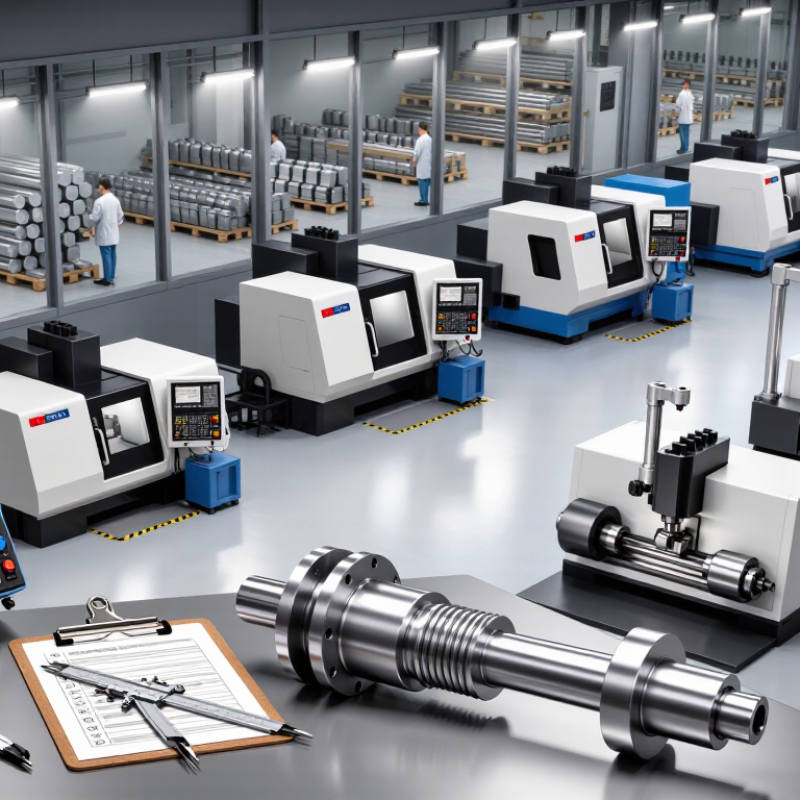
In China’s manufacturing industry, CNC precision machining converts digital designs into accurate metal and plastic components. Common operations include milling, turning, drilling, boring, and multi-axis cutting. A workshop might produce an aluminum equipment housing, a stainless-steel valve body, or a small brass connector. The process supports prototypes and repeat production, depending on machine capacity and inspection planning. Details matter.
This work serves medical devices, electronics, automotive systems, industrial equipment, and many other fields. Materials range from aluminum and stainless steel to engineering plastics and copper alloys. Quality depends on more than machine accuracy. Operators also check dimensions with calibrated instruments, review surface finish, and follow the drawing’s tolerances. Not every part needs micron-level precision. Setting unnecessarily tight tolerances can increase cost and scrap without improving how a component works.
For buyers, useful questions cover material sourcing, heat treatment, finishing, and inspection records. Clear drawings and realistic tolerances help avoid costly revisions. Even a polished capability sheet can leave gaps. Ask how a supplier handles a difficult feature, such as a deep bore or thin wall, and how results are verified. Communication matters, too; a small misunderstanding about a datum can change the finished part. The process is capable, but no single machining setup fits every design.
Choosing among China’s leading CNC machining companies takes more than comparing hourly rates. Start with your part’s requirements: material grade, critical dimensions, surface finish, and expected production volume. Ask how the supplier controls tolerances during setup and repeat runs. A capable team should explain its inspection method and provide sample measurement reports, not just promise precision. For a small aluminum bracket, for example, check whether hole positions and flatness are measured against your drawing. That matters.
Review equipment and process fit, too. A shop’s machine list is useful, but it does not prove that its operators have experience with your geometry or material. Request a first-article sample and clarify who handles programming, deburring, and final inspection. Check response times and how engineering questions are documented. If an answer stays vague, treat that as a signal to investigate—not automatic proof of poor quality. I would also compare several suppliers; one overlooked detail in a quote can change the real cost.
Tips: Send the same drawing and revision to every candidate. Ask for a written tolerance review, inspection plan, lead time, and packaging details. Keep the first order small enough to verify fit before scaling up. A little caution helps.
Use this supplier-evaluation framework to compare up to 10 CNC machining companies without relying on unsupported rankings. Request evidence for each item and assess the supplier’s ability to meet your specific drawings, materials, volumes, and delivery requirements.
| No. | Evaluation Dimension | What to Assess | Evidence to Request | Important Check |
|---|---|---|---|---|
| 1 | Process Capability | Relevant experience with CNC milling, turning, drilling, tapping, and any required multi-axis work. | Process plan, sample inspection report, and examples of comparable part geometries. | Confirm that the quoted process can produce the features and tolerances on your actual drawing. |
| 2 | Dimensional Quality | How critical dimensions, geometric tolerances, and measurement methods are controlled. | Inspection records, measuring-equipment list, calibration records, and a sample first-article report. | Do not treat a general tolerance claim as a guarantee. Confirm each requirement against the drawing and inspection plan. |
| 3 | Quality Management System | Whether documented procedures cover order review, production control, inspection, nonconformance, and corrective action. | Current certificate, issuing body details, certificate scope, site address, and audit status. | ISO 9001 is a general quality-management standard; a certificate alone does not prove that a specific part will meet its requirements. |
| 4 | Industry-Specific Requirements | Whether the supplier’s systems and traceability fit the intended industry and product risk. | Relevant certificates and scope documentation, plus examples of required traceability or validation records. | AS9100 is used in the aerospace quality-management sector, ISO 13485 in medical-device quality management, and IATF 16949 in automotive quality management. Verify applicability and certificate scope. |
| 5 | Material Control | Ability to source and identify the specified alloy, grade, temper, or condition throughout production. | Material certificates, purchase records, lot identification, and material-to-part traceability procedures. | Check that certificates match the drawing specification and the material actually used for your order. |
| 6 | Surface Finish and Post-Processing | Control of specified finishes and outsourced processes such as anodizing, plating, heat treatment, or passivation. | Process specifications, inspection results, subcontractor controls, and certificates where required. | Clarify who performs each operation and who is responsible for final acceptance. |
| 7 | Production Capacity | Available machine types, staffing, production scheduling, and ability to handle the requested quantity and repeat orders. | Equipment list, capacity plan, proposed production schedule, and confirmation of available capacity. | Evaluate capacity against your part mix and delivery schedule rather than machine count alone. |
| 8 | Prototyping and Ramp-Up | How design questions, prototypes, first articles, engineering changes, and production approval are managed. | Sample project timeline, change-control procedure, and agreed first-article or sample-approval plan. | Agree on approval criteria and revision control before production starts. |
| 9 | Delivery and Communication | Quotation responsiveness, order updates, export-document readiness, and procedures for handling delays. | Written lead-time assumptions, communication contacts, shipment plan, and escalation process. | Request a schedule that separates production time, inspection, packaging, and transportation. |
| 10 | Total Cost and Risk | Quoted price alongside tooling, setup, inspection, finishing, packaging, freight, and potential rework costs. | Itemized quotation, payment terms, warranty or corrective-action terms, and packaging specification. | Compare quotations on the same drawing revision, quantity, Incoterms, inspection scope, and delivery basis. |
Comparison tip: Apply the same drawing package, quantities, inspection requirements, and delivery assumptions to every supplier. Verify certificates and technical claims directly with the issuing body or through appropriate audit and sample-part checks.
The ten profiles below highlight different machining capabilities, not a verified ranking. A small-batch shop may focus on aluminum housings, using three-axis mills and careful deburring for clean edges. Another supplier may handle stainless-steel shafts, checking diameter and concentricity with micrometers. A third may specialize in complex milled parts, where five-axis equipment reduces repositioning between features. A fourth may serve prototype work, offering quick design feedback before production begins.
One workshop may machine brass fittings and maintain tight control over tool wear. Another may produce plastic components, adjusting feeds to reduce heat and surface marks. A supplier focused on medical-device components may emphasize traceability and documented inspection steps. Ask what records are available. A high-volume shop may rely on repeatable fixtures and in-process checks to keep batches consistent. Yet production speed alone says little about quality.
A precision turning company may serve customers needing small, concentric parts with smooth bores. Another supplier may combine milling, turning, and finishing, reducing handoffs between operations. The final profile could be a general-purpose job shop handling varied materials and short runs. Request sample inspection reports, material certificates, and clear tolerance reviews. A polished website is not enough. Compare actual part experience, communication, and inspection methods against your drawing; supplier capabilities can vary by machine, operator, and project.
Comparing China’s top ten CNC precision-machining companies means looking beyond machine counts. Some suppliers focus on high-volume turning and milling; others offer five-axis machining, complex prototypes, or small production runs. Ask for sample inspection reports, material traceability, and demonstrated process capability—not just advertised tolerances. A shiny machine proves little.
Industry demand also shapes the comparison. The China Association of Automobile Manufacturers reported 30.16 million vehicles produced in China in 2023, supporting demand for repeatable, high-volume components. SEMI reported that China’s semiconductor equipment market reached US$49.6 billion that year. This points to a substantial electronics manufacturing ecosystem, though it does not directly measure demand for machined parts. Suppliers serving automotive work may prioritize cycle time and stable batch quality; aerospace and medical projects often require tighter documentation and more demanding inspection. One comparison remains imperfect: public profiles rarely reveal production yield or delivery consistency. Request evidence from comparable parts, such as a measured aluminum housing or a stainless-steel fixture, before judging a supplier’s fit.
Choosing among China’s CNC precision machining companies takes more than comparing hourly rates. A capable partner should understand material behavior, tolerances, and inspection methods. Share a clear drawing, revision level, material grade, surface finish, and critical dimensions. Ask how first-article checks are performed and documented. Small details matter. A tight tolerance on a thin wall may need a different process plan than the same tolerance on a compact block.
Tips: Request sample inspection reports and a quote that separates machining, finishing, tooling, and shipping. Confirm equipment capacity, expected lead time, communication arrangements, and who approves drawing changes. When practical, begin with a small paid batch. Check edges, threads, flatness, and packaging on arrival. Do not rely on polished photos alone. A neat sample may not prove consistent production.
Cost is one factor, not the whole decision. Ask how the shop handles measurement drift, rejected parts, and corrective actions. A reliable partner explains risks before production and gives clear updates when plans change. Some requirements may be negotiable; critical dimensions should not be. It is worth revisiting assumptions, especially when a drawing leaves room for interpretation.
5107 County Road C
Manitowoc, WI 54220
920-726-4526