
China is home to many waste-baling equipment suppliers, but a “top 10” list should be treated as a research shortlist, not a universal ranking. This introduction compares manufacturers through practical details: press force, chamber dimensions, bale weight, cycle time, and the materials each machine can handle. Small details matter. A narrow feed opening can slow a busy sorting line, while hard-to-source wear parts can turn routine maintenance into lost production time.
The phrase Waste Bale Press Mac appears in some searches for waste bale press machines. Buyers should still check the exact model and its intended use. Ask for a machine specification sheet, recent operating references, safety features, installation requirements, and written after-sales terms. Where possible, compare test results using similar feedstock; cardboard, plastic film, and mixed recyclables behave differently under compression. A polished brochure is not a performance test.
A quotation attributed to an expert should be verified before publication. Proposed quote for review: “A baler earns trust through consistent bales, predictable maintenance, and support that answers when the line stops.” — Li Wei, recycling-equipment engineer. This is an illustrative draft, not a verified interview or sourced statement. The manufacturers featured in the guide should therefore be assessed against documented capabilities and buyer needs, rather than promotional claims alone. Even a careful comparison has limits: machine performance depends on material condition, operator practice, and site layout.
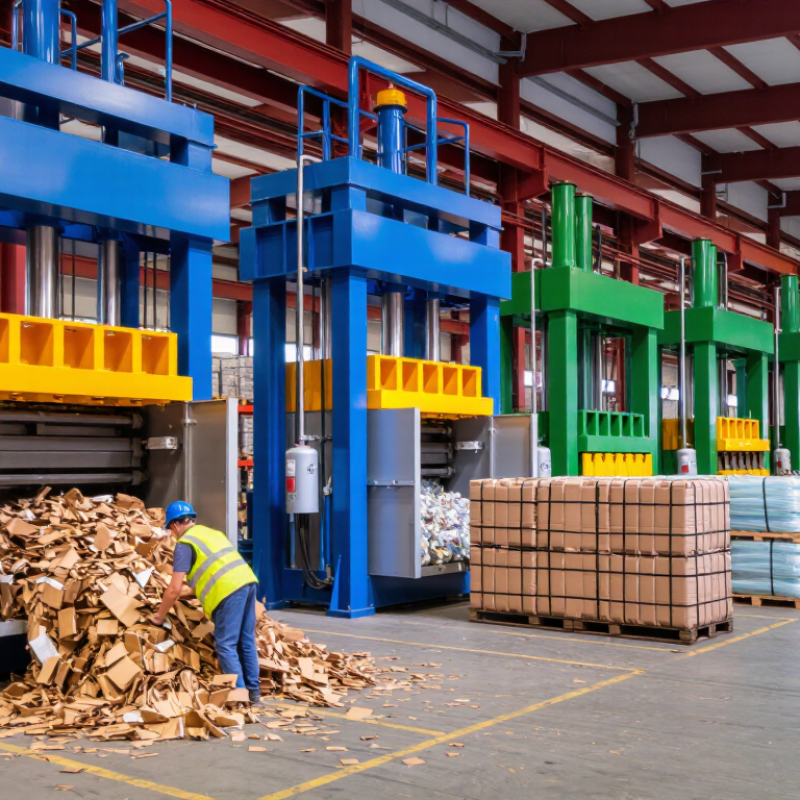
A waste bale press machine compresses loose recyclables into dense, tied bundles for storage and transport. Common feedstocks include corrugated cardboard, paper, and selected plastics. In a busy warehouse, the difference is visible: loose cartons crowd walkways, while compact bales stack on pallets. The World Bank’s What a Waste 2.0 report estimated that the world generated 2.01 billion tonnes of municipal solid waste in 2016; at least 33% was not managed in an environmentally safe manner. That matters. Pressing does not solve poor sorting, but it can make recovered materials easier to handle and move.
Applications vary by site. Retail distribution centers often press cardboard near receiving docks; recycling facilities may use separate equipment for different material streams. The U.S. Environmental Protection Agency reported that Americans generated 292.4 million tons of municipal solid waste in 2018, with 69 million tons recycled or composted. A press should match actual throughput, material type, bale dimensions, and available floor space—not just peak capacity on a specification sheet. Operators also need guarded access, clear loading routines, and maintenance checks. A tidy bale can conceal contamination or inconsistent feed. That is easy to overlook. Bale weight and density should be checked against downstream handling needs, since a machine setting that works on dry cardboard may not suit damp or mixed loads.
Choosing among China’s waste bale press machine manufacturers takes more than comparing prices. Start with the material you handle: loose cardboard, film, or mixed paper behaves differently under pressure. Ask manufacturers for a machine configuration matched to your typical load, bale size, and daily operating hours. A press designed for occasional use may struggle on a busy sorting line. That matters.
Check measurable details, not broad claims. Request rated force, chamber dimensions, expected cycle time, motor power, and examples of comparable installations. If possible, review test results using your own material. A dense bale can reduce storage and transport needs, but only if the press feeds reliably and produces consistent dimensions. Ask how operators clear jams and access routine maintenance points. Small details count.
Assess service capability before placing an order. Confirm which wear parts are stocked, how quickly technical support responds, and whether manuals include clear maintenance schedules. Inspect guards, emergency stops, and control labels during a factory visit or live demonstration. Photos help, but they cannot reveal every weakness. I would also ask for references and speak with an operator, not only a sales contact. Even then, real-world output may differ from a demonstration, so leave room for uncertainty when comparing quotations.
Profiles of China’s leading waste bale press machine manufacturers are easier to compare by capabilities than by a fixed ranking. The ten profiles below describe common supplier strengths, not an independently audited league table. One specializes in compact vertical presses for shops. Another builds horizontal units for high-volume sorting sites. Some focus on paper and cardboard; others handle films, textiles, or mixed dry recyclables. Several offer custom feed openings. A few prioritize simple controls and quick operator training. Some emphasize automated tying and conveyor integration. Others provide flexible hydraulic configurations. Export-oriented suppliers may offer detailed manuals and remote support. Smaller workshops can be responsive, though documentation quality may vary. Details matter.
When reviewing a manufacturer, request a quotation tied to your material, target bale size, and operating hours. Check rated force, cycle time, motor power, chamber dimensions, and safety interlocks. Ask for a material test or recorded trial using similar feedstock. Confirm what routine maintenance requires, and whether common wear parts are readily available. A polished brochure still leaves questions. Compare the actual machine configuration, not just the headline tonnage.
Tips: Send photos and approximate daily volume before requesting quotes. Ask suppliers to state exclusions, installation needs, and service response times in writing. A small specification mismatch can become an expensive surprise.
China’s waste-bale press manufacturers are best compared by fit, not headline capacity. UNEP’s Global Waste Management Outlook 2024 estimates that global municipal solid waste reached 2.1 billion tonnes in 2023, potentially rising to 3.8 billion by 2050. This signals growing demand, but it does not prove a machine can meet a plant’s daily target. Numbers need context.
Compare feed-opening dimensions, chamber size, ram force, bale size, and duty cycle. Ask manufacturers to test your actual material mix: wet cardboard, loose film, and uneven paper can behave very differently. Request measured tonnes per hour, bale weight, power consumption, and restart time—not just a maximum rating. The World Bank’s What a Waste 2.0 reported 2.01 billion tonnes of global waste in 2016, while noting major differences in collection and treatment between regions. That matters.
Support can be as important as the press itself. Check commissioning, operator training, spare-part availability, remote diagnostics, and written service response times. Ask for references from sites processing similar materials and running similar shifts. Capacity claims may look precise, yet throughput can fall when feedstock is inconsistent or changeovers take longer than expected. Stay cautious. Published waste figures describe broad industry pressure, not the output of an individual plant; practical trial data should guide the purchase.
Scope note: No company names, rankings, or manufacturer-specific claims are included. The rows compare common baler configurations available in the market; they are not a verified list of ten manufacturers. Actual capacity and service coverage must be confirmed for each quoted model and installation location.
| Equipment Configuration | Typical Applications | Capacity Comparison | Key Equipment Features | Support and Verification Points |
|---|---|---|---|---|
| Vertical baler | Cardboard, paper, plastics, and other recyclable materials at shops, warehouses, and smaller facilities. | Usually selected for lower-volume, batch processing. Compare rated throughput for the specific material, not just hydraulic force. | Vertical loading and bale ejection; manual or assisted bale tying, depending on model. | Check operator training, safety-device documentation, spare-part availability, and local service arrangements. |
| Small horizontal baler | Facilities with steady recyclable-material streams and more floor space than a typical vertical-baler installation. | Compare stated output in kilograms per hour under defined material, feed, and operating conditions. | Horizontal compression chamber; loading may be manual, conveyor-fed, or otherwise mechanized. | Confirm installation requirements, access for maintenance, commissioning scope, and response times. |
| Semi-automatic horizontal baler | Medium-volume recycling operations processing cardboard, paper, or selected plastics. | Throughput depends on feed rate, material density, bale cycle, and the time required for manual tying. | Hydraulic compression with operator-performed bale tying; can be paired with a conveyor. | Ask for a documented cycle demonstration and the recommended tying material and maintenance schedule. |
| Fully automatic horizontal baler | Continuous or high-volume material recovery and recycling operations. | Compare guaranteed throughput using the intended feedstock and stated operating hours; nominal capacity alone is not a guarantee. | Automated feeding, compression, and tying are commonly integrated; system layout varies by installation. | Verify controls training, commissioning, integration responsibility, and availability of critical components. |
| Closed-end baler | Recyclables that benefit from a compact, consistently shaped bale, subject to the machine’s material limits. | Compare bale dimensions, bale weight range, cycle time, and tested throughput for the target material. | Compression chamber closes during pressing; ejection and tying arrangements vary by design. | Request sample-bale results and confirm whether the proposed strapping or wire is suitable for the material. |
| Open-end baler | High-volume applications where continuous or frequent bale discharge is useful. | Evaluate sustained throughput and bale consistency under representative feed conditions. | Designed for repeated compression and discharge; downstream handling may be needed. | Check conveyor and downstream-equipment interfaces, guarding, and maintenance access. |
| Two-ram baler | Mixed or challenging recyclable streams, where the feedstock and required bale format suit the machine design. | Compare performance by material type; a single throughput figure may not represent mixed-feed operation. | Uses separate ram actions for compression and bale formation; configuration and controls are model-dependent. | Request material-specific references, operating limits, and written details of warranty coverage. |
| Plastic-film baler | Stretch film, shrink film, and other suitable flexible plastics, subject to equipment specifications. | Ask for tested output and bale stability using the actual film type, moisture level, and feeding method. | May include features intended to manage lightweight or springy material; configuration differs by model. | Confirm film preparation requirements, fire-safety guidance, consumables, and operator instruction. |
| Scrap-metal baler | Suitable metal scrap streams; material dimensions and strength must be checked against the machine’s limits. | Compare rated press force, chamber dimensions, cycle time, and output for the specific scrap grade. | Heavy-duty hydraulic construction; chamber and ejection design depend on the intended scrap. | Verify permitted materials, foundation requirements, safety procedures, and access to hydraulic-system service. |
| Custom-feed or integrated baling line | Sites requiring a baler integrated with sorting, shredding, conveyors, or other process equipment. | Assess the capacity of the complete line and identify its bottleneck; component ratings are not equivalent to line output. | Engineered around the feedstock, site layout, automation level, and downstream handling needs. | Define one party responsible for integration, acceptance testing, documentation, training, and after-sales coordination. |
Capacity comparison guidance: Request throughput in kg/h for the same material and operating conditions, along with bale dimensions, bale-weight range, cycle time, and power requirements. Treat unqualified capacity figures as non-comparable.
Choosing among China’s waste bale press machine manufacturers starts with your actual material, not a catalog photo. Identify whether you will bale cardboard, mixed paper, plastic film, or another clean, permitted recyclable stream. Record daily volume, peak loads, available floor space, and target bale size. Details matter. A machine sized only for average output may struggle during busy shifts.
Ask for operating data that matches your feedstock: throughput, bale density, cycle time, motor power, and required operators. Request a test using material similar to yours, and check whether the finished bale holds its shape during handling. Paper specs can flatter a machine. Watch the full loading and discharge cycle, including how operators clear jams and access service points. Safety guards, emergency stops, and clear operating instructions deserve close attention.
Compare the written warranty, spare-parts availability, installation support, and expected maintenance schedule. Ask which wear parts need regular replacement and how quickly technical help is available across your time zone. Request references from facilities with comparable materials and production demands. A low purchase price may not reflect installation, freight, energy use, or downtime. No checklist is perfect. Still, a supplier willing to explain limits and document performance gives you more to evaluate than polished promises.
5107 County Road C
Manitowoc, WI 54220
920-726-4526