920-726-4526



Trench Pipe is not one single product. It describes pipes selected for burial in trenches, where soil pressure, water, traffic, and installation conditions all matter. A pipe that performs well beneath a garden path may be unsuitable under a busy road. Small details matter.
This guide introduces ten common types, including PVC, HDPE, ductile iron, steel, concrete, clay, and corrugated options. Each has different strengths. Some are light and flexible, making transport and fitting easier. Others are heavier but offer rigidity or resistance to particular loads. The right choice depends on the pipe’s purpose, required diameter, expected flow, ground conditions, and connection method. It also depends on careful bedding and backfill; even a strong pipe can be damaged by poor support.
There is no universal “best” trench pipe. That answer is tempting, but incomplete. Product standards and performance ratings can vary, so check manufacturer specifications and local project requirements before selecting materials. This overview compares practical uses, advantages, limitations, and key selection points for each type. It is a starting point, not a substitute for project-specific engineering advice. A little caution here can prevent costly repairs later.
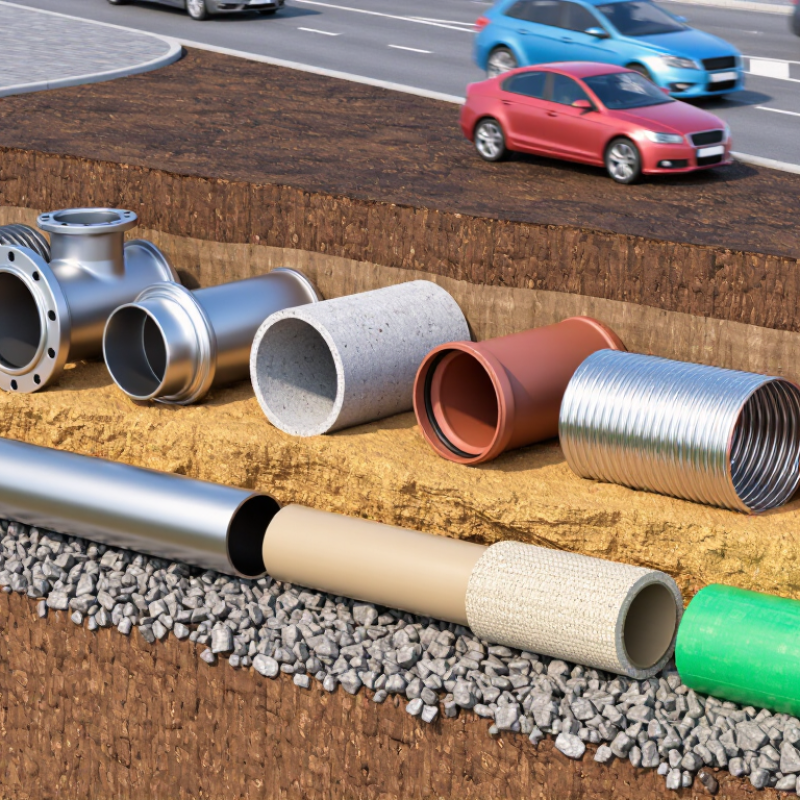
What Are the Top 10 Types of Trench Pipe?
Material-Based Categories of Trench Pipe
Trench pipe materials differ in strength, weight, joint design, and resistance to corrosion. Reinforced concrete handles heavy loads and is common in large drainage lines. Ductile iron offers toughness for pressurized water systems. Steel provides high strength, while PVC is lightweight and smooth inside. HDPE bends around gentle curves and uses fused joints. Polypropylene can suit drainage applications where chemical resistance matters. Each option needs proper bedding and installation.
Other material-based choices include vitrified clay, fiberglass-reinforced polymer, corrugated steel, and corrugated aluminum. Clay resists many chemicals but can crack if handled poorly. Fiberglass is lightweight and corrosion-resistant, though its fittings and installation need careful specification. Corrugated steel and aluminum are often used for culverts and stormwater drainage. Their shape adds strength, but coating, soil conditions, and expected loads affect service life. Details matter. A material name alone cannot confirm suitability.
Tips: Compare the pipe’s intended use, soil conditions, flow, burial depth, and expected loads. Check manufacturer data and local engineering requirements before selecting it. A detail that seems minor, such as joint type, can cause trouble later.
| No. | Pipe Material | Common Forms | Typical Trench Applications | Key Advantages | Important Considerations |
|---|---|---|---|---|---|
| 1 | Ductile Iron | Pressure pipe, often with protective linings and exterior coatings | Water distribution and transmission; some wastewater and fire-protection systems | High strength, impact resistance, and suitability for buried pressure service | Corrosion protection, joints, bedding, and backfill should be selected for local soil and operating conditions. |
| 2 | PVC (Polyvinyl Chloride) | Solid-wall pressure pipe and gravity sewer pipe | Water mains, sewer lines, storm drainage, and utility conduits | Lightweight, corrosion-resistant, and available in a range of diameters and pressure classes | Use the product type and joint system rated for the intended service; protect pipe from excessive point loads and unsuitable handling. |
| 3 | HDPE (High-Density Polyethylene) | Solid-wall pressure pipe, including fusion-jointed systems; structured-wall products are also available | Water and wastewater mains, force mains, gas distribution, and trenchless or difficult alignments | Flexible, corrosion-resistant, and capable of leak-resistant fused joints when properly installed | Design must account for temperature, pressure, deflection, support, and the specific joining procedure. |
| 4 | Reinforced Concrete | Reinforced concrete pipe, typically manufactured in sections with gasketed or other specified joints | Stormwater drainage, culverts, and large-diameter gravity sewer systems | High structural capacity and availability in large diameters | Handling and installation require suitable lifting equipment; check reinforcement, joint details, and chemical exposure requirements. |
| 5 | Steel | Welded or fabricated steel pipe, commonly protected by coatings or linings | Water transmission, crossings, industrial services, and locations requiring specially designed strength | High strength and adaptability to custom diameters, fittings, and installation conditions | Corrosion control, coating repair, welding quality, and any required cathodic protection are important design considerations. |
| 6 | Corrugated Metal | Corrugated galvanized steel or aluminum pipe; may be supplied with coatings or a lining | Road culverts, stormwater conveyance, and drainage applications | Relatively lightweight and practical for many drainage and culvert installations | Service life depends on soil and water chemistry, abrasion, coating condition, and installation quality; it is not interchangeable with pressure-rated steel pipe. |
| 7 | Vitrified Clay | Short sections of fired clay pipe with gasketed or otherwise specified joints | Gravity sanitary sewers and some industrial wastewater systems | Resistant to many forms of chemical attack and does not corrode like metal | It is rigid and can be brittle under impact or uneven support; careful handling, bedding, and joint installation are essential. |
| 8 | Fiberglass-Reinforced Polymer (FRP/GRP) | Glass-fiber-reinforced resin pipe, often supplied with a smooth internal surface | Water and wastewater transmission, industrial pipelines, and corrosive environments | Corrosion resistance, relatively low weight, and potential for large-diameter applications | Design and installation should follow the product’s structural, jointing, handling, and backfill requirements. |
| 9 | Polypropylene (PP) | Structured-wall gravity pipe and, in suitable product systems, pressure pipe | Sanitary sewer, storm drainage, and other gravity-flow networks | Low weight and resistance to many chemicals; structured-wall designs can provide stiffness with efficient material use | Confirm that the pipe is rated for the required pressure or gravity service, and follow requirements for deflection, joints, and embedment. |
| 10 | Asbestos Cement (Legacy Material) | Older cement-based pressure and drainage pipe | Found in some existing buried water and sewer networks; generally a legacy rather than a routine choice for new work | Historically used for its relatively low weight and corrosion resistance | Contains asbestos fibers. Do not cut, break, or disturb it without qualified assessment and legally compliant handling; replacement and disposal rules vary by jurisdiction. |
Note: These are material-based categories, not a universal performance ranking. Suitable pipe selection depends on the service, pressure or flow conditions, soil, groundwater, loading, local codes, and manufacturer-independent product standards.