Top 10 Ball Bearing Types You Need to Know About?
When discussing the essentials of machinery, few elements are as crucial as the Ball Bearing. According to industry expert Dr. Emily Johnson, "Ball bearings are the unsung heroes of mechanical design." They play a vital role in reducing friction and supporting load, making machines run smoothly.
Ball bearings come in various types, each designed for specific applications. Understanding these different types can greatly enhance the performance and durability of equipment. For instance, ceramic ball bearings are known for their lightweight and high strength, perfect for high-speed applications. Conversely, stainless steel ball bearings offer excellent corrosion resistance, ideal for environments exposed to moisture.
It's important to note that not every ball bearing suits every application. Choosing the wrong type can lead to failures. Knowing the right specifications is key. As you explore the world of ball bearings, consider your project’s specific needs. Balancing performance and longevity can be challenging but is essential for optimal results.
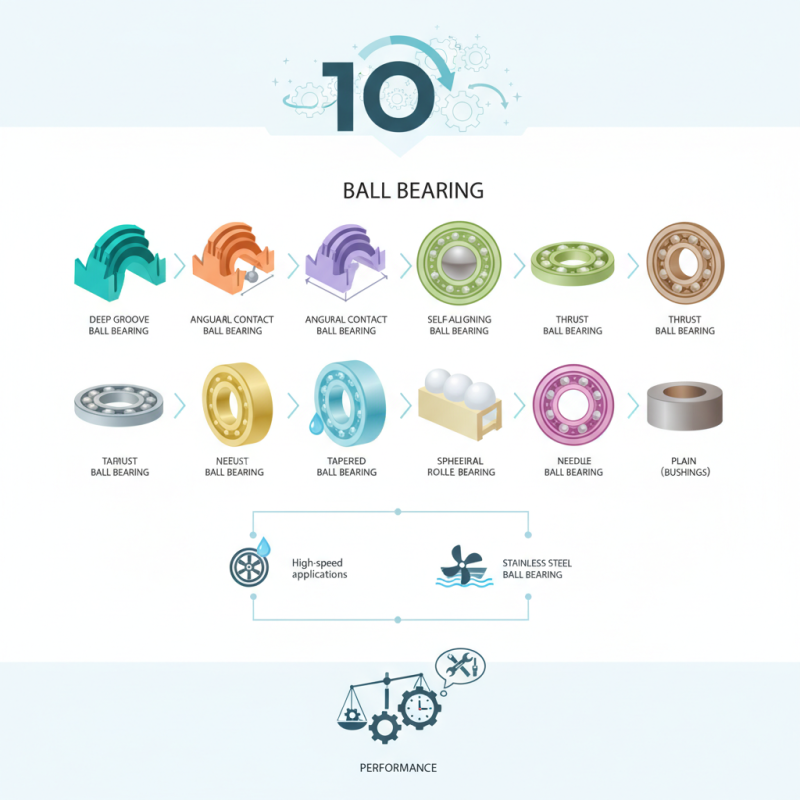
Top 10 Ball Bearing Types with Functionality and Applications
Ball bearings are vital components in various machinery. Understanding their types and applications is essential for efficient operations. The top ten ball bearing types vary significantly in their functionality. For instance, deep groove ball bearings are common due to their versatility. They efficiently handle radial and axial loads, making them suitable for electric motors and household appliances.
Another popular type is angular contact ball bearings. These are designed for high-speed applications. They accommodate combined loads and work well in gearboxes and pumps. Thrust ball bearings serve a different purpose. They are used primarily in applications with axial loads, such as in automotive wheel assemblies.
Tips: Always consider the environment where the bearing will operate. Moist or high-temperature conditions may shorten the lifespan of some types. Regular maintenance is crucial. Lack of lubrication can lead to premature wear.
Some designs, like ceramic ball bearings, outperform traditional steel versions. However, they can be costlier and might not be necessary for all applications. Balancing performance and budget is vital when choosing bearings. Evaluate your needs carefully.
Top 10 Ball Bearing Types with Functionality and Applications
| Bearing Type | Functionality | Applications |
| Deep Groove Bearings | Supports both radial and axial loads | Electric motors, automotive applications |
| Angular Contact Bearings | Handles high-speed and axial loads | Machine tools, gearboxes |
| Self-Aligning Bearings | Adjusts for misalignments | Conveyors, agricultural machinery |
| Thrust Bearings | Supports axial loads only | Rotary applications, pumps |
| Magnetic Bearings | Uses magnetic levitation, no physical contact | High-speed machinery, flywheels |
| Roller Bearings | Supports higher loads compared to ball bearings | Heavy machinery, automotive |
| Spherical Roller Bearings | Allows for angular misalignments | Mining equipment, construction machinery |
| Needle Bearings | Saves space while supporting axial loads | Automotive, compressors |
| Ceramic Bearings | Resistant to corrosion and high temperatures | High-performance applications, medical devices |
| Hybrid Bearings | Combines ceramic and steel materials | Robotics, aerospace |
Understanding the Material Composition of Different Ball Bearings
When it comes to ball bearings, the material type plays a crucial role in their performance. Most commonly, you’ll find steel and ceramic ball bearings. Steel offers strength and durability, making it ideal for heavy loads. On the other hand, ceramic bearings are lightweight and resistant to corrosion. Yet, they can be more fragile under extreme pressure.
Beyond the common types, various alloy compositions can further influence performance. Stainless steel bearings resist rust but may not bear heavy loads as effectively as carbon steel. Some hybrid bearings combine materials, featuring ceramic balls and steel races. This combination seeks to balance weight and strength. However, it’s essential to consider the environment where these bearings will be used.
Different applications demand different characteristics. Precision machinery often requires materials with tighter tolerances. In contrast, applications with higher temperatures might need special heat-treated alloys. It’s helpful to reflect on the specific requirements instead of blindly choosing a type. The wrong choice can lead to failure, increased friction, or short lifespan. Each material brings pros and cons to the table. Understanding these nuances can lead to better decisions.
Performance Metrics: Load Capacity and Speed Ratings of Bearings
When considering ball bearings, two critical performance metrics stand out: load capacity and speed ratings. Load capacity refers to the maximum weight a bearing can handle. This metric is crucial for applications like automotive industries where stress and weight are daily concerns. Each bearing type has its unique limits. Oversizing or underestimating can lead to failure.
Speed ratings indicate the maximum speed at which a bearing can operate efficiently. It's not just about spinning fast; it's about maintaining performance under pressure. For example, high-speed applications, such as turbines or drones, demand bearings that can handle rapid rotations without overheating. Yet, some types might not be suitable for these conditions. Therefore, choosing the right type involves understanding these parameters in detail.
However, it’s common for users to overlook these metrics. Many assume that any bearing will suffice. This mistake can lead to costly repairs or downtime. Real-world scenarios show that optimizing these choices enhances machinery longevity. Yet, the balance between load capacity and speed must be mastered. Experimentation often reveals the ideal setup, but mistakes can be enlightening too. Embracing trial and error is part of the process.
Top 10 Ball Bearing Types: Load Capacity and Speed Ratings
Common Applications: Where Each Ball Bearing Type Excels
Ball bearings are essential in many industries. Each type serves a specific purpose. Deep groove ball bearings are versatile. They handle radial and axial loads effectively. You'll find them in motors, tools, and appliances. Their widespread use shows their reliability, but they may not excel under extreme conditions.
Angular contact ball bearings work well in high-speed applications. They offer enhanced performance in pumps and turbines. Their design is unique, allowing for better load handling. However, they can be more sensitive to misalignment. Users must pay attention to installation practices. Sufficient care is necessary to maximize their lifespan.
Self-aligning ball bearings are useful in misalignment situations. They can accommodate shaft deflection. This type finds its place in agricultural machinery and conveyors. Yet, they may experience higher friction in certain conditions. This can lead to premature wear if not monitored closely. Each type of ball bearing has its strengths and weaknesses, making selection crucial.
Maintenance Tips for Prolonging the Life of Ball Bearings
Maintaining ball bearings is crucial for longevity and performance. According to industry reports, improper maintenance can reduce bearing life by up to 30%. Regular inspection is key to spotting issues early. Look for signs of wear, noise, and vibration changes. These can signal problems that need addressing.
Here are some tips to prolong the life of ball bearings. Ensure proper lubrication. Use the right type and amount of lubricant. Excess or insufficient lubrication can cause failure. Clean bearings regularly. Dirt and debris can lead to rapid wear.
Temperature control is also important. Bearings operate best within specific temperature ranges. Overheating can degrade materials and shorten lifespan. Monitoring temperature can help detect early signs of trouble. Remember, negligence can lead to costly repairs and downtime. Keep in mind that even small lapses in maintenance can have significant impacts.