
Stecker Machine Blog

What Are the Top Bolt and Screw Types in 2026?

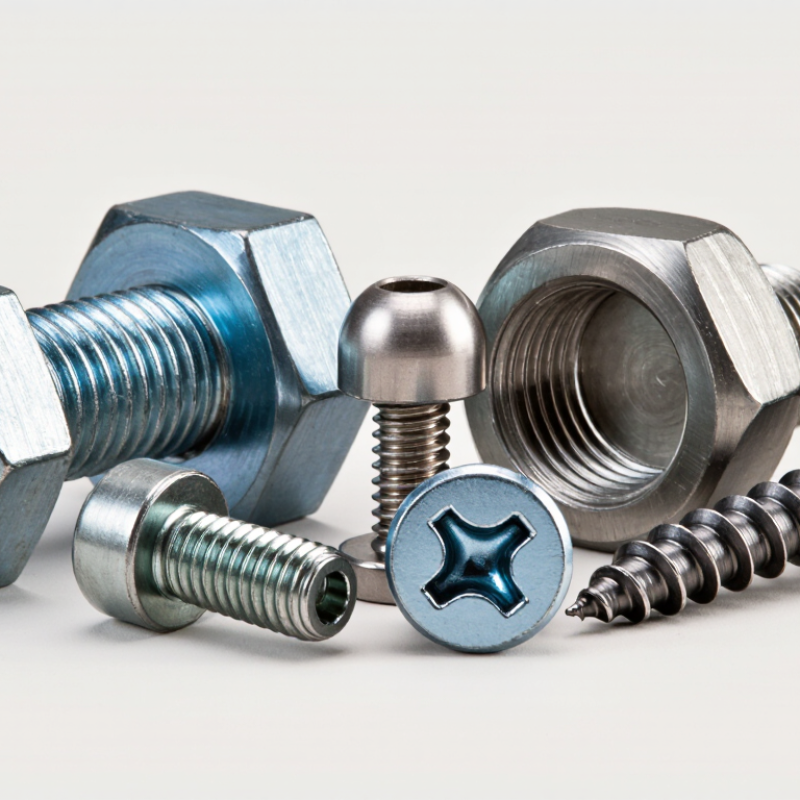
In 2026, the right fastener still depends on the joint, material, load, and working conditions. A bolt securing a steel bracket is not interchangeable with a screw driven into a wood stud. For readers searching Bolt Screw options, this guide introduces widely used types and the practical differences between them. Hex bolts suit many general assembly tasks, while carriage bolts offer a smooth, rounded head for certain wood connections. Lag screws provide strong engagement in timber. Machine screws pair with threaded holes or nuts, and self-tapping screws form threads as they enter suitable materials. Small details matter. Head shape, drive style, thread pitch, and length can change installation and performance.

The sections ahead compare these fasteners by application, material, and installation needs. They also cover stainless steel, carbon steel, and common protective coatings, since moisture and exposure can affect service life. A clean pilot hole, the correct driver bit, and a snug fit are easy details to overlook. They matter. No single type is best for every project, and product labels do not replace manufacturer specifications. Check the drawing, load requirements, and installation guidance before choosing. This overview is a useful starting point, not a substitute for engineering review where a connection is safety-critical. Even a careful guide can miss an unusual use case; that is worth keeping in mind.
What Are the Top Bolt and Screw Types in 2026?

How Bolts and Screws Differ in Design and Function

Bolts and screws both use threads to hold parts together, but their usual installation differs. A bolt typically passes through matching clearance holes and is tightened with a nut. The nut provides the opposing grip. A screw usually forms or engages threads in one part, such as a wood board or a tapped metal hole. That distinction is useful, though real-world naming is not always consistent.

Head shape and thread design affect how each fastener works. A hex-head bolt can be turned with a wrench, while a countersunk screw sits nearly flush with a surface. Coarse threads often suit softer materials; finer threads can provide controlled engagement in metal. Check the material, hole size, and expected load before choosing.

Small details matter. For example, a screw driven into a thin board may split the edge, while a bolt without enough thread engagement may loosen under vibration. I’ve found that labels alone can mislead; inspecting the joint and installation method gives a clearer answer.

Which Features Determine a Fastener’s Type and Performance

A fastener’s type is not defined by its head alone. A hex head may suit a wrench. A Phillips or Torx-style drive changes tool engagement and slipping risk. Drive shape matters. Thread form and pitch decide how a fastener grips its material. Coarse threads often bite well in wood. Finer threads can provide controlled engagement in metal, if the joint is designed for them. A screw usually enters or forms threads in a part. A bolt commonly works with a nut, though everyday usage is not perfectly consistent.

Strength depends on material, diameter, and grade, not just visible size. Stainless steel resists corrosion in damp settings, but it is not automatically the strongest option. Coatings can protect carbon steel, yet scratches or cut edges may expose bare metal. The installed joint matters. Match length and shank to material thickness. Choose a head that seats without crushing the surface. A countersunk head should sit flush in a matching recess. Forcing one into a flat surface can split wood or create uneven pressure. Torque, vibration, and temperature also affect connection security. Real assemblies vary. Check technical data and test a sample when consequences are significant; a neat fit alone proves little.

What Bolt Types Are Widely Used in 2026

In 2026, hex bolts remain common in building frames, vehicle assemblies, and equipment repair. Their six-sided heads are easy to grip with ordinary tools. Carriage bolts are recognizable by their domed heads and square necks, which resist turning in wood. They suit fences, benches, and timber structures. Flange bolts have a broad base under the head. That added bearing surface can help spread pressure across a joint.

Anchor bolts secure posts, columns, and machinery to concrete. They are often set during a pour or installed into prepared holes, so placement matters. U-bolts are widely used to support pipes and hold round components in place. Shoulder bolts, with a smooth section beneath the head, serve as pivots or guides in moving assemblies. Small detail, big difference.

Choosing a type means checking the joint, load, material, and surroundings. Stainless steel may suit damp locations, while coated steel is common in general construction. Still, coatings can wear, and “corrosion-resistant” does not mean corrosion-proof. Bolt naming also varies between suppliers and regions. Check the drawing and product specifications, especially thread size and length; a bolt that looks right may not fit the joint.

What Are the Top Bolt and Screw Types in 2026? – What Bolt Types Are Widely Used in 2026

Fastener Type Category Key Features Common Uses Typical Material or Finish
Hex-Head Bolt Bolt Six-sided head for wrench or socket access; available with different thread lengths and strength grades. Machinery, equipment, structural assemblies, and general construction. Carbon or alloy steel, stainless steel; plain, zinc-plated, or other specified coatings.
Structural Bolt Bolt Specified for engineered steel connections; strength, dimensions, and installation requirements depend on the applicable grade and standard. Steel frames, bridges, and other designed structural connections. Usually high-strength steel; coatings and assembly requirements are project-specific.
Carriage Bolt Bolt Typically has a rounded head and a square section beneath it that helps resist turning when seated in a suitable material. Wood-to-wood and wood-to-metal connections, such as gates, frames, and outdoor structures. Steel or stainless steel; galvanized finishes are commonly selected for outdoor exposure.
Anchor Bolt Bolt / anchoring fastener Connects a fixture or structural component to concrete or masonry; may be cast in or installed after curing, depending on the anchor system. Base plates, equipment supports, handrails, and building components fixed to concrete. Commonly steel or stainless steel; selection depends on load, environment, and installation method.
Socket-Head Cap Screw Screw Cylindrical head with an internal hex drive; useful where a compact head and access from above are needed. Machine assemblies, tooling, and equipment with limited clearance. Alloy steel or stainless steel; strength and finish vary by specification.
Machine Screw Screw Usually has machine threads and is installed into a tapped hole or used with a nut; head and drive styles vary. Electrical enclosures, appliances, instruments, and general machinery. Steel, stainless steel, brass, or other specified materials.
Wood Screw Screw Coarse threads are designed to engage wood; head styles and shank designs vary by application. Woodworking, cabinetry, furniture, and wood framing details. Steel or stainless steel; finish should suit the wood and exposure conditions.
Self-Tapping Screw Screw Forms or cuts mating threads as it is driven; pilot-hole requirements depend on the screw and base material. Sheet metal, plastics, and other materials when a separate pre-tapped thread is not used. Often hardened steel or stainless steel, with a finish selected for the environment.
Self-Drilling Screw Screw Has a drill-point tip that can drill and form threads in suitable materials; capacity depends on point type and material thickness. Metal sheets, light-gauge steel framing, and selected metal-to-metal connections. Typically hardened steel; corrosion-resistant coatings or stainless steel may be specified.
Drywall Screw Screw Designed for attaching gypsum board; thread style is selected for wood or metal framing, and the bugle-shaped head helps seat into the board surface. Interior drywall installation on compatible framing. Usually steel with a coating intended for interior use; not automatically suitable for exterior exposure.
Set Screw Screw Typically has no projecting head and presses against or engages a shaft to help secure a component in position. Pulleys, collars, gears, knobs, and other shaft-mounted components. Often alloy steel or stainless steel; tip style and hardness depend on the application.

Note: Fastener dimensions, strength, coatings, and standards vary by design and jurisdiction. Confirm the applicable specification and installation requirements for each project.

Which Screw Types Serve the Most Common Applications in 2026

What Are the Top Bolt and Screw Types in 2026?

Which Screw Types Serve the Most Common Applications in 2026

Wood screws remain a practical choice for framing, cabinets, and decking. Their coarse threads grip wood fibers, while a tapered point helps start the drive. For structural connections, use screws rated for the load—not ordinary drywall screws. Deck screws also need corrosion-resistant finishes when exposed to rain. Small details matter. U.S. construction spending reached about $2.15 trillion in 2024, according to the Census Bureau’s Value of Construction Put in Place data. That scale helps explain why reliable fastening choices matter across building projects.

For steel studs and light-gauge sheet metal, self-drilling screws cut through thin metal without a separate pilot hole. AISI’s North American standard for cold-formed steel framing recognizes screw-fastened connections, though the right size and spacing depend on the assembly. Machine screws suit equipment housings and appliances, where they pair with a nut or threaded hole. Masonry screws anchor fixtures into concrete or brick; check the substrate and load before installation. I would not treat “one screw fits most” as a safe shortcut. Moisture, vibration, and material thickness can change the choice, and specifications are sometimes overlooked on small jobs.

How to Choose the Right Fastener for a Material and Project

What Are the Top Bolt and Screw Types in 2026?

How to Choose the Right Fastener for a Material and Project

Choose a fastener for the material, load, and environment—not just its appearance. Wood screws have tapered points and threads suited to timber; machine screws need a matching threaded hole or nut. For metal sheet, use screws designed to grip thin stock. Hex bolts work well where parts can be clamped with a nut and washer. Carriage bolts suit wood-to-wood joints, but their smooth shoulders need firm seating. Small detail. A washer can spread pressure, but it cannot fix a weak substrate.

For wood, the USDA Forest Products Laboratory’s Wood Handbook links screw withdrawal resistance to factors including wood density, penetration, and fastener dimensions. A longer screw is not automatically stronger if it splits an edge or misses the supporting member. Check pilot-hole guidance, thread engagement, and the joint’s direction of loading. For outdoor or damp settings, corrosion resistance matters too. The NACE IMPACT study estimated corrosion costs at $2.5 trillion worldwide, or 3.4% of global GDP, and reported potential savings of 15–35% through corrosion-control practices. That supports treating finish and material choice as part of the design, not an afterthought.

Match the fastener’s material and coating to the parts being joined, especially when dissimilar metals meet. Confirm the specified diameter, length, and strength grade against the project requirements; avoid mixing components without checking compatibility. A rule of thumb can mislead. Measure the actual material thickness, inspect for cracks or rust, and test a sample joint when the application allows.

Sources: USDA Forest Products Laboratory, Wood Handbook; NACE International, IMPACT study (2016).
