
China has become a significant sourcing base for pneumatic components, supported by strong manufacturing capacity, export infrastructure, and growing automation demand. This makes the search for reliable Festo Pneumatic Connectors suppliers increasingly important for machinery builders and maintenance teams. Buyers usually need more than competitive pricing. They also require stable dimensions, clean threads, dependable sealing, and consistent delivery.
Industry research supports this market direction. MarketsandMarkets’ Pneumatic Components Market report identifies factory automation, process efficiency, and industrial equipment upgrades as major growth drivers. Grand View Research also highlights Asia-Pacific’s expanding role in pneumatic equipment manufacturing and consumption. These findings do not measure every connector supplier directly, but they explain why China attracts increasing attention from international buyers.
Quality remains the practical test. A connector may look correct on a sample table, yet fail after repeated assembly, vibration, or pressure cycling. ISO 4414 provides a useful safety framework for pneumatic systems, while ISO 9001 certification can indicate structured quality management. Buyers should still verify test records, material specifications, batch traceability, and authorized distribution status. Traceability matters.
This guide examines leading Chinese suppliers associated with Festo Pneumatic Connectors, including authorized channels and manufacturers producing compatible pneumatic fittings. It considers product range, machining capability, inspection procedures, export experience, and technical support. The ranking is not perfect. Supplier performance can change with production batches, staff, and customer requirements. That limitation deserves attention before any purchasing decision. Small parts matter. A dependable supplier protects machine uptime, installation accuracy, and long-term operating costs.
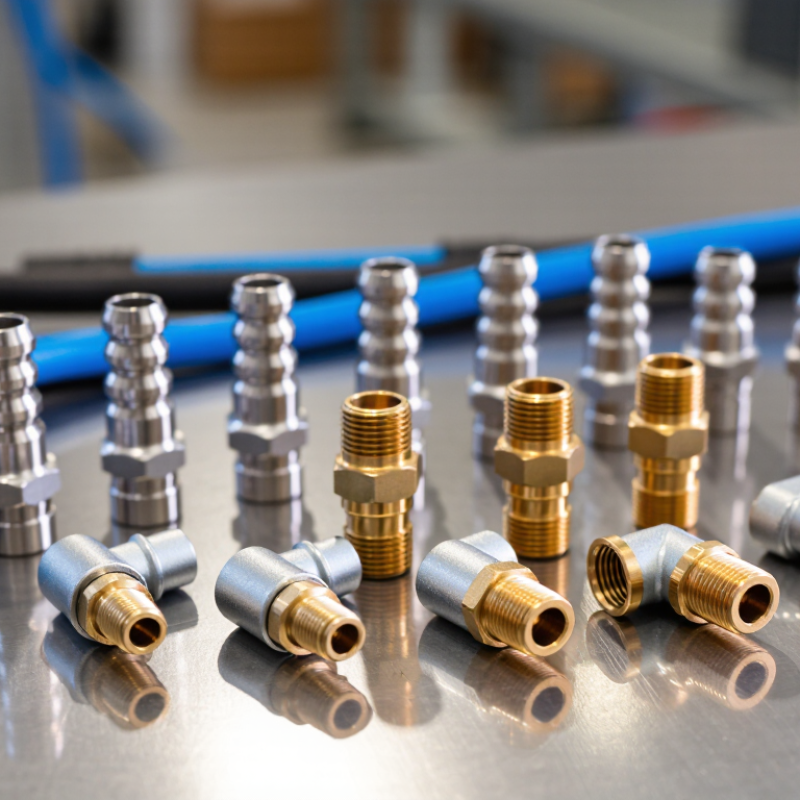
Pneumatic connectors join air tubing to valves, cylinders, filters, and other control components. Their role is simple, but their effect on machine reliability is substantial. A connector normally uses a threaded body, sealing element, gripping collet, and tube passage. Push-in designs allow quick installation, while threaded designs support fixed, vibration-resistant connections.
According to Grand View Research’s 2024 pneumatic equipment report, the global market was valued at more than USD 12 billion in 2023. Growth is linked to factory automation, packaging, and material-handling equipment. Connectors support these systems by maintaining controlled airflow. Even a small leak can reduce actuator speed and increase compressor workload. The U.S. Department of Energy reports that compressed-air leaks can waste 20–30% of compressor output in poorly maintained systems.
Details matter. Select connectors according to tube diameter, working pressure, temperature, and fluid compatibility. ISO 4414 also emphasizes safe pneumatic system design, including isolation and controlled release of stored air. In practice, technicians should cut tubing squarely and push it fully into the fitting. A gentle pull test is useful. It is not perfect.
Dirt, sharp tube edges, and excessive thread sealant often cause early leakage. I have seen connections appear secure while a faint hiss remained near the seal. That small sound deserves attention. Supplier quality should be judged through material traceability, pressure testing, dimensional consistency, and clear technical documentation. Low purchase cost alone can become an expensive maintenance decision.
Leading Chinese pneumatic connector suppliers stand out through practical engineering, not polished catalogs alone. Their teams understand tube sizing, thread standards, pressure ranges, and common installation errors. Experienced engineers can recommend nickel-plated brass, stainless steel, or polymer bodies for different working environments. They also check seal compatibility with compressed air, water, and selected industrial fluids. Small details matter.
Reliable suppliers maintain clear quality controls from incoming materials to final packing. They often use batch records, dimensional inspection, thread gauges, and leak testing. A useful inspection report should show sample size, pressure conditions, and measured results. This evidence helps buyers compare suppliers without relying on sales claims. Some factories also provide traceable production codes and replacement support. That adds confidence during maintenance.
Strong technical service is another important feature. Engineers may review drawings, tube routing, working temperature, and available installation space before suggesting a connector. Custom colors, thread combinations, and packaging can support specialized projects. However, customization sometimes creates longer lead times or inconsistent samples. This weakness deserves honest discussion. A supplier should explain limits clearly, not promise everything. In my view, factory visits and small trial orders remain valuable, especially when connector performance affects repeated machine cycles.
China’s pneumatic connector market offers several practical types for compressed-air systems. Push-in connectors are widely used because tubes install quickly without tools. Elbow connectors change airflow direction in tight machine spaces. Tee and Y connectors divide one air line into two branches. Straight connectors join tubes with matching outer diameters.
Threaded connectors connect tubing to valves, cylinders, filters, and regulators. Common thread choices include BSPP, BSPT, and NPT, but they are not interchangeable. Bulkhead connectors pass through panels, while reducer fittings join different tube sizes. Materials usually include nickel-plated brass, stainless steel, and engineering polymer. Each choice affects corrosion resistance, weight, and service life. In factory inspections, I have seen small sealing errors cause pressure loss. Fit matters.
Tips: Confirm tube diameter, thread standard, working pressure, and temperature range before ordering. Check the sealing method too. Some fittings need an O-ring, while others require suitable thread sealant. Ask suppliers for dimensional drawings, material certificates, and pressure-test records. Samples should be tested under real vibration and moisture conditions. A connector may look identical but perform differently after repeated assembly. This is easy to overlook.
Reliable Chinese suppliers should explain tolerances, inspection methods, and production capacity clearly. Look for traceable batches and consistent packaging. A useful evaluation includes leak testing, insertion-force checks, and pull-out testing. Cost matters, but unstable dimensions create higher maintenance expenses. I would not approve a large order from appearance alone. Supplier claims still need evidence.
| Connector Type | Typical Structure | Common Tube Sizes | Thread Standards | Typical Materials | Common Applications | Key Selection Factors |
|---|---|---|---|---|---|---|
| Push-In Straight Fitting | Straight body with one tube port and one threaded port | 4, 6, 8, 10, 12 mm outside diameter | G, R, NPT, or metric threads | Nickel-plated brass, engineering polymer, stainless steel | General pneumatic lines, valves, cylinders, and manifolds | Tube diameter, thread type, working pressure, and available space |
| Push-In Elbow Fitting | 90-degree body for changing the direction of tubing | 4, 6, 8, 10, 12 mm outside diameter | G, R, NPT, or metric threads | Nickel-plated brass and reinforced polymer | Compact control cabinets, actuator ports, and directional routing | Bend radius, orientation, sealing method, and installation clearance |
| Push-In T-Fitting | Three-port body for branching one pneumatic line into two | 4, 6, 8, 10, 12 mm outside diameter | Tube-to-tube or threaded outlet configurations | Nickel-plated brass, acetal, polyamide, or similar polymers | Parallel actuator circuits and air distribution branches | Flow direction, port size, pressure drop, and tube compatibility |
| Y-Fitting | Three-port body with a Y-shaped flow path | 4, 6, 8, 10, 12 mm outside diameter | Usually tube-to-tube; threaded variants are also available | Nickel-plated brass and technical polymer | Low-profile branching and synchronized air circuits | Branch geometry, airflow balance, mounting space, and tube size |
| Bulkhead Fitting | Panel-mounted connector passing through a machine wall | 4, 6, 8, 10, 12 mm outside diameter | Locknut-mounted; thread sizes commonly include M5, M6, G1/8, and G1/4 | Nickel-plated brass, stainless steel, and sealing polymers | Machine panels, enclosures, robotic equipment, and modular frames | Panel thickness, hole diameter, sealing ring, and locking method |
| Bulkhead Elbow Fitting | Panel-mounted connector combined with a 90-degree outlet | 4, 6, 8, 10, 12 mm outside diameter | Metric or pipe-threaded mounting configurations | Nickel-plated brass and engineering polymer | Space-restricted pneumatic panels and compact assemblies | Panel access, outlet direction, vibration resistance, and tube routing |
| Banjo Fitting | Swiveling angled fitting with a compact rotating body | Typically 4, 6, 8, and 10 mm outside diameter | M5, M6, G1/8, G1/4, and other common pneumatic threads | Nickel-plated brass with polymer tube-release components | Cylinder ports, compact grippers, and confined installations | Swivel angle, port orientation, sealing surface, and collision clearance |
| Tube-to-Tube Union | Straight connector joining two tubes of the same size | 4, 6, 8, 10, 12 mm outside diameter | No threaded port; push-in tube connections on both ends | Acetal, polyamide, brass, or other pneumatic-grade materials | Tube extensions, repairs, and modular line construction | Tube material, insertion depth, sealing reliability, and operating pressure |
| Tube Reducer | Connector joining pneumatic tubes with different outside diameters | Common combinations include 6-to-4, 8-to-6, and 10-to-8 mm | Usually tube-to-tube without threaded ports | Technical polymer, nickel-plated brass, and sealing elastomers | Transitioning between circuit sections with different tube sizes | Size reduction, flow capacity, pressure loss, and tube retention |
| Silencer or Exhaust Fitting | Threaded exhaust accessory with porous noise-reducing element | Selected by port thread rather than tube diameter | M5, G1/8, G1/4, G3/8, and G1/2 are commonly used | Sintered bronze, plastic, stainless steel, or composite media | Directional control valve exhaust ports and pneumatic actuators | Noise reduction, exhaust flow, contamination resistance, and thread fit |
Evaluating China-based pneumatic connector suppliers requires more than comparing catalog prices. Start with dimensional accuracy, material grades, thread standards, and sealing performance. Ask for drawings, inspection records, and sample parts. A reliable supplier should explain tolerances clearly, not hide behind general claims. Check whether the connector fits your tubing without excessive force or leakage.
Request a small trial order before approving regular production. Test samples under working pressure, repeated connection cycles, vibration, and temperature changes. Inspect the threads with gauges and measure the body with calipers. Small details matter. Review batch numbers, raw material certificates, and final inspection reports. Suppliers with traceable records usually respond faster when problems appear.
Communication also reveals technical capability. Send the supplier your pressure range, tube size, environment, and installation method. Their engineers should identify risks and suggest practical adjustments. Be cautious when every answer is immediate and perfect. A polished catalog can still conceal uneven plating or inconsistent machining. I have found that slower, evidence-based replies are often more useful. Still, written promises are not enough. Factory audits, independent testing, and clear warranty terms reduce uncertainty. A supplier may meet the first sample standard yet struggle with volume consistency. That weakness deserves attention before a long-term purchase agreement.
Pneumatic connectors are small components, but their quality affects every air circuit. In factory automation, they join tubing to valves, cylinders, filters, and pressure regulators. Packaging machines need fast installation and stable sealing. Robotic equipment needs connectors that tolerate vibration and repeated movement. Clean environments may require stainless steel or specially treated surfaces. The application decides the material.
Reliable suppliers in China should control dimensions, thread accuracy, and surface finish during production. Common options include metric, BSP, and NPT threads, but they are not automatically interchangeable. Incorrect matching can cause leaks or damaged ports. Good suppliers verify designs against ISO 4414 principles and relevant connector requirements, such as ISO 14743 for push-in fittings. They should also provide material records and traceable inspection data.
Testing should include air-leak checks, pressure resistance, pull-out strength, and repeated connection cycles. Temperature testing matters when equipment operates near heat sources or cold storage. Ask for sampling plans, calibration records, and batch identification. A clean appearance is not proof of reliability. It can hide weak threads.
Practical experience also exposes an uncomfortable point: selecting the cheapest connector may increase maintenance costs. Yet higher price alone proves little. Suppliers should explain test methods, tolerances, and failure limits in clear language. Their answers should match the samples. If they cannot, reconsider the purchase.
5107 County Road C
Manitowoc, WI 54220
920-726-4526
