
Choosing reliable flexible packaging slitting blades suppliers requires more than comparing catalog prices. Converters depend on clean cuts, stable production, and predictable blade life. A small edge defect can create film dust, uneven rolls, or costly machine stoppages. This guide introduces leading suppliers worldwide and examines the qualities that matter in daily converting operations.
The evaluation considers blade materials, carbide grades, coatings, edge geometry, and manufacturing tolerances. Supplier experience also matters, especially when blades must match films, laminates, foils, or adhesive structures. Strong manufacturers should provide technical data, application guidance, inspection records, and consistent replacement support. Traceability is valuable. So is practical testing.
A polished website is not enough. Real confidence comes from documented quality systems, responsive engineers, and feedback from converters using similar equipment. Delivery capability, packaging protection, and regional service can influence the final result. Some suppliers may excel in precision while offering fewer customization options. Others may provide broad support but require longer lead times. No single company fits every production line.
This overview aims to compare suppliers fairly, using evidence rather than promotional language. Information can change, and supplier performance may vary by factory or market. That limitation deserves attention. Buyers should verify specifications, test samples, and confirm compatibility before placing large orders. The best choice is not always the cheapest. It is the supplier that consistently supports safe, efficient, and measurable slitting performance.
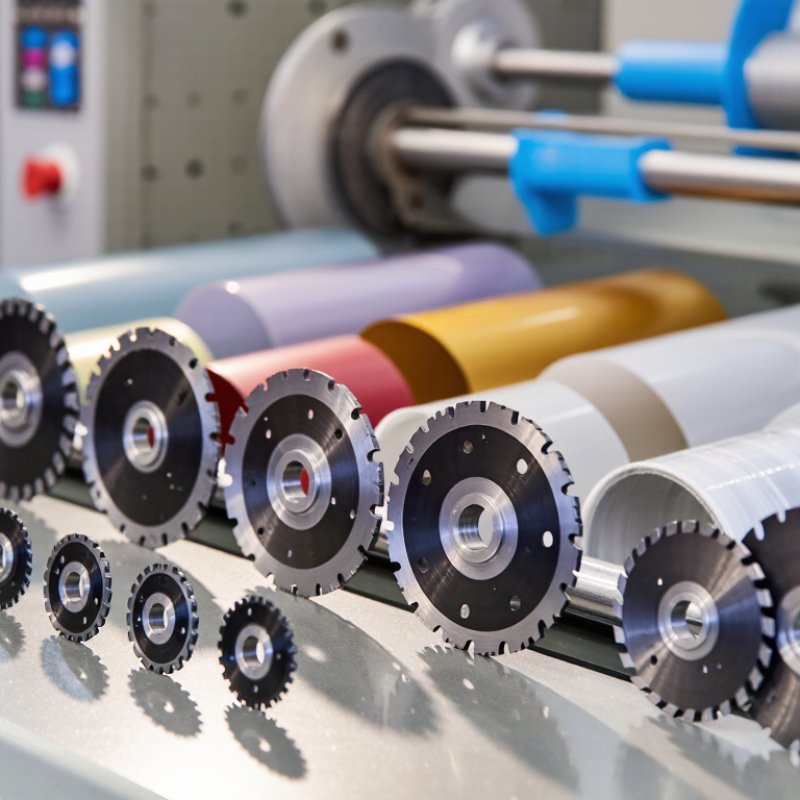
Flexible packaging slitting blades are precision tools used to divide wide rolls into narrower webs. They cut films, laminates, paper, and thin foil during converting. Common designs include razor blades, shear knives, and scoring blades. Each design creates a different cutting action. Razor blades slice with a sharp edge, while shear knives cut between overlapping circular blades. Scoring blades press through material against a grooved surface. The right choice depends on thickness, layer structure, line speed, and winding requirements.
In practical production, blade geometry matters as much as hardness. A polished edge can reduce drag and limit adhesive buildup. A suitable rake angle may produce cleaner cuts with less dust. Carbide and hardened tool steel offer useful wear resistance, but neither material suits every package structure. Operators should check edge chipping, web tension, and blade alignment during setup. Small alignment errors can create wandering cuts, edge fraying, or uneven roll faces. These details are easy to overlook.
Clean cuts matter.
Reliable suppliers should provide consistent dimensions, traceable material information, and clear sharpening or replacement guidance. Sample trials are more dependable than catalogue claims, especially when a package combines film with foil or paper. I have found that longer blade life is not always better; a worn edge may damage the web before it appears visibly dull. This is one area where assumptions deserve review. Regular inspection, careful storage, and measured cutting tests support stable performance across different converting lines.
Flexible Packaging Slitting Blades Suppliers Worldwide
Blade material directly affects cut quality, service life, and production stability. Hardened tool steel offers balanced toughness for common films and laminated structures. Carbide keeps a sharper edge under abrasive conditions, but it can chip after impact or poor alignment. Ceramic blades resist corrosion and maintain hardness, though they require careful handling during setup.
Blade design matters just as much. Razor blades create clean cuts on thin films when tension remains stable. Shear blades separate material gradually, reducing dust and edge distortion on multilayer packaging. Score-cut designs can work efficiently on softer films, but excessive pressure may stretch the web or leave curled edges. Small changes in bevel angle, edge thickness, and blade overlap can alter results noticeably.
During supplier evaluations, I would request cutting trials with the actual film structure, not a similar sample. Measure burrs, powder, edge waviness, and blade temperature after extended running. A polished edge may reduce friction, while a rough mounting surface can cancel that advantage. We sometimes blame the blade too quickly. In practice, uneven shafts, poor tension control, or incorrect overlap may cause the defect. Supplier reliability also depends on consistent heat treatment, dimensional inspection, and clear replacement guidance. Perfect performance is unlikely when operating conditions keep changing.
This benchmark compares commonly used blade material and edge-design combinations. The edge-retention index is normalized to 100 for conventional hardened tool steel, while cut consistency is scored from 1 to 10. Carbide and ceramic options generally provide longer wear life and cleaner cuts on abrasive or high-volume flexible packaging, whereas tool steel and high-speed steel offer better toughness and lower initial cost.
A reliable global blade supplier understands that flexible packaging materials behave differently on every production line. Film, laminate, and foil can demand separate edge geometries, hardness levels, and clearances. Practical experience matters here. Engineers should explain why a blade suits a specific substrate, not simply recommend the hardest steel.
Consistent quality begins with controlled raw materials and repeatable heat treatment. Suppliers should provide measurable tolerances, inspection records, and batch traceability. Microscopic edge damage can create wrinkles, dust, or uneven cuts during high-speed slitting. Small details matter. A dependable supplier also checks blade balance, surface finish, and packaging protection before shipment. Clear communication about lead times and technical support is equally important across time zones. Trial samples can reveal whether the proposed design works under real tension and temperature conditions. Not every supplier will get the first selection right. That is worth admitting. A responsible partner reviews failed tests, adjusts specifications, and records the lesson for future orders. After-sales support should include sharpening guidance, storage advice, and practical responses to production problems. Certifications may strengthen confidence, but documented performance and honest communication often matter more. Reliability is visible in the details: stable dimensions, accurate answers, and help that continues after delivery.
Flexible packaging slitting blade suppliers worldwide are adapting to faster converting lines and thinner films. Smithers’ 2024 study estimates the global flexible packaging market will exceed USD 300 billion by 2028. This growth increases demand for blades that maintain clean cuts across films, laminates, foil, and coated structures.
Experienced suppliers usually offer hardened steel, carbide, or ceramic blade options. Material selection depends on film thickness, adhesive residue, web tension, and production speed. A supplier’s technical team should review these variables before recommending an edge profile. Grand View Research reported that the flexible packaging market reached more than USD 260 billion in 2023. Even small cutting defects can create waste at this scale. Tiny burrs matter.
Reliable suppliers worldwide also support controlled testing, traceable batches, and consistent dimensional tolerance. Operators should check edge life under real production conditions, not only laboratory samples. ISO-based quality systems can improve confidence, but certificates cannot replace practical trials. No supplier gets every variable right. Some recommendations fail when humidity, recycled content, or coating changes. That weakness deserves honest discussion. Buyers should compare blade life, downtime, sharpening options, and delivery stability. The cheapest blade may produce higher costs through web breaks and rejected rolls. Clear technical records make supplier evaluation more dependable across multiple converting sites.
When comparing flexible packaging slitting blade suppliers, quality should be measured beyond sharpness. Smithers’ The Future of Flexible Packaging to 2028 reports continued growth in high-speed, lightweight packaging production. That trend increases pressure on edge stability, coating life, and dimensional accuracy. Ask suppliers for hardness ranges, runout tolerances, coating specifications, and test records. A reliable supplier should explain how each blade performs on film, foil, laminate, or adhesive-coated webs. Trial results matter more than polished brochures.
Service affects production costs quietly. PMMI reports that packaging manufacturers continue investing in automation, where unplanned stops can disrupt tightly scheduled lines. Compare response times, technical troubleshooting, sharpening support, and replacement availability. Request a sample batch and record meters processed, edge defects, dust, and changeover time. Very short.
Cost should include the full operating cycle, not only the purchase price. The Flexible Packaging Association highlights material efficiency and waste reduction as major industry priorities. A cheaper blade may create more trim waste, frequent adjustments, or damaged rolls. Calculate cost per usable production meter instead. Include freight, inspection, regrinding, inventory, and downtime. I would not trust a supplier promising the longest life without comparable machine data. That judgment can be wrong when substrates or tension settings change. An honest comparison uses the same line, material, speed, and operator conditions across suppliers.
| Comparison Dimension | Typical Industry Benchmark | High-Quality Supplier Indicators | Questions to Ask Suppliers | Suggested Evaluation Weight |
|---|---|---|---|---|
| Blade Material | Tool steel, powder metallurgy steel, tungsten carbide, or ceramic-coated steel are commonly used for flexible packaging applications. | Material grade is documented; the material is matched to film abrasiveness, machine speed, cut method, and expected service life. | Which material grade is used? Can you provide a material certificate or test report? | 15% |
| Hardness and Toughness | Many hardened steel slitting blades are supplied within approximately 56–64 HRC, depending on grade and application. | Hardness is consistent across the cutting area, while toughness is sufficient to reduce chipping and edge breakage. | What hardness range is guaranteed? How is hardness measured and recorded? | 10% |
| Dimensional Accuracy | Precision slitting components are commonly controlled in the hundredths of a millimetre, with tolerance depending on diameter, thickness, and drawing requirements. | Supplier provides inspection records for outside diameter, bore, thickness, flatness, concentricity, and runout. | Which dimensions are inspected on every batch? What tolerance can you guarantee? | 15% |
| Edge Geometry | Common specifications include razor, shear, crush, and perforation profiles; edge angle and finish are selected according to the slitting method. | The supplier recommends geometry based on film structure, adhesive content, web tension, and machine configuration rather than using one standard profile. | Can you review our film construction and recommend the edge profile? | 10% |
| Surface Finish | Polished and coated surfaces are used to reduce friction, contamination, and material adhesion where required. | Surface roughness, coating type, coating thickness, and adhesion performance are specified and verified. | Is the blade polished or coated? What is the measured surface roughness? | 8% |
| Cutting Performance | Performance should be assessed by cut quality, edge life, dust generation, web tension stability, and the absence of wrinkles or burrs. | Supplier can provide application-specific samples, trial blades, or documented cutting test results. | Can we run a production trial before placing a larger order? | 15% |
| Quality Management | A documented quality system, traceable production records, calibrated measuring equipment, and batch inspection are standard procurement expectations. | The supplier maintains lot traceability and provides certificates of conformity, inspection reports, and corrective-action procedures. | How are nonconforming blades handled? Can you provide sample inspection records? | 10% |
| Compatibility and Customization | Important variables include machine model, blade diameter, bore, thickness, keyway, edge profile, and material construction. | Supplier can work from engineering drawings, samples, or machine specifications and confirms fit before production. | Do you support reverse engineering and drawing approval before manufacturing? | 7% |
| Lead Time and Delivery | Standard replacement blades may have shorter production schedules, while custom or coated blades generally require additional engineering and processing time. | Lead times are quoted clearly, packaging protects the cutting edge, and shipment status is communicated proactively. | What are the standard, custom, and repeat-order lead times? | 5% |
| Minimum Order Quantity | MOQ varies according to blade size, material, coating, tooling requirements, and whether the item is standard or custom-made. | The supplier offers practical trial quantities and explains any tooling, setup, or coating charges separately. | What is the trial quantity, repeat-order MOQ, and setup cost? | 3% |
| Unit Price | Price is influenced by material grade, precision, coating, quantity, production method, inspection requirements, and shipping terms. | Quotation is itemized and includes specifications, inspection scope, packaging, tooling, freight terms, and validity period. | Does the quotation include tooling, inspection, packaging, freight, and replacement terms? | 5% |
| Total Cost of Ownership | The lowest purchase price may not provide the lowest operating cost if blade changes, downtime, scrap, or inconsistent cuts are higher. | Supplier evaluates service life, changeover frequency, material waste, downtime risk, and after-sales support in addition to unit price. | Can you estimate cost per production hour or cost per finished roll based on trial data? | 12% |
5107 County Road C
Manitowoc, WI 54220
920-726-4526
