920-726-4526



Global sourcing demands more than a low unit price. It requires dependable performance, clear documentation, and suppliers who understand regional requirements. Insulated Terminal Lugs connect conductors securely while reducing accidental contact with energized metal. Their value depends on much more than appearance.
This guide examines leading options for international purchasing teams. It considers insulation materials, copper or aluminum construction, plating quality, crimp consistency, temperature ratings, and packaging protection. A well-made lug should maintain electrical contact after vibration, heat exposure, and repeated handling. Small details matter. A loose barrel, uneven plating, or brittle sleeve can create costly failures during installation.
Experienced buyers should request material certificates, dimensional drawings, test reports, and traceable batch information. Independent verification can strengthen supplier claims, especially when factories present similar samples. Relevant standards may differ by market, application, and voltage level, so product listings should never replace engineering review. Claims need testing.
No single design suits every project. Some sourcing decisions remain imperfect because laboratory results may not reflect field conditions. Installation tools, conductor size, storage humidity, and technician skill can change performance. That limitation deserves attention.
The following overview compares practical choices for distributors, electrical contractors, and industrial procurement teams. It focuses on evidence rather than polished descriptions. Reliable sourcing begins with asking precise questions, checking repeatability, and confirming that each Insulated Terminal Lugs supplier can support quality beyond the first shipment.
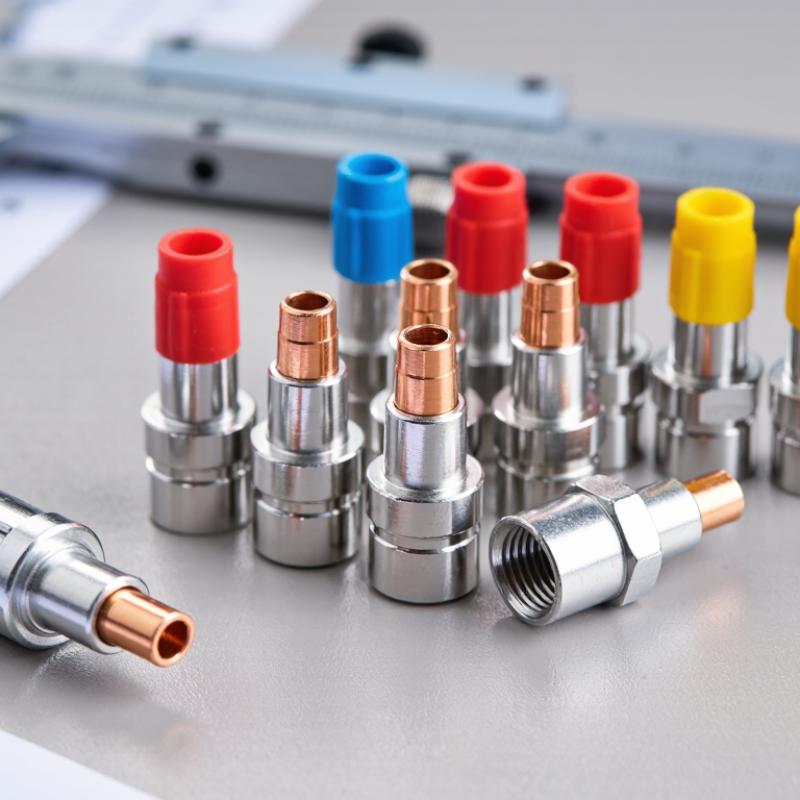
Insulated terminal lugs are metal connectors with a protective sleeve around the crimp barrel. They join a wire to a stud, busbar, or electrical component. The metal barrel carries current. The insulation helps prevent accidental contact and reduces short-circuit risk. Simple, but not careless.
During installation, a stripped conductor enters the barrel. A calibrated crimping tool compresses the barrel around the strands. This creates mechanical retention and a low-resistance electrical path. The tongue then fits over a bolt or stud. Correct wire size matters. So does crimp height. An oversized lug may loosen under vibration, while excessive force can damage strands. Field experience often exposes this gap between catalog claims and real installation conditions.
Demand is expanding with electrification. The International Energy Agency’s Renewables 2024 report recorded about 510 GW of renewable capacity additions in 2023. Its Electricity 2024 report also projected global electricity demand growth of roughly 4% annually through 2026. More distributed power equipment means more termination points. For global sourcing, buyers should verify conductor ranges, temperature ratings, plating, and insulation material. They should also request test evidence aligned with UL 486A-486B or IEC 61238-1. Lot traceability and crimp-test records improve reliability. A small weakness remains: certification alone cannot guarantee a poor field crimp will perform well.
| Insulated Terminal Lug Type | Typical Conductor Range | Common Stud or Terminal Size | Insulation Material | Typical Operating Temperature | Common Voltage Application | How It Works | Typical Applications |
|---|---|---|---|---|---|---|---|
| Ring Terminal | 0.25–6 mm² 22–10 AWG | M3–M8 #4–5/16 in | PVC, nylon, or polyamide | Approximately −40°C to +105°C | Up to approximately 600 V, depending on construction and certification | The conductor is inserted into the metal barrel and crimped. The closed ring remains secured under a screw or stud even when the fastener is partially loosened. | Control panels, automotive wiring, industrial equipment, power distribution |
| Fork or Spade Terminal | 0.25–6 mm² 22–10 AWG | M3–M8 #4–5/16 in | PVC, nylon, or polyamide | Approximately −40°C to +105°C | Up to approximately 600 V, depending on construction and certification | The crimped metal contact forms an electrical connection while the open fork allows installation without completely removing the terminal screw. | Relay bases, terminal blocks, appliances, maintenance-friendly wiring |
| Pin Terminal | 0.25–6 mm² 22–10 AWG | Designed for screw-clamp or spring-clamp terminals | PVC, nylon, or polyamide | Approximately −40°C to +105°C | Usually used in low- and medium-voltage control circuits | The crimped pin creates a compact, rigid conductor end that fits into narrow terminal openings and helps prevent wire-strand spreading. | Terminal blocks, circuit breakers, contactors, compact control devices |
| Male or Female Quick-Disconnect Terminal | 0.5–6 mm² 20–10 AWG | Common tab widths: 2.8, 4.8, and 6.3 mm | PVC, nylon, or polyamide | Approximately −40°C to +105°C | Commonly used in low-voltage wiring; ratings depend on contact size and design | A male tab and female receptacle mate by sliding together, providing a detachable electrical connection without a screw terminal. | Automotive harnesses, appliances, motors, switches, serviceable assemblies |
| Butt Splice with Insulated Crimp Sleeve | 0.5–6 mm² 20–10 AWG | Not applicable; inline conductor connection | PVC, nylon, or heat-shrink polyolefin | Approximately −40°C to +105°C for standard sleeves; higher ratings may be available for specialized materials | Commonly used in low-voltage circuits | Two stripped conductors enter opposite ends of a metal splice barrel and are crimped. The surrounding sleeve provides electrical insulation and strain protection. | Wire harness repair, cable extensions, control wiring, field installation |
| Heat-Shrink Insulated Ring Terminal | 0.5–6 mm² 20–10 AWG | M3–M8 #4–5/16 in | Heat-shrink polyolefin with adhesive lining or sealing compound | Approximately −55°C to +125°C, depending on material system | Often used in low-voltage and protected industrial circuits | After crimping, controlled heat shrinks the insulation around the wire and barrel, improving moisture resistance, strain relief, and environmental sealing. | Marine wiring, outdoor equipment, transportation, vibration-prone installations |
| Twin Ferrule Insulated Terminal | Two conductors, commonly 0.5–6 mm² total range | Designed for screw-clamp or spring-clamp terminals | Polyamide or other molded insulating material | Approximately −20°C to +105°C | Commonly used in control and distribution panels | Two stranded wires enter one metal ferrule and are compressed together, allowing both conductors to be installed neatly in one terminal position. | PLC wiring, control cabinets, terminal blocks, instrumentation systems |
| Insulated Flag Terminal | 0.5–6 mm² 20–10 AWG | Common tab widths: 4.8 and 6.3 mm | PVC, nylon, or polyamide | Approximately −40°C to +105°C | Commonly used in low-voltage equipment wiring | The conductor enters the terminal at an angle, allowing the connected wire to run parallel to the mounting surface and fit into confined spaces. | Compact harnesses, motors, appliances, automotive and control equipment |
| Sourcing note: The values shown are typical industry ranges for insulated crimp terminals and are intended for product comparison. Actual current capacity, voltage rating, temperature rating, conductor range, insulation material, and compliance status must be verified against the individual product specification, applicable wire size, crimping tool, and installation standard. | |||||||