
China has a large base of manufacturers serving precast concrete and construction equipment markets. Choosing among them, however, takes more than comparing catalog prices. A Permanent Formwork Magnet must hold steel formwork securely during concrete placement, then release cleanly without damaging the casting bed. Small details matter. Magnet dimensions, rated holding force, surface finish, and button access can affect daily production.
This guide introduces Chinese manufacturers and explains how buyers can assess their products. It considers manufacturing experience, customization options, quality controls, export support, and the clarity of technical documentation. Buyers should request drawings, material specifications, and test information for the exact model under consideration. A quoted force alone may not represent performance on a real production line. Steel thickness, surface condition, and operating practices also matter.
Look closely at the details. A robust housing and accessible release mechanism can make repeated setup easier. Ask how suppliers handle sample orders, replacement parts, and changes in mold design. Factory visits or independent inspections may provide useful evidence, though not every buyer can arrange them. There is no perfect shortlist. Supplier claims can be difficult to compare when test methods differ, so verify important details before placing an order. The aim is a practical, evidence-based overview—not an unsupported ranking.
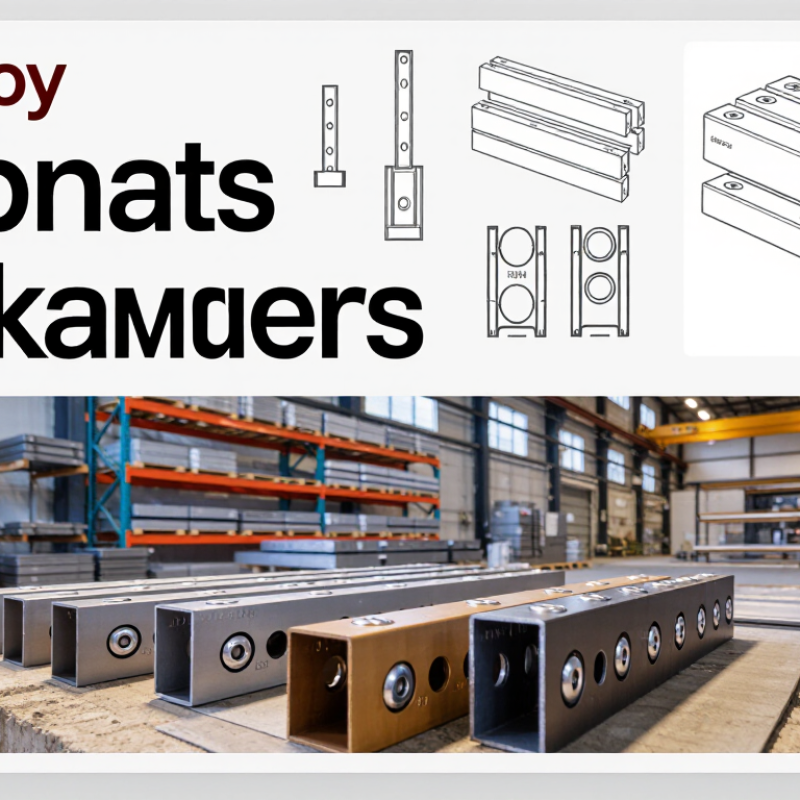
Permanent formwork magnets combine a steel housing, permanent magnet assembly, release mechanism, and threaded connection to a formwork rail or table. Common designs include push-button units and lever-operated units. The mechanism switches the magnetic force on or off; the housing transfers that force to the formwork. Small parts matter. Dust, weld spatter, or a damaged contact face can reduce effective holding performance.
The Portland Cement Association’s Design and Control of Concrete Mixtures describes normal-weight concrete at roughly 2,400 kg/m³. At that density, a one-metre vertical concrete head produces about 23.5 kPa of hydrostatic pressure. ACI 347R-14 notes that fresh-concrete form pressure also depends on factors such as placement rate and concrete temperature. So density alone cannot size a magnet system. A faster pour can change the loading picture.
Check the magnet’s rated pull against the actual steel surface, installation direction, and load path. A catalog pull figure is not a site safety factor. That distinction is easy to miss. For a 2,400 kg/m³ mix, engineers should assess panel deflection, rail spacing, vibration, and the possibility of uneven contact. Field conditions are rarely perfect. A trial installation and documented inspection can reveal gaps that calculations overlook.
For permanent formwork magnets, clamping force in kN should describe a measured condition, not just a product label. One kilonewton equals 1,000 newtons, but the result depends on the test surface and setup. A thick, clean steel plate can produce a different reading from a thin plate with paint, rust, or a small air gap. Specify the plate material and thickness, contact condition, magnet orientation, and whether the force is measured perpendicular to the plate or along it. These details make supplier comparisons more meaningful.
A practical test uses a calibrated load cell or force gauge, mounted in line with the pull. Seat the magnet fully, then increase the load steadily until it releases; record the peak force and repeat the test on several samples. Test it consistently. Note the plate temperature and any visible debris, too. A vertical pull-off result is not the same as resistance to sliding on a formwork beam. There is a weakness in any single headline figure: site conditions rarely match a laboratory plate. Buyers should ask for the test method, sample count, and results, not only a kN rating. Recheck magnets after wear or impact, since damaged contact faces may reduce holding force. A neat number can still mislead.
| Category | Item | Specification or test value | How to interpret it |
|---|---|---|---|
| Clamping-force reference | Force unit | 1 kN = 1,000 N ≈ 101.97 kgf | kN is a unit of force. The kgf equivalent is a force conversion, not the mass of a load the magnet can safely lift. |
| Example nominal force class | 5 kN ≈ 510 kgf | Illustrative rating tier for comparing specifications; it is not a verified rating for a particular product. | |
| Example nominal force class | 10 kN ≈ 1,020 kgf | Illustrative rating tier. Actual measured force depends on the magnet, contact plate, and test conditions. | |
| Example nominal force class | 15 kN ≈ 1,530 kgf | Illustrative rating tier, not a manufacturer-specific performance claim. | |
| Example nominal force class | 20 kN ≈ 2,040 kgf | Illustrative rating tier, not a substitute for a product test report. | |
| Example nominal force class | 25 kN ≈ 2,550 kgf | Illustrative rating tier. Confirm whether the declared value is a peak, minimum, or typical test result. | |
| Example nominal force class | 30 kN ≈ 3,060 kgf | Illustrative rating tier. Higher nominal force does not by itself establish suitability for a specific formwork application. | |
| Force test and reporting | Force direction | Pull perpendicular to the contact surface | Report the test direction. A perpendicular pull-off result is not the same as resistance to sliding or shear. |
| Test equipment | Calibrated force gauge or load cell, with a suitable test fixture | Record the instrument identification, capacity, and calibration status so the result can be traced. | |
| Contact surface | Document the steel plate material, thickness, flatness, and surface condition | Steel properties, plate thickness, surface irregularities, paint, rust, and debris can affect the measured force. | |
| Test setup | Seat and activate the magnet as intended; align the pull axis with the test fixture | Misalignment, incomplete contact, or an inconsistent activation procedure can change the result. | |
| Result to report | Record peak pull-off force in N or kN, test conditions, and number of trials | For comparison, test samples under the same documented conditions. Do not treat a single peak reading as a guaranteed minimum unless specified as such. | |
| Application limit | Use the supplier’s stated working limits and the project’s engineering requirements | Test pull-off force alone does not account for concrete pressure, dynamic effects, load direction, installation, or safety factors. | |
| Comparison note | Manufacturer and product selection | This table contains no company or brand rankings. The force classes are illustrative comparison points; request product-specific test records and clearly defined test conditions before comparing shuttering magnets. | |
China’s permanent formwork magnet manufacturers vary in production scale, tooling, and customization depth. A capable factory should explain how its magnet housing is formed, how components are assembled, and how each unit is checked. For example, consistent steel thickness and clean welds help the housing sit flat against a formwork panel. Small details matter.
Customization may cover magnet dimensions, button positions, clamping profiles, and access for release tools. Clear drawings and sample approval reduce fit problems on site. Ask whether custom batches receive the same inspection as standard products. A rushed change can affect fit or holding performance; more customization is not always better. I would also compare test conditions, since a holding-force result means little without the steel surface and measurement method.
Tips: Request a sample and check its fit on your actual panel. Ask for repeat-cycle results, coating checks, and batch records. Look for calibrated test equipment and traceable inspection notes. These checks cannot prevent every issue, but they make supplier claims easier to evaluate.
China’s permanent formwork magnet suppliers should be compared on process control and test evidence, not brochure claims. ISO 9001 can indicate documented procedures, corrective actions, and traceability. It does not certify a magnet’s holding force. That distinction matters.
Ask for the certificate scope, issuing body, expiry date, and recent audit status. Then request pull-force data for the exact model and production lot. A useful report states the test surface, steel thickness, contact condition, loading direction, and instrument calibration date. A clean, thick test plate can produce higher readings than a painted or uneven formwork surface. Compare repeated measurements, not one impressive maximum. Small details count.
Check how much readings vary across samples, and ask what acceptance range the supplier uses. Where possible, compare results under conditions close to your site setup. The data may still not predict every installation; surface gaps and handling can change performance. It is tempting to rank suppliers by the highest number, but that can hide inconsistency. A supplier that explains test limits and shares traceable records offers more useful evidence than one that provides a polished certificate alone.
Permanent formwork magnets can hold steel side forms in position on a precast casting bed. Their strength does not remove the need to assess fresh-concrete pressure. ACI 347R offers guidance for estimating that pressure, with placement rate, concrete temperature, mixture properties, and vibration affecting the loads. Check the current guidance and project-specific design assumptions before selecting magnet spacing or capacity. Small details matter.
During placement, concrete can push outward before it begins to stiffen. A fast pour, highly workable mix, or deep form may increase pressure on panels and connections. Confirm that the complete assembly—not just each magnet—can resist the calculated load, including local panel bending and possible sliding. Keep contact surfaces clean and flat; a thin film of paste or debris can reduce reliable seating. Do not guess. Inspect magnet engagement and form alignment before pouring, then monitor movement as concrete rises. A neat calculation may still miss uneven placement or site vibration. That uncertainty deserves a deliberate safety margin and a documented check by a qualified formwork designer.
5107 County Road C
Manitowoc, WI 54220
920-726-4526