
A Cast Iron Butterfly Valve is commonly used to start, stop, or regulate flow in pipelines. Its disc turns on a central shaft, opening or restricting the passage with a short quarter-turn motion. The design is compact, and it can be practical where installation space is limited. That matters.
These valves are often found in building water systems, HVAC lines, irrigation networks, and some industrial services. For example, a maintenance team may use one to isolate a section of pipe before servicing a pump. In larger lines, its relatively light, compact form can simplify installation compared with some bulkier valve designs. Still, the right choice depends on the job.
Cast iron has useful strength for many water and general-purpose applications, but it is not suitable for every fluid or operating condition. Corrosion, pressure, temperature, and water chemistry can affect service life. Check the valve’s pressure rating, lining, disc and seat materials, and connection type against the system requirements. A mismatch may cause leakage or early wear, even when the valve looks robust. Not always obvious.
This article explains where cast iron butterfly valves are used, how their basic operation supports flow control, and what to check before specifying one. Actual performance depends on correct sizing, installation, and maintenance. Manufacturer data should guide final selection; assumptions based only on pipe size can be misleading.
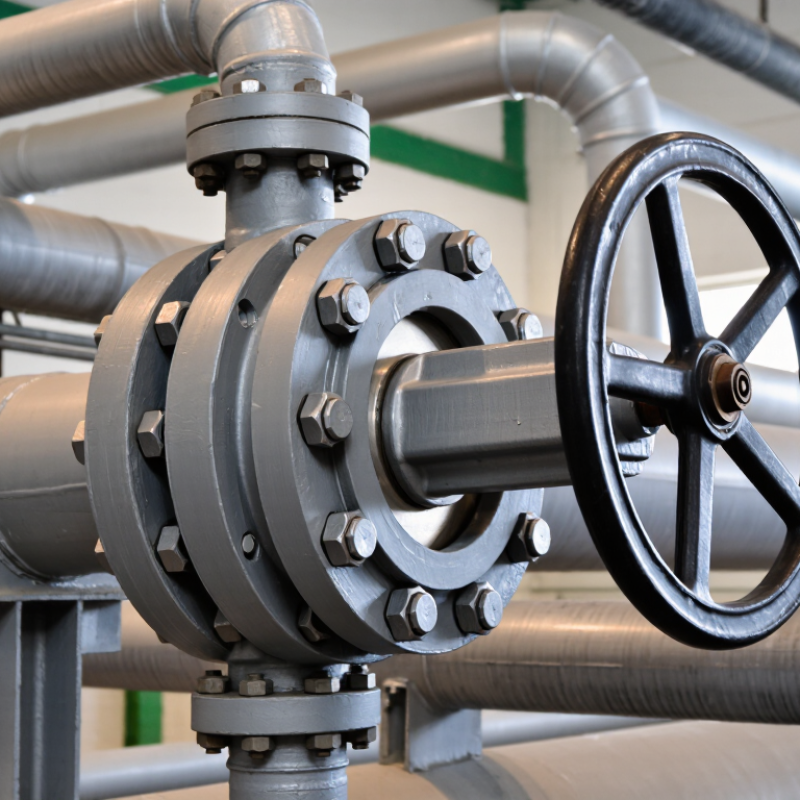
A cast iron butterfly valve is a quarter-turn device fitted into a pipe to control flow. Its main parts are a circular body, a stem, a rotating disk, and a sealing seat. In many designs, the body sits between pipe flanges, keeping the installation compact.
The disk turns across the flow path, much like a flat plate pivoting inside the pipe. The disk turns. When it lies parallel to the flow, fluid can pass; when it turns across the opening, the valve closes. An operator may use a hand lever, gearbox, or actuator, depending on the valve size and system needs.
Cast iron describes the valve body material, not every component. The disk, stem, and seat may use different materials to suit the service.
These valves are commonly used in water lines, building heating and cooling systems, and some air or low-pressure process lines. Their relatively simple shape can make them practical where space and quick operation matter.
But “cast iron” does not mean suitable for every fluid or condition. Pressure, temperature, corrosion, and seat compatibility all need checking against the valve’s rated specifications.
A detail that is easy to miss: the disk remains in the flow path even when the valve is open, so it can create some resistance. It is worth checking the actual application rather than relying on the material name alone.
A cast iron butterfly valve controls flow with a circular disc mounted inside a compact body. The body connects to the pipe, while a resilient seat lines its inner edge and helps form a seal. A stem passes through the body and links the disc to a lever, gearbox, or powered actuator. Simple parts, but each has a job.
Turning the handle about a quarter-turn rotates the disc. When open, the disc sits roughly parallel to the flowing water, leaving a passage around it; when closed, it turns across the pipe and presses against the seat. The disc remains in the flow path, so it can create some resistance even when fully open. Not quite a clear pipe.
In practical installations, cast iron bodies are common in water and building-service systems where the specified pressure, temperature, and fluid are suitable. The valve’s actual limits depend on its design, seat material, and connection type, so checking the nameplate and technical data matters. A small detail matters: a poorly aligned disc or worn seat may cause leakage, even if the handle reaches its stop. Regular inspection can reveal stiffness, corrosion, or seal wear before operation becomes unreliable.
Cast iron butterfly valves are common in municipal water networks because they control large flows without taking up much space. Their quarter-turn disc opens or closes quickly, which is useful at pump stations, treatment plants, and distribution mains. Operators may use them to isolate a pipeline during maintenance or regulate flow between storage tanks. A handwheel suits smaller lines; larger valves often use electric or hydraulic actuators. Fit matters.
Industrial and building applications
In industrial systems, these valves handle cooling water, fire-protection water, and general process water. They also appear in heating and ventilation systems, where they help balance water flow through chillers and building loops. Their compact body can make installation easier in crowded pipe racks.
Selection and installation considerations
Still, a valve that works well on clean water may not suit every service. Suspended solids, temperature, pressure, and fluid chemistry all affect seat and disc selection. Cast iron is durable for many water applications, but it is not automatically the right choice for every pipeline. Engineers should check pressure ratings, connection type, and material compatibility against actual operating conditions. For corrosive fluids or demanding temperatures, another body material or lining may be needed. A detail that is easy to miss: the valve’s position can affect maintenance access, especially when an actuator sits close to a wall.
What Is a Cast Iron Butterfly Valve Used For?
Key Advantages and Operating Limitations
Cast iron butterfly valves are commonly used to isolate or regulate water in treatment plants, pumping stations, and building services. A quarter-turn handle moves the disc across the pipe, so operators can shut off flow quickly without a long valve body. The compact shape helps where installation space is tight. Useful, but not universal. The U.S. EPA’s 2022 Clean Watersheds Needs Survey estimated $630.1 billion in wastewater and stormwater infrastructure needs over 20 years. That scale helps explain why maintainable, space-efficient flow-control equipment matters.
Cast iron bodies are generally economical and rigid, but the material can crack under impact or severe water hammer. The disc also remains in the flow path when open, creating some resistance and catching debris in dirty service. For precise throttling, a butterfly valve may provide uneven control, especially near closed positions. Not ideal for every duty. EPA’s 2023 Drinking Water Infrastructure Needs Survey estimated $625 billion in drinking-water system needs over 20 years; however, those figures do not mean one valve type fits every project. Check the valve’s pressure-temperature rating, lining, disc material, and end connections against the actual fluid and operating cycles. For corrosive water, abrasive solids, or frequent surges, that review is easy to rush—and costly to skip.
| Dimension | Typical Use or Characteristic | Key Advantage | Operating Limitation |
|---|---|---|---|
| Water distribution | On/off isolation in water mains, treatment plants, storage systems, and building services. | Compact, quarter-turn design can provide a relatively short face-to-face length and quick operation. | Pressure rating and permitted installation orientation depend on the valve’s design and applicable standard. |
| HVAC and cooling water | Isolation of chilled-water, condenser-water, and other compatible closed-loop services. | Lightweight compared with many larger gate or globe valve assemblies, helping simplify installation. | Seat and coating materials must suit the fluid temperature, treatment chemicals, and operating conditions. |
| General industrial utility lines | Isolation of compatible, relatively clean liquids and certain low-pressure utility services. | The disc rotates through 90 degrees, so operation is straightforward with a lever, gearbox, or actuator. | Cast iron is brittle compared with ductile iron or steel and can be vulnerable to impact, excessive pipe loads, or freezing conditions. |
| Flow regulation | Some butterfly valves can be held partly open to regulate flow when the valve and service are suitable. | Quarter-turn movement allows convenient adjustment and can support automated control with an actuator. | A standard isolation valve is not automatically a suitable control valve; partial opening may cause noise, vibration, cavitation, or accelerated wear. |
| Clean or mildly treated fluids | Commonly selected for water and other media confirmed as compatible with the body, disc, seat, and coating. | Resilient seats can provide tight shutoff in appropriately specified designs. | Compatibility cannot be assumed for acids, solvents, oils, seawater, or other corrosive media; material selection must be checked. |
| Large-diameter pipelines | Used where a compact, quarter-turn valve is needed for comparatively large line sizes. | The design can be space-efficient, and the valve’s operating torque may be manageable with suitable gearing or actuation. | The disc remains in the flow path when open, creating some pressure loss; required torque increases with valve size and service conditions. |
| Abrasive or solids-laden service | Generally not the first choice for highly abrasive slurries or services with frequent, large solids unless specifically engineered for them. | Specialized disc, seat, and lining arrangements may be available for particular duties. | Solids can damage the seat or interfere with disc closure; confirm suitability with the valve’s design data. |
| Pressure and temperature selection | Chosen according to the stated pressure class, temperature range, body material, and seat construction. | Many designs are available for common water-service conditions. | There is no single pressure or temperature limit for all cast iron butterfly valves. The allowable rating can decrease as temperature rises and varies by model and materials. |
| Selection check | Verify the manufacturer’s pressure-temperature rating, end connection, seat and coating compatibility, shutoff requirements, flow conditions, and installation instructions for the specific valve. Do not treat general service examples as a substitute for the product’s technical data. | ||
A cast iron butterfly valve is commonly used to isolate or regulate water in building services, irrigation, and general industrial piping. Its quarter-turn disc needs less installation space than many gate valves. Selection starts with the actual duty: fluid, operating pressure, temperature, pipe size, and whether the valve will remain open or cycle often. Cast iron can suit many water services, but it is not automatically suitable for corrosive fluids or severe pressure and temperature conditions.
Check the valve’s pressure-temperature rating and the compatibility of its disc, liner, and shaft with the fluid. A mismatch can cause corrosion, leakage, or a stiff handle. Also confirm the flange standard, face-to-face dimension, flow direction requirements, and actuator torque. For throttling, ask for flow data; a partly closed disc can create turbulence and wear. The U.S. EPA’s 2023 Drinking Water Infrastructure Needs Survey and Assessment estimated $625 billion in drinking-water infrastructure needs over 20 years. That scale makes dependable component selection practical, not just paperwork.
Tips: Compare the valve’s rated limits with real operating conditions, including pressure surges. Leave room for the handle or actuator, and verify access for inspection. If the service is unusual, pause and get a qualified engineer’s review. A catalog match alone may not be enough.
5107 County Road C
Manitowoc, WI 54220
920-726-4526