
Choosing a Vertical Boring Machine is rarely just a matter of picking the largest model. The right machine must match the workpiece, required accuracy, available floor space, and production volume. A heavy casting, for example, may need a broad table and steady support, while repeat production can make setup time especially important. Small details matter.
This guide examines ten vertical boring machines and the features that can make each one suitable for particular shop conditions. We consider practical factors such as table diameter, turning capacity, spindle performance, control options, tool changes, and service support. Specifications alone do not tell the whole story. A machine that looks impressive on paper may not suit a shop’s power supply, operator experience, or maintenance resources. That is worth checking.
“Best” depends on the job, and product availability or specifications can change. Buyers should confirm current details with manufacturers or authorized suppliers before making a decision. The comparisons here are intended to help narrow the options, not replace a technical review of your parts and process. A careful match can improve workflow and consistency; a rushed choice can leave valuable capacity unused.
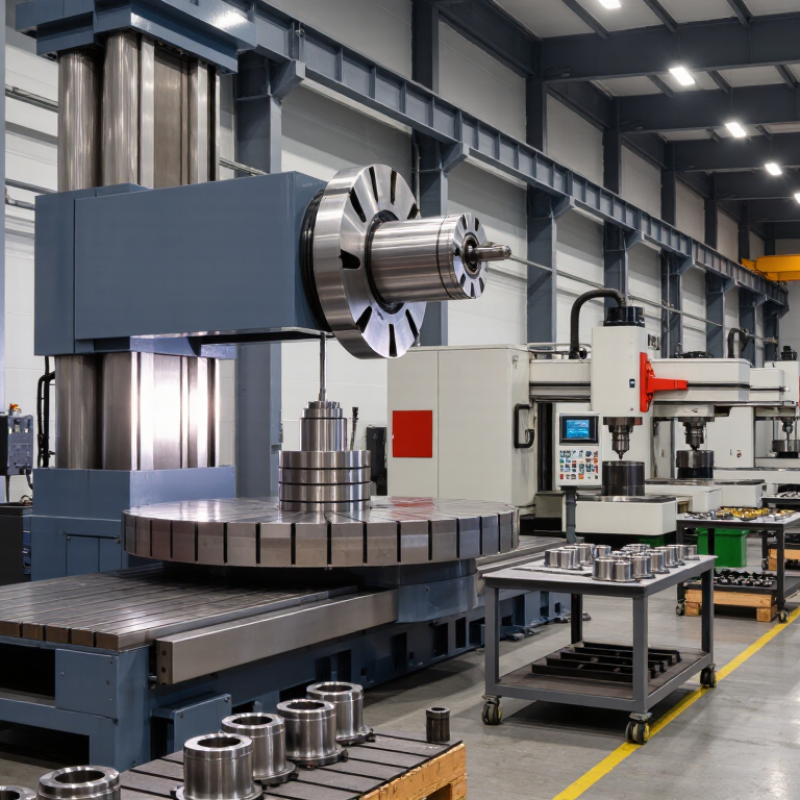
A vertical boring machine, often called a vertical turning lathe, holds a large workpiece on a horizontal rotating table. A tool head travels along the machine column as the table turns the part beneath it. The cutter can bore internal diameters, face flat surfaces, or shape outer walls. Heavy parts. This layout suits wide castings that are difficult to rotate horizontally.
Operators clamp and center the workpiece before cutting; even a small setup error can leave uneven walls. During operation, the rotating table supplies the cutting motion, while the tool feeds across or into the material.
Grand View Research’s 2023 CNC Machine Market report estimated the global market at USD 83.99 billion in 2022 and forecast 5.5% annual growth from 2023 to 2030. This figure covers CNC machines broadly, not vertical boring machines alone. The distinction matters.
These machines can handle substantial parts, but accuracy still depends on rigidity, tooling, and careful setup.
Vertical boring machines are commonly classified by column layout and control system. Single-column models use one upright supporting a cross rail and tool head. Their open front makes loading large, awkward castings easier. They suit medium-sized parts, though heavy cuts can challenge frame rigidity.
Double-column machines place the worktable between two uprights. This arrangement offers strong support for wide, heavy components such as pump housings or turbine casings. The cross rail can be adjusted to accommodate different workpiece heights. Setup takes care. A poorly supported part may vibrate, leaving chatter marks on the bore.
Manual vertical boring mills rely on an operator to position tools and control feeds. They remain useful for repair work and short production runs. CNC vertical turning and boring machines follow programmed tool paths, making repeated dimensions easier to maintain. Some have a turret that holds several tools, reducing tool changes between facing, turning, and boring operations. The right type depends on part diameter, weight, tolerance, and production volume. Shops sometimes focus too much on spindle power; table capacity and accessible tool travel matter just as much. That detail is easy to miss.
Start with the workpiece, not the machine’s headline capacity. Measure its maximum diameter, height, and weight, then allow room for fixtures and safe loading. Confirm table diameter and swing, since a large casting may clear the enclosure but still interfere with clamps. Fit matters. Check the boring diameter range, spindle nose, and tool reach against the jobs you actually run.
Spindle torque and speed should suit the material and cutting tools. Heavy roughing often needs steady torque at lower speeds, while finishing may call for finer speed control. Look at ram travel, rigidity, and the machine’s ability to hold alignment across its working range. A brochure may quote accuracy, but ask how it is measured and maintained after warm-up. No single specification settles the choice.
Controls matter when operators change jobs often. Check whether setup, tool offsets, and repeatable cycles are clear to use. Also inspect chip removal, coolant access, guarding, and loading arrangements; these details affect daily work more than they first appear to. Ask about service response, spare parts, and preventive maintenance requirements. It is easy to overvalue maximum capacity. A machine sized far beyond typical work can cost more to run, yet a tight fit leaves little room for future parts.
What Are the 10 Best Vertical Boring Machines for Different Applications?
There is no single winner. The right choice depends on workpiece size, material, accuracy needs, and production volume. These ten machine configurations suit different shop-floor demands. A compact manual vertical boring mill works well for repair shops handling varied, occasional jobs. A CNC single-column model suits medium-sized parts and repeatable machining. A double-column design offers added support for wide, heavy components. A ram-head machine reaches deep features without repositioning the part. A turret-head configuration handles several tools efficiently during one setup.
For large castings, a heavy-duty machine with a broad table can provide stable support, but it needs ample floor space. A precision-focused model is suited to finishing bearing seats and other close-tolerance surfaces. A multi-axis configuration helps machine angled features with fewer setups. A production-oriented machine with automatic tool changing can reduce interruptions on repeat work. A retrofit-ready machine may appeal to shops upgrading controls or capacity gradually. That choice can involve compromises.
Check the actual work envelope, table load rating, spindle range, and tool access before comparing machines. Ask how the machine performs with your material and cutting depth, not just its maximum capacity. A large table is not automatically better if small parts dominate the workload. And tighter specifications may raise costs without improving the finished part. Review sample cuts and service support where possible. The best fit is the one that meets real job requirements consistently.
Choosing a vertical boring machine starts with the part, not the catalogue. Measure the largest workpiece diameter, height, and weight, then check the machine’s swing, table load, and ram travel. Leave room for fixtures and tool clearance. A workpiece that barely fits may be difficult to load safely. Consider materials, too: cast iron, steel, and difficult alloys place different demands on spindle torque, tooling, and coolant. Grand View Research’s 2024 Machine Tools Market report estimated the global market at USD 84.17 billion in 2023, with projected growth through 2030. That broad trend does not identify the right machine for your shop; actual part mix matters more.
Compare accuracy and repeatability at the required cutting conditions, not only the values printed on a specification sheet. ISO 230-2:2014 describes tests for positioning accuracy and repeatability of numerically controlled axes, including measurements in both travel directions. Ask for test results and verify what conditions were used. Also check foundation requirements, control compatibility, tooling availability, and service response. A larger machine can feel safer, but it may raise installation and operating costs without improving your parts. I would double-check this trade-off.
Tips: Bring a representative part drawing and a recent job list to supplier discussions. Ask how long setup, loading, and tool changes take. Confirm the heaviest workpiece against the table rating, with fixture weight included. If a machine meets every limit only on paper, pause and investigate.
The options below are machine configurations for different jobs, not specific product models. Diameter figures are indicative sizing bands; actual capacity varies by machine design, tooling, and workpiece setup.
| No. | Machine Configuration | Indicative Maximum Turning Diameter | Typical Workpiece Profile | Key Advantages | Best Suited For | What to Check Before Buying |
|---|---|---|---|---|---|---|
| 1 | Compact manual vertical boring machine | Approximately 300–600 mm | Small, relatively simple circular parts | Simple operation, modest space requirements, and straightforward maintenance | Repair shops, training facilities, and occasional low-volume work | Table diameter, spindle speed range, tooling availability, and operator skill requirements |
| 2 | Compact CNC vertical turning machine | Approximately 400–800 mm | Small to medium parts requiring repeatable turning operations | Programmable cycles and consistent repeatability for recurring jobs | Job shops and production cells with frequent part changes | Control functions, tool capacity, setup time, and the availability of suitable workholding |
| 3 | Small single-column CNC vertical turning machine | Approximately 600–1,200 mm | Flanges, rings, housings, and other medium-sized components | Smaller floor-space footprint than many large double-column machines | General machining where workpiece size and floor space are both constrained | Column and ram rigidity, maximum part height, table load rating, and access for loading |
| 4 | Medium single-column vertical boring machine | Approximately 1,000–2,000 mm | Medium-to-large parts with turning, facing, or boring requirements | Versatile capacity for a broad range of components | Industrial workshops handling mixed, medium-to-large workpieces | Maximum turning height, ram travel, spindle torque, and the rigidity needed for interrupted cuts |
| 5 | Medium double-column vertical boring machine | Approximately 1,500–3,000 mm | Large, heavy parts that benefit from a more rigid structure | Greater structural support and working space for larger components | Heavy engineering and production of large rings, housings, or machinery parts | Table load rating, foundation requirements, cross-rail positioning, and crane access |
| 6 | Large single-column CNC vertical turning machine | Approximately 2,000–3,500 mm | Large-diameter components where a single-column layout suits the shop | Large-part capacity with a layout that may simplify access from some sides | Large components produced in facilities with appropriate lifting equipment | Part swing, maximum height, ram reach, chip removal, and machine foundation specifications |
| 7 | Large double-column vertical boring machine | Approximately 3,000–6,000 mm | Very large, heavy components requiring substantial table capacity | Robust support for demanding large-part machining applications | Energy, heavy-equipment, and large industrial component manufacturing | Workpiece weight and dimensions, rail stiffness, available power, and installation clearance |
| 8 | Extra-large heavy-duty double-column machine | Approximately 5,000 mm and above | Oversized components beyond the practical range of standard shop machines | Can accommodate exceptionally large workpieces when specified for the job | Specialized heavy manufacturing and large infrastructure components | Confirm capacity for the actual part, including weight distribution, height, lifting, and foundation limits |
| 9 | High-precision CNC vertical turning machine | Commonly selected within approximately 500–2,000 mm | Parts with demanding dimensional, geometric, or surface-finish requirements | Designed around process control, repeatability, and precision features | Precision components and production processes with documented inspection requirements | Specified accuracy conditions, thermal control, feedback system, calibration, and inspection method |
| 10 | Vertical boring machine with milling capability | Approximately 1,500–6,000 mm, depending on configuration | Large parts needing turning plus selected milling or drilling operations | Can combine multiple operations and reduce part repositioning | Complex large components where fewer setups can improve workflow | Milling power and torque, tool system, axis travel, tool access, and whether the added functions are needed |
How to choose: Start with the largest workpiece diameter, height, and weight you expect to machine. Then confirm table capacity, required machining operations, accuracy, production volume, floor space, foundation, power supply, loading equipment, tooling, and service support. Request written specifications for the actual machine configuration before comparing quotations.
5107 County Road C
Manitowoc, WI 54220
920-726-4526
