


Stecker Machine Blog

Why Choose Gravity Conveyor Manufacturers?

Gravity conveyors can make a busy packing area feel more orderly. A carton rolls from a loading point to a workbench without a motor, while workers keep products moving with simple pushes. The right system can reduce routine lifting, use floor space efficiently, and fit changing workflows. The wrong one can create bottlenecks.

Gravity Conveyor Manufacturers help buyers compare roller and skate-wheel designs, frame widths, load capacities, and installation options. Those details matter. A narrow roller pitch may suit firm-bottomed cartons, while uneven loads may need closer support. Slope also deserves care: too little movement slows handling; too much can send a box sliding faster than expected. Measure actual cartons and test representative loads before choosing.

A useful expert quotation should be checked against a reliable source. No verified expert name or quotation was included with the supplied material, so inventing one would weaken trust. Add an approved quotation here before publication. It should speak to practical selection, not promise universal savings or performance.

Ask Gravity Conveyor Manufacturers how they assess load variation, daily throughput, operator reach, and future layout changes. Request drawings, specifications, and a clear explanation of assumptions. Then compare proposals against the conditions on your floor, including aisle space and transfer points. Small details matter. A careful review may take longer than expected, and not every application benefits from gravity flow. That is worth questioning before equipment is ordered.
Why Choose Gravity Conveyor Manufacturers?

What Gravity Conveyors Are and How They Work

Why Choose Gravity Conveyor Manufacturers?
What Gravity Conveyors Are and How They Work

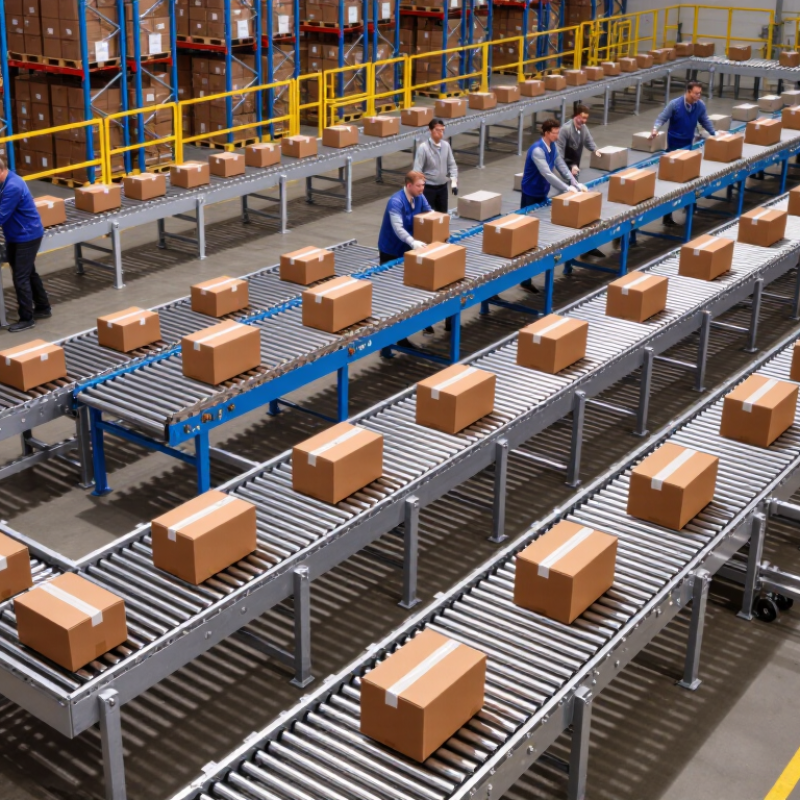
Gravity conveyors move cartons, totes, and other suitable loads without powered rollers. A slight decline lets gravity pull each item forward; workers may also push loads across level sections. Rollers or wheels support the load while reducing sliding friction. No motor. No drive chain.

The details matter. Roller spacing must suit the smallest load, or a carton can sag between rollers. A heavier box may also gain speed on a long incline, so stops, side guides, and brakes can help control its travel. Manufacturers can assess load dimensions, weight, route, and transfer points before specifying a layout. A real site check is useful; drawings alone may miss uneven floors or awkward handoffs.

MHI’s 2024 Annual Industry Report found that 55% of surveyed respondents planned to increase supply-chain technology and innovation investment over the following five years. That figure describes broader investment plans, not gravity conveyors specifically. Still, it highlights why equipment choices deserve careful review. Gravity systems can be simple, but they are not automatically suitable for every line. A small change in slope can affect spacing and handling, and this is easy to underestimate.

How Manufacturers Design and Build Gravity Conveyor Systems

Why Choose Gravity Conveyor Manufacturers?

How Manufacturers Design and Build Gravity Conveyor Systems

A gravity conveyor looks simple: rollers, a frame, and a slight incline. Its performance depends on careful sizing. Manufacturers assess carton weight, base dimensions, package mix, and daily flow before selecting roller diameter and spacing. The smallest carton should contact several rollers at once. Small details matter. A gap that suits a rigid tote may snag a soft carton.

Designers calculate slope and run length, balancing reliable movement against impact at the discharge end. They specify side guides, end stops, transitions, and, where needed, brakes or flow-control sections. Frame material and support spacing depend on load and site conditions. Each section should be checked for deflection, alignment, and safe access. A drawing can still miss a real-world snag.

MHI’s 2024 Annual Industry Report, based on a survey of more than 2,000 supply-chain professionals, found that 55% planned to increase technology investment. That pressure makes adaptable layouts valuable, even for non-powered equipment. Manufacturers can build modular sections for future changes to line length or workstations. Before production, experienced teams review sample cartons and test loaded sections where practical. They document assumptions, since packaging and floor conditions can affect performance. A careful manufacturer explains those limits instead of promising every carton will roll perfectly.

Benefits of Working with a Gravity Conveyor Manufacturer

A gravity conveyor manufacturer can match roller pitch, diameter, and frame strength to the actual load. That matters when cartons have uneven bases or totes arrive slightly off-center. A specialist can review product dimensions, weight, throughput, and floor layout before recommending a design. Small details count. A roller gap that suits a rigid carton may catch a soft package. For an inclined line, the manufacturer can assess slope and braking needs, rather than treating gravity as a one-size-fits-all solution.

Working directly with a manufacturer can also simplify installation planning and future changes. Ask for load limits, maintenance access, and how transfer points will align with existing equipment. MHI’s 2024 Annual Industry Report found that 55% of respondents were using robotics and automation, while 88% expected to adopt them within five years. Those figures describe broader supply-chain technology, not gravity conveyors specifically. Still, they show why clear interface planning matters as facilities evolve. A gravity section may remain simple, but a poorly placed stop or awkward height change can slow workers and disrupt flow. Even a good design may need adjustment once real products run through it.

Why Choose a Gravity Conveyor Manufacturer?

Compare the basic operating principles of gravity and powered conveyors.

Gravity conveyors move loads using gravity on a suitable incline or manual pushing on level sections, without a motorized drive. A gravity conveyor manufacturer can help match conveyor dimensions and layout to the loads and available space. Values show operating principles, not measured performance; configurations vary.

How to Evaluate a Manufacturer’s Quality and Capabilities

When comparing gravity conveyor manufacturers, inspect how they turn a load rating into a usable system. Ask for roller diameter, spacing, frame gauge, and rated capacity per section. Then compare those figures with your heaviest cartons, including unevenly packed ones. A sample test helps: run a real carton over joints and curves, and watch for rocking, snagging, or excessive speed. Small faults matter.

Quality also shows up in records and repeatability. Request material specifications, inspection procedures, load-test results, and traceable component details. Ask how the manufacturer handles damaged rollers and replacement parts. MHI’s 2024 Annual Industry Report found that 55% of surveyed supply-chain leaders planned to adopt robotics and automation within five years. Gravity equipment is simpler, but it still needs to fit changing workflows and connect reliably with other handling systems. Ask for installation references from operations with similar carton sizes, shifts, and throughput—not just polished product photos.

Check engineering support, too. Can the team review your layout, slope, transitions, and operator access? Do they explain where manual checks remain necessary? Clear answers are useful. Vague promises aren’t. One detail is easy to miss: floor variation can change product speed, even when conveyor sections meet specification. Ask the manufacturer to document assumptions and limits. A good supplier should welcome that scrutiny, though no checklist replaces testing your actual loads.

Why Choose Gravity Conveyor Manufacturers? - How to Evaluate a Manufacturer’s Quality and Capabilities

Use this evaluation matrix to compare suppliers against your product, throughput, environment, and installation requirements. Confirm all ratings and tolerances against the proposed design; requirements vary by application.

Evaluation Area What to Check Useful Evidence or Acceptance Criteria Weight
Load capacity and product fit Confirm the conveyor is designed for the maximum unit load, load distribution, product dimensions, and any concentrated or overhanging loads. Written capacity for the proposed configuration; product and load assumptions documented; safety factor and operating limits stated for the application. 15%
Roller selection and spacing Check roller diameter, material, bearing type, and pitch against package size, weight, base condition, and desired movement. Layout or specification identifies roller details. Roller pitch is suitable for the smallest product base, with adequate support during transfer. 12%
Frame and finish quality Review frame material, structural design, corrosion protection, edges, welds, and finish for the operating environment. Material and finish specifications are provided; workmanship is consistent; coating or stainless-steel selection matches exposure and cleaning needs. 12%
Engineering and configuration capability Assess the ability to configure straight sections, curves, stops, supports, transitions, and interfaces with adjacent equipment. Application-specific drawings show dimensions, elevations, connections, and options; design changes are reviewed and documented. 12%
Performance and operating safety For gravity applications, evaluate slope, starting and running behavior, product control, and potential pinch or impact points. Proposed slope and operating assumptions are documented; the supplier explains how speed, accumulation, and safe access will be addressed. 10%
Dimensional accuracy and assembly Check consistency of section lengths, widths, elevations, hole patterns, and connection points. Inspection is performed against approved drawings; critical tolerances are specified rather than assumed; sections align during installation. 10%
Quality control and traceability Review inspection procedures for incoming materials, fabrication, finishing, and final assembly. Documented quality checks and inspection records are available. Applicable quality-system certifications can be verified when claimed. 10%
Testing and delivery inspection Determine what checks are completed before shipment and how discrepancies are managed. Inspection checklist covers the agreed configuration, dimensions, finish, and included components; nonconformances have a defined resolution process. 7%
Installation documents and support Assess the clarity of assembly, anchoring, maintenance, and operating instructions, plus access to technical assistance. Manuals and drawings are supplied for the delivered system; maintenance guidance identifies inspection points and replaceable parts. 6%
Spare parts and lifecycle support Check availability of common replacement items such as rollers, bearings, and connection hardware. Parts are identifiable from documentation; the supplier states availability, ordering information, and support arrangements. 6%
Total evaluation weighting 100%

Suggested scoring method: rate each area from 1 (does not meet requirements) to 5 (fully meets documented requirements), multiply the rating by its weight, and compare suppliers using the same application assumptions and evidence standard.

Industries and Applications for Gravity Conveyor Systems

Gravity conveyor systems serve warehouses, distribution centers, assembly plants, and packaging operations. They move cartons, totes, and other suitable loads between workstations without powered drives. A gently sloped roller lane can carry boxes from a packing bench to a staging area, while skate-wheel sections can help guide lighter packages around a sorting zone. No motor is needed. That can mean fewer powered components to maintain, though the system still needs regular inspection.

Applications depend on the load and the working environment. Manufacturers often use gravity sections to connect assembly steps, and retailers may use them for order preparation and dispatch. In food handling, equipment materials and cleaning needs should be considered carefully; not every roller setup suits every process. The incline, roller spacing, and conveyor width must match the products, or cartons may stall, drift, or become difficult to control. Keep it simple. A short test with typical loads can reveal awkward transitions before a full installation. Gravity conveyors are not ideal for every route, especially where products must travel uphill or move at a precisely controlled speed.