


Stecker Machine Blog

Why Use Industrial RFID Tablets in Global Warehouses?

Global warehouses operate under constant pressure. Orders move across receiving docks, storage aisles, and export stations every hour. Paper records and ordinary tablets often struggle in these demanding environments. Dust, vibration, cold rooms, and heavy handling can quickly expose their weaknesses.

INDUSTRIAL RFID TABLETS combine rugged computing with faster item identification. Workers can scan tagged pallets, cartons, and assets without returning to fixed workstations. A supervisor may verify a shipment beside a loading bay, even while forklifts move nearby. RFID support can reduce manual entry and improve visibility across inventory processes. It also helps teams locate misplaced goods before delays affect customers. That changes everything.

The practical value depends on thoughtful implementation. Field experience shows that durable hardware cannot repair inaccurate tags, weak network coverage, or poorly designed workflows. The details matter. Warehouse managers should examine scan distance, battery endurance, screen readability, glove operation, and software compatibility before purchasing. Independent testing, supplier documentation, and service records can support a more reliable decision. Security controls and user permissions also deserve attention, especially when devices connect with enterprise systems. A tablet may survive a fall, yet still fail operationally if updates are neglected. That uncomfortable point is easy to overlook. The strongest programs combine trained employees, clear procedures, and measurable performance targets. They review missed scans, charging habits, and repair trends regularly. When selected and managed responsibly, rugged RFID tablets can strengthen warehouse accuracy, mobility, and accountability across international operations. They are not a shortcut. They are a practical tool within a larger, continually improving system.
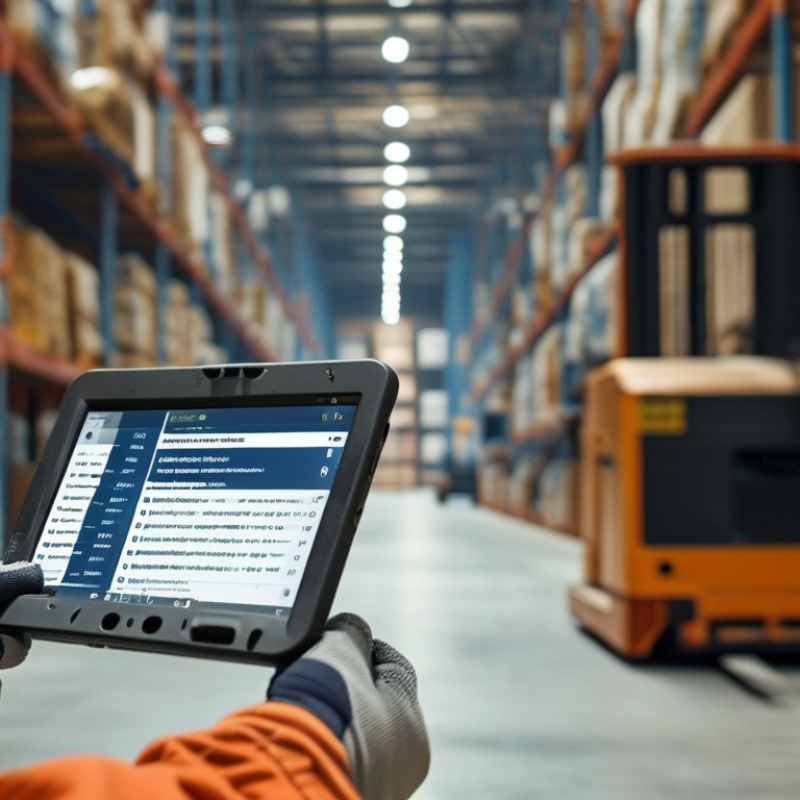
Why Use Industrial RFID Tablets in Global Warehouses?

What Are Industrial RFID Tablets?

Why Use Industrial RFID Tablets in Global Warehouses?

What Are Industrial RFID Tablets?

Industrial RFID tablets are rugged mobile computers designed for demanding warehouse work. They combine a touchscreen, RFID reader, barcode scanner, and wireless communication in one device. Their sealed housing resists dust, moisture, drops, and repeated handling. Workers can scan tagged cartons without opening every container. The tablet then displays stock details, location data, and task instructions. This supports faster receiving, picking, cycle counting, and shipment checks.

Unlike ordinary tablets, industrial models usually offer stronger batteries, brighter screens, and glove-friendly controls. These details matter in cold rooms, loading bays, and noisy aisles. A worker may hold the tablet with one hand while moving a pallet with the other. Reliable software also matters. It should record scans clearly and connect with warehouse systems without creating duplicate entries. RFID is not magic. Metal racks, liquids, and overlapping tags can reduce reading accuracy. Testing remains essential.

Tips: Map reading zones before installation. Test tags on real cartons and pallets. Keep a barcode option for difficult materials. Train workers to confirm unusual quantities instead of trusting every automatic scan. Access controls and encrypted connections should protect inventory data. One practical lesson is easy to miss: faster scanning can reveal weak data rules. Teams may need to revise workflows after the first trial. That is not failure. It is useful evidence.

How Do RFID Tablets Improve Warehouse Data Capture?

Industrial RFID tablets improve warehouse data capture by combining tag reading, visual verification, and mobile workflow control. A worker can read several tagged cartons beside a loading door, confirm quantities on screen, and attach photos to the receipt record. This reduces repeated keying and helps prevent unreadable handwriting. The 2024 MHI Annual Industry Report found that 74% of supply chain professionals expect technology investment to increase. That pressure makes faster, cleaner data increasingly important.

RFID tablets also capture information where work happens. Operators can record pallet movement in aisles, storage zones, or refrigerated areas without returning to a fixed workstation. Many devices support offline data storage, then synchronize when connectivity returns. This detail matters in large warehouses with metal racks and weak signals. A 2023 warehouse technology survey by a global logistics research group reported that inventory accuracy remains a major automation priority for operators. Better capture supports cycle counting, dock audits, and exception handling.

The result is not magic. A tablet can still read the wrong pallet. Poor tag placement, damaged labels, and rushed training create blind spots. Workers should review duplicate reads and compare unusual quantities with shipment documents. Experience suggests that simple screen layouts work better than crowded dashboards. Data quality improves when the device gives clear prompts, timestamps each action, and identifies the operator. The process may feel slower during early deployment, but that friction often reveals weak warehouse procedures.

Why Use Industrial RFID Tablets in Global Warehouses? How Do RFID Tablets Improve Warehouse Data Capture?

Operational comparison of RFID-enabled tablets and conventional barcode-based data capture in warehouse environments.

Data Dimension RFID Tablet Capability Typical Operational Data Warehouse Benefit Measurement Basis or Reference
Identification Method Reads electronic product codes from passive UHF RFID tags without requiring direct visual alignment. Non-line-of-sight capture Improves receiving, put-away, picking, cycle counting, and dispatch verification when labels or items are difficult to access. UHF RFID systems operate through radio communication between the reader and the tag; performance depends on tag placement, materials, antenna orientation, and environmental interference.
Read Distance Captures tagged items from a short distance while the operator moves through a storage location or pallet area. Approximately 0.5–10 m for passive UHF RFID in typical warehouse conditions. Reduces the need to handle every carton individually and supports faster location checks. Actual distance varies with reader power, antenna design, tag sensitivity, packaging, metal, liquids, and regulatory limits.
Multiple-Item Capture Reads multiple tags in one scan event and transfers the item list directly to the warehouse application. From several items to hundreds of tags per read zone, depending on tag density and system configuration. Shortens pallet verification and cycle-counting time compared with one-by-one barcode scanning. Read volume is affected by tag collision management, reader configuration, tag orientation, shielding, and the required read accuracy.
Data Entry Accuracy Automatically records the tag identifier and event time, reducing manual keying and repeated scanning. Lower keying-error exposure than manual entry; local acceptance testing should target 99%+ read accuracy for approved tag positions. Creates more consistent inventory records and reduces duplicate or omitted item entries. Accuracy should be measured by comparing RFID reads with a controlled physical count across representative products and warehouse zones.
Cycle Counting Supports rapid location-level counts using a handheld industrial tablet and integrated RFID reader. Often 2–4 times faster than one-at-a-time barcode counting in suitable layouts. Allows more frequent inventory checks while reducing disruption to normal warehouse operations. Productivity depends on travel distance, tag readability, rack density, counting rules, operator training, and exception handling.
Receiving Verification Compares the expected advanced shipping notice or purchase-order list with RFID reads at the dock. Near-real-time reconciliation of item identity, quantity, and receiving event. Helps detect shortages, overages, and misrouted cartons before goods enter storage. Results depend on supplier tagging compliance, dock-door read-zone design, and integration with the warehouse management system.
Location Traceability Associates an item or handling unit with a storage location, operator, timestamp, and transaction status. Event records can include EPC, location ID, time, user ID, and task status. Improves inventory visibility and supports faster investigation of misplaced stock. Traceability quality depends on complete event capture, synchronized clocks, reliable network connectivity, and correct location master data.
Tag Data Structure Reads a unique electronic product code and, where configured, user-memory data stored on the RFID tag. Common EPC identifiers use 96 or 128 bits; available user memory varies by tag. Provides item-level identity while keeping operational transaction data in the warehouse system rather than on the tag. EPC memory and encoding practices are defined by EPCglobal and related GS1 specifications; tag memory is not uniform across all products.
Connectivity Synchronizes scan results with warehouse systems through Wi-Fi, cellular networks, Bluetooth, or offline storage. Supports both online and offline workflows with later synchronization. Maintains productivity in large facilities, loading yards, cold areas, and temporary network dead zones. Network performance should be evaluated by coverage, latency, roaming behavior, data-queue capacity, and synchronization conflict handling.
Battery Operating Time Combines tablet computing with continuous or repeated RFID reading during a work shift. Approximately 8–12 hours under mixed-use conditions for many industrial handheld configurations. Reduces interruptions caused by battery replacement or midday charging. Runtime varies with RFID scan duty cycle, screen brightness, wireless use, processor load, temperature, battery age, and application design.
Environmental Protection Industrial enclosures can be selected for protection from dust, water splashes, vibration, and accidental drops. Common target ratings include IP65 or higher and drop resistance of approximately 1.2–1.5 m. Supports dependable use in docks, racks, yards, production-adjacent areas, and demanding warehouse environments. Ingress and drop performance must be confirmed against the applicable IEC 60529 rating and the device manufacturer’s test conditions.
Temperature Range Rugged configurations can be specified for ambient warehouse, loading-dock, or cold-storage operation. Typical industrial designs may support approximately -20°C to 50°C; cold-chain models may require additional validation. Reduces device failures and data interruptions when moving between indoor, outdoor, and temperature-controlled zones. Operating and storage limits are product-specific; battery performance and display behavior should be tested at the actual site temperatures.
System Integration Connects RFID reads with WMS, ERP, inventory, transport, and task-management applications through APIs, middleware, or mobile clients. Typical transaction fields include item ID, quantity, location, timestamp, user, and exception code. Turns raw RFID reads into actionable inventory and fulfillment events instead of isolated device data. Integration quality should be assessed using transaction response time, duplicate-event control, error recovery, authentication, and audit-log completeness.
Labor Impact Automates identification and reduces repetitive aiming, scanning, and manual typing tasks. Potential labor-time reduction of approximately 30–60% in suitable counting and verification processes. Enables staff to spend more time on exception resolution, replenishment, quality checks, and order completion. Actual savings depend on baseline process time, travel paths, product mix, tag coverage, exception rates, and workflow redesign.
Data Security Supports user authentication, encrypted communications, role-based access, device management, and remote wipe capabilities. Security controls can include TLS-encrypted data transfer, managed accounts, and audit trails. Protects inventory records and operational data across multiple facilities and countries. Controls should be aligned with organizational security policies and relevant information-security practices, including least-privilege access and device lifecycle management.
Note: The figures shown are typical engineering and operational ranges rather than guaranteed results. Final performance should be validated through a site survey and a pilot using the actual products, tag placements, rack materials, network conditions, and warehouse workflows.

Which Warehouse Tasks Benefit from RFID Tablets?

Why Use Industrial RFID Tablets in Global Warehouses?

Which Warehouse Tasks Benefit from RFID Tablets?

Industrial RFID tablets are most useful where workers move continuously. In receiving, an operator can scan a pallet from several feet away, verify its contents, and record damage beside the dock. Zebra’s 2023 Warehousing Vision Study found that 58% of warehouse leaders planned to adopt RFID by 2028. That figure reflects pressure for faster, more visible operations.

58% of warehouse leaders planned to adopt RFID by 2028.

Cycle counting is another strong use case. A worker can walk along a rack and read multiple tagged cartons without opening every box. GS1 guidance reports that well-designed RFID deployments can raise inventory accuracy above 95%. Tablets also connect each read with location, time, and employee notes. This helps teams investigate missing stock before a customer order is delayed.

Picking and shipping benefit from immediate verification. The tablet can flag a wrong item before it reaches the packing bench. At returns stations, staff can identify products, inspect condition, and update records with photographs. Small details matter. A damp carton, a torn label, or an unscanned transfer can explain later discrepancies.

However, RFID is not automatic perfection. Metal shelving, liquid products, poor tag placement, and dead batteries still create missed reads. Human checks remain necessary. That is the uncomfortable part. A faster scan can also spread bad data faster when item masters or location records are wrong.

Why Are Industrial RFID Tablets Suited to Global Operations?

Industrial RFID tablets suit global operations because warehouses rarely share the same conditions. One site may handle dusty cartons, while another works in freezing storage rooms. A rugged tablet combines RFID reading, barcode scanning, and mobile software in one device. Workers can verify pallets at receiving docks, rather than returning to fixed terminals.

The MHI 2024 Annual Industry Report found that 73% of supply-chain leaders expect robotics and automation adoption within five years. RFID tablets support that shift without requiring fully automated facilities. They can connect with warehouse systems through common wireless networks and provide time-stamped records across locations. GS1’s EPCIS 2.0 standard also supports event-based supply-chain data, helping companies share product movements between trading partners. Data consistency matters.

Global work is not perfectly consistent. Different languages, network speeds, and local workflows can create errors. An RFID tablet with offline storage can keep scans temporarily when connectivity fails. Its screen should remain readable under strong sunlight, and physical buttons help workers wearing gloves. These details sound small. They are not.

The 2023 Warehousing Technology Study reported that 58% of warehouse leaders planned RFID deployment by 2028. That figure suggests growing confidence, but it does not guarantee success. Poor tag placement, metal interference, and rushed training still reduce accuracy. Teams should test real cartons, temperatures, and aisle layouts before large-scale deployment. A practical pilot may reveal uncomfortable problems early.

What Factors Should Businesses Consider Before Adoption?

Why Use Industrial RFID Tablets in Global Warehouses?

Industrial RFID tablets can connect receiving, picking, cycle counting, and shipping on one mobile workflow. Workers can scan several tagged cartons without opening every box. This reduces keyboard entry and exposes location errors near the storage rack.

58%
A 2023 Warehousing Vision Study reported that 58% of warehouse decision-makers planned RFID deployment by 2028.

The figure is encouraging, but adoption alone does not guarantee accuracy.

Before buying, businesses should test read performance around metal shelving, liquids, dense pallets, and cold-storage doors. They should also check battery life, screen visibility, glove operation, Wi-Fi roaming, and drop resistance. Integration matters more than a bright display. The tablet must exchange data reliably with warehouse management and enterprise systems. GS1 guidance emphasizes consistent identification and data standards across trading partners. Without them, faster scanning may simply create faster mistakes. That part is easy to underestimate.

Tips: Run a limited pilot for four weeks. Measure scan time, missed reads, inventory accuracy, training hours, and repair incidents. Ask workers to test the device during peak receiving, not during a quiet shift. Include total ownership costs, including tags, software, charging stations, support, and replacement units. A smaller pilot may reveal uncomfortable weaknesses before a global rollout.